Locations:





Lying on your back with your head slightly elevated may help improve circulation and provide modest relief from leg pain
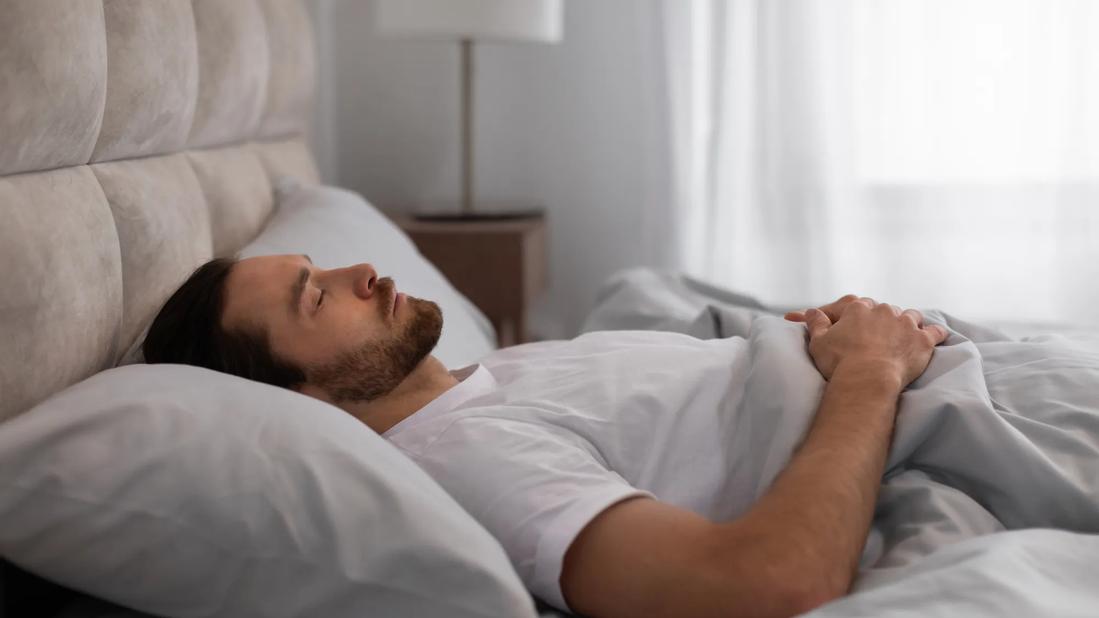
Image content: This image is available to view online.
View image online (https://assets.clevelandclinic.org/transform/b3128372-023d-484d-b506-fd20ddad92e1/sleeping-on-back-2166934606)
Person sleeping on back with head slightly elevated
If you’re living with advanced peripheral artery disease (PAD), you might feel worse at night, with aching and discomfort that keep you awake. It’s a situation that can be frustrating and exhausting.
Advertisement
Cleveland Clinic is a non-profit academic medical center. Advertising on our site helps support our mission. We do not endorse non-Cleveland Clinic products or services. Policy
Can changing your sleeping position help? Let’s get the lowdown on lying down from interventional cardiologist Aravinda Nanjundappa, MD.
PAD occurs when plaque builds up in the arteries that supply blood to your legs and feet. These blockages limit the amount of oxygen-rich blood reaching your muscles, which can lead to pain and fatigue.
The condition typically brings on leg pain during physical activity, like walking. Nighttime symptoms are usually seen in more advanced stages of the disease.
“Most patients with mild or moderate PAD do not experience symptoms while sleeping,” states Dr. Nanjundappa. “Nighttime discomfort typically occurs in patients with advanced PAD, particularly those with what we call ischemic rest pain.”
Rest pain develops when blood flow to your feet becomes severely compromised. When you’re lying down, with your feet level with your heart, blood flow may be even more limited as gravity isn’t pulling it down.
This can lead to burning, aching or cramping pain, often in the toes or forefoot. Some people find temporary relief from rest pain by dangling their legs over the side of the bed, allowing gravity to do its thing.
Sleep and PAD also influence each other in another important way: Poor sleep quality has been associated with increased inflammation, higher cardiovascular risk and progression of atherosclerosis — all of which contribute to PAD.
Advertisement
“Over time, inadequate sleep may contribute to worsening vascular disease,” says Dr. Nanjundappa.
There is no scientifically proven “best” sleeping position for PAD. “For most people with PAD, sleep position has little impact on reducing symptoms,” notes Dr. Nanjundappa.
But some individuals with severe PAD find modest relief by sleeping on their back and slightly elevating the head of the bed. This reclined position allows gravity to assist blood flow to the lower extremities.
But it’s important to remember that this adjustment does not address the underlying issue.
“If your leg pain is severe enough to wake you from sleep or forces you to hang your legs off the bed for relief, that’s a warning sign of advanced PAD and warrants medical attention,” emphasizes Dr. Nanjundappa.
Sleeping on your side — especially your left side — is another option if you have PAD-related leg pain. While not proven to relieve PAD symptoms directly, it may offer other health benefits that make it easier to catch ZZZs.
“There’s some evidence that sleeping on your left side can help with digestion, reduce acid reflux and support better drainage of lymphatic fluid,” explains Dr. Nanjundappa. “It also eases pressure on the vena cava, the large vein that returns blood to your heart.”
Side sleeping may also be a better choice than back sleeping if you have sleep apnea, which often seems to coexist with PAD, according to research.
Another important point: Side sleeping is not recommended if PAD is affecting one or both of your arms. (That’s especially true if you’re lying on the side where you’re experiencing pain.) Back sleeping is the better option in this case.
While back and side sleeping can be helpful, there are two positions you may want to avoid:
And while it might be tempting to sleep with your feet hanging off the bed for some quick relief, it’s not sustainable or safe over time, he cautions.
What you do before crawling under the covers can help you get a restful snooze once you close your eyes. Dr. Nanjundappa says improving your sleep when you have PAD often means addressing the condition and other health issues.
Advertisement
You can do that by:
Pay attention to your bedtime routine, too. That includes:
Advertisement
“These are all healthy decisions that may help when you try to sleep,” concludes Dr. Nanjundappa.
Advertisement

Sign up for our Health Essentials emails for expert guidance on nutrition, fitness, sleep, skin care and more.
Learn more about our editorial process.
Advertisement

Expert advice on different heart-friendly diets
What to expect from a supervised walking program
The right mask fit, pressure settings and machine adjustments can help make this treatment more comfortable

RSV is common and may cause serious complications, but there are ways to reduce your and your baby’s risk of serious illness

Don’t underestimate the power of a pause

Boys are more likely to exhibit easily noticed hyperactive symptoms, while girls often show subtler, quieter signs of the condition
While the ADHD medications are similar, variations may make one a better choice over the other for you
Stress affects your physical health more than you may realize, including raising your risk for serious medical events

Managing your weight through physical activity may lower your chances of getting this common cancer

It typically starts in October and winds down in early spring, with cases at their highest in the middle of winter

Anxiety disorders, health conditions and past trauma can make driving nerve-wracking — help is available
 Search










