Locations:





 Search
On average, bruises last one to three weeks, and bigger bruises last longer than smaller ones
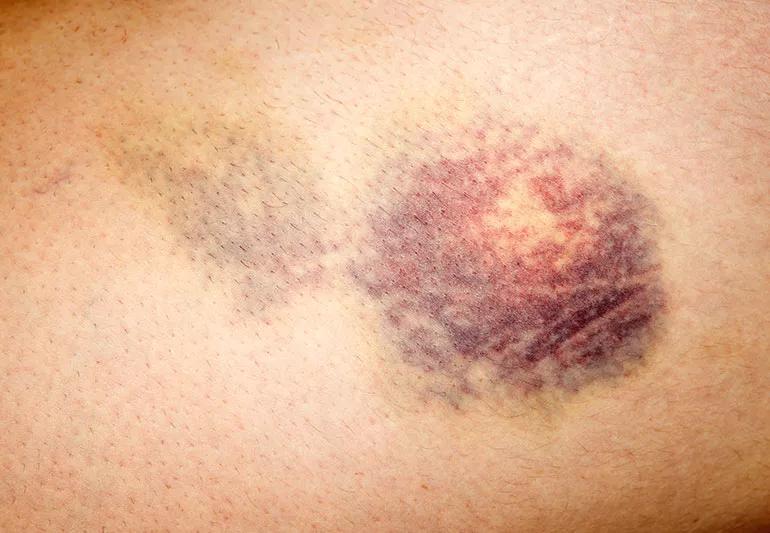
Image content: This image is available to view online.
View image online (https://assets.clevelandclinic.org/transform/7965a2c2-b74a-4c7b-8b3d-b568042b9c0b/Lasting-Bruises-157607038-770x533-1_jpg)
Leg bruise.
Bruises are part of life. Some are small and tender and some are huge and painful. Either way, they can be annoying — and most of us are happy to see them go.
Advertisement
Cleveland Clinic is a non-profit academic medical center. Advertising on our site helps support our mission. We do not endorse non-Cleveland Clinic products or services. Policy
So, how long must we wait before that bruise is gone? And when should you be concerned about a bruise? Hematologist (blood disease specialist) Dana Angelini, MD, explains how long bruises take to heal and what to do if your bruise won’t go away.
Why we get bruises
Bruises happen when tiny blood vessels under your skin become damaged and bleed. Your skin usually isn’t broken (like with a cut), so the blood stays trapped under your skin. You might get a bruise after you:
There’s no standard lifespan for bruises. It depends on your body and what caused the bruise. “Big bruises last longer than smaller ones,” says Dr. Angelini. “There’s more blood for your body to clear out, so it takes more time. Bruises last one to three weeks on average, though it’s OK if a bruise lasts a little longer. During the healing process, you might notice the bruise changing colors.”
Some bruises seem like they’ll never clear up, but all bruises eventually heal. If you have a bruise that looks like it’s set up permanent residence, a few things could be happening.
Advertisement
Some bruises signal a health condition that needs medical attention. See a provider if you notice:
As you put on your socks, you notice a new black-and-blue mark on your leg. Don’t panic if you occasionally get bruises and don’t know where they came from. But see a healthcare provider if you often get mystery bruises.
In some cases, frequent bruising could be a sign of a blood clotting disorder like hemophilia or von Willebrand disease. And though this is less common, excessive bruising can be a sign of cancer.
Also called hematomas, these large bruises may be a sign of a more serious injury, like a broken bone. They might also signal bleeding inside of your body that needs treatment. Hematomas are more likely to affect people with a blood clotting disorder or who take blood thinners.
Known as petechiae, these mini bruises can appear on your skin, in your mouth or inside of your eyelids. They have many causes, from infections to low platelet levels in your blood. You can also get them from excessive straining, like during childbirth or from forceful coughing.
Senile purpura is a common cause of painless bruises in older adults. “Years of sun exposure, on the forearms especially, causes the skin to become thin and fragile,” explains Dr. Angelini. “You might bruise from a tiny bump, so the bruises don’t hurt.”
Senile purpura bruises usually take longer to heal, too. It might seem like you have permanent bruises on your arms. But it’s just many bruises happening in a row.
Maybe you bruise from barely brushing up against a door frame, while your friend can take a major spill and barely bruise. If you bruise easily and don’t know why, talk with your provider.
“There are several reasons why some people seem to bruise easily,” says Dr. Angelini. “It could just seem like you bruise more because of your skin type and color. Lighter skin tones show bruises more easily than darker ones.”
Certain medications and supplements can also cause you to bruise more easily, including:
Advertisement
“Your provider may be able to switch your medication if bruising is bothering you,” says Dr. Angelini. “But don’t stop taking your medication or change your dose until you talk with your provider.”
Home remedies can relieve painful bruises, but they don’t drastically change the healing time. “Apply ice right after an injury to relieve swelling and pain,” advises Dr. Angelini. “Ice might help a bruise heal slightly faster, but it’s not a miracle cure. And don’t use ice for more than 15 minutes at a time, or you could damage your skin.”
Another tip: Avoid heating pads, saunas and hot baths for the first 48 hours after an injury. Heat can dilate (widen) the blood vessels and make your bruise even larger.
Most of the time, bruises aren’t a reason to worry — even if you don’t remember where they came from. But see your provider if you experience bruising that:
Advertisement
Bruises are usually just a result of daily life. But don’t brush them off if it seems like your bruises never go away. “Tell your provider if you’re seeing bruises regularly,” says Dr. Angelini. “Usually, they can run some tests to rule out any health problems. Or they can change your medication if that’s the cause. Your provider is here to address any health concerns, so don’t be afraid to bring them up. It might give you the peace of mind you need.”
Advertisement

Sign up for our Health Essentials emails for expert guidance on nutrition, fitness, sleep, skin care and more.
Learn more about our editorial process.
Advertisement
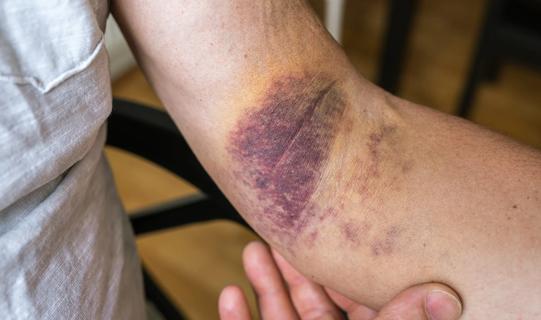
Medications, vitamin deficiencies and age can make you bruise more easily

Both are a collection of blood in your brain, but they happen in different parts, for different reasons and with different symptoms
Injections of Botox can significantly reduce sweating for up to a year, especially in your armpits
Look for emollients, humectants and occlusives to hydrate, soothe and protect your skin
This multitasker can help keep your skin clear, support wound healing and disinfect surfaces around your home

This gentle facial cleanser removes dirt, oil and most makeup without drying out your skin

UVA rays from tanning beds increase your risk of skin cancer, wrinkles and eye damage

Persistent itching is usually caused by something harmless — but in some cases, it can point to certain cancers

Gradually increasing your training, choosing proper footwear and listening to your body can help keep shin pain from sidelining your workouts

Self-stimulating behaviors can help you self-regulate or cope with intense emotions
At-home remedies may help calm symptoms and make it easier to relax at bedtime











