Locations:





Restricting the amount of fluid you take in and eating less salt can make your dialysis treatments more efficient
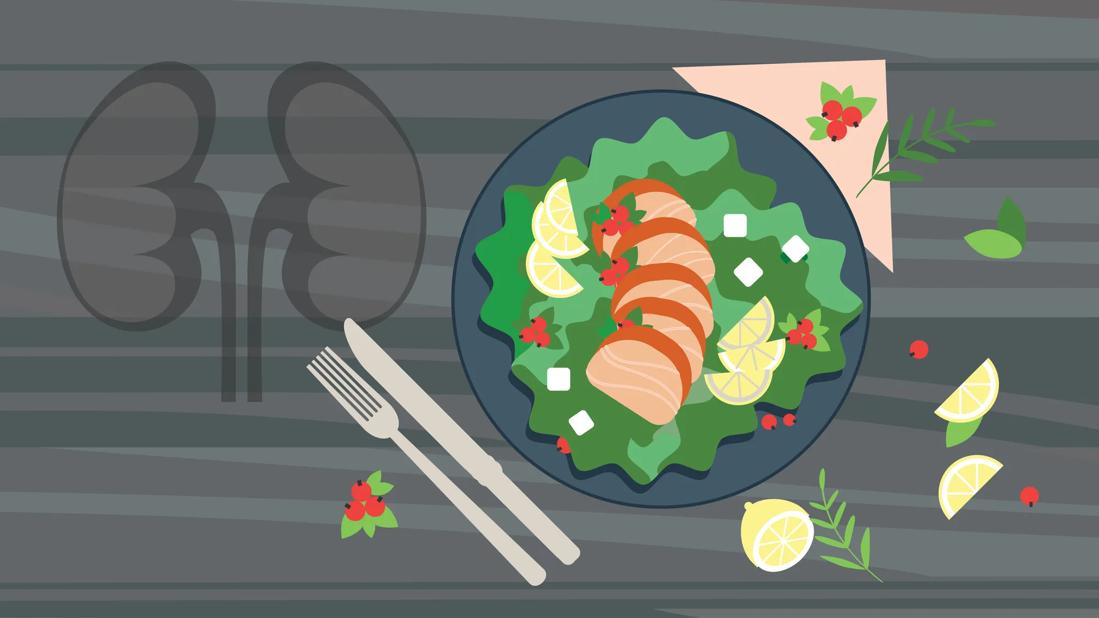
Image content: This image is available to view online.
View image online (https://assets.clevelandclinic.org/transform/9cb0f0d4-ffbb-4267-b004-fb6a33d08108/salad-chicken-lettuce-1127701961)
Salad topped with chicken breast and lemon slices, with kidneys silhouetted alongside
If you’ve been diagnosed with end-stage renal disease (ESRD), you may be close to starting dialysis. Perhaps you’ve already begun treatment. Dialysis does many of the tasks your kidneys can no longer do. But it also means making big changes to your daily life, including what you eat and drink.
Advertisement
Cleveland Clinic is a non-profit academic medical center. Advertising on our site helps support our mission. We do not endorse non-Cleveland Clinic products or services. Policy
For many people, these lifestyle changes are challenging. What are the best dietary choices to make if you’re on dialysis? And why is it all so important?
Nephrology nurse practitioner Jennifer Hyland, CNP, walks us through the basics of a dialysis diet.
What you eat and drink plays a major role in the amount of waste and fluid building up in your body between dialysis treatments.
Dialysis cleanses your blood, but it doesn’t do as much as a healthy kidney — and it isn’t nearly as efficient.
Healthy kidneys are working all the time. If you’re on dialysis, the dialyzer is doing the work for them. That means fluids, minerals and other waste products build up until your next treatment, causing unpleasant and potentially dangerous side effects.
Following a dialysis diet can make a difference in the symptoms you live with, their severity and whether you have complications.
“The diet we recommend for people with ESRD is challenging,” Hyland says. “It requires you and your support system to learn how to read labels and measure fluids, for example.”
It’s challenging work for your provider, too. They have to take other factors into account, like any other health conditions you have and who prepares your food.
Advertisement
“People in assisted living or a skilled nursing facility may not have a choice in what they eat,” she adds.
The goal of a dialysis diet is balance: getting enough nutrition while keeping fluid levels low and certain minerals in check. You’ll work with a dietitian trained in end-stage renal disease to be sure you’re watching your intake of:
Monitoring your blood work is important at every stage of kidney disease — including when you go on dialysis, Hyland says.
During dialysis, your care team will check your labs to see how well the treatment is working. The test results will show them whether dialysis is removing enough waste, and if it’s keeping your body’s electrolyte levels in balance. Your care team will also review your bloodwork for signs that you’re getting enough protein.
Here are the key features of a diet for a person with end-stage renal disease.
If you’ve been living with kidney disease for a long time, you may have been told to limit protein. But Hyland says that your protein needs change when you have end-stage renal disease and begin dialysis.
“Dialysis takes a protein, called albumin, out of your body,” she explains. “So, a high-protein diet becomes part of your treatment. It can help keep you out of the hospital, prevent muscle wasting and allow for easier fluid removal during dialysis.”
Your daily protein goal will reflect your specific needs, but it tends to be between 1.2 and 1.4 grams of protein per kilogram of body weight. To put that in context: If you weigh 150 pounds (about 68 kilograms) and your dietitian at the dialysis center wants you to eat 1.3 grams per kilogram, you would aim to get about 88 grams of protein a day.
Some sources of protein are better than others. Hyland recommends the following protein-rich foods:
“It can get very confusing because many sources of protein are naturally high in phosphorus, which you’re trying to avoid,” Hyland clarifies. Your provider may prescribe a phosphorus binder to take before you eat, to be sure you’re able to meet your protein goals safely (more on phosphorus binders later).
Limit or avoid the following protein sources, which tend to be high in sodium, and may contain added phosphorus:
Limiting your salt intake is crucial because too much sodium can raise your blood pressure, cause your body to retain fluid and make dialysis more difficult. In extreme cases, eating too much sodium can contribute to fluid overload (hypervolemia), which causes serious health problems and could land you in the hospital.
Advertisement
“Sodium is in everything,” Hyland concedes. “So, it’s important not to add more to your food to make it taste better.”
She recommends flavoring your food with herbs and spices instead.
You probably know that limiting sodium means cutting down on fast food and salty snacks, like chips and crackers. But sodium can sneak up on you. Other foods to watch out for include:
It’s important to keep your phosphorus levels within a normal range when you have end-stage renal disease, as it’s only being removed from your body while you’re on dialysis.
High levels of phosphorus can cause serious health complications. When it builds up, it causes calcium to leach out of your bones, increasing your risk of fractures. High phosphorus levels can also cause calcification (hardening) in your blood vessels.
“Over time, high phosphorus levels can cause circulation problems, vascular issues and arterial disease,” Hyland reports.
Advertisement
They’re also associated with:
To keep phosphorus low, limit your intake of:
Phosphorus is also a common additive. You’re most likely to find it in processed meats, dark colas, convenience foods and baked goods.
If you know something you’re going to eat is high in phosphorus, Hyland urges you to take a phosphorus binder with your meal. These medications bind with the phosphorus in your digestive tract, so it’s removed with your poop.
“Some phosphorus binders are chewable, and others are tablets,” she says. “Either way, you take it 10 to 15 minutes before eating.”
Potassium is normally excreted by your kidneys. When you have very limited or no kidney function, it can build up in your blood. Dialysis removes that extra potassium from your body.
“If you’re coming into treatment with potassium levels that are too high, you can be at risk for dangerous heart rhythms (arrythmias) or even sudden cardiac death,” Hyland states.
To keep your potassium levels in a healthy range, you’ll want to cut down on or avoid:
Advertisement
There’s one fruit that you need to cut from your diet completely: starfruit. This tropical fruit contains moderate amounts of potassium and phosphorus. It also contains a neurotoxin that people with severe kidney disease can’t filter properly.
Starfruit can cause seizures and other neurologic complications, so give it a wide berth.
If you’re on dialysis, you’ll need to limit your fluid intake as directed by your care team.
Because your kidneys no longer filter blood and remove excess fluid effectively, the things you drink can cause fluid to build up between dialysis sessions. That could lead to:
The rapid removal of built-up fluid during dialysis can cause uncomfortable side effects, like headaches, cramping, nausea and more.
In some cases, Hyland says that dialysis may not be able to remove all the extra fluid. Severe fluid overload can send you to the hospital.
Restricting fluid intake is key. But what you drink is important, too.
“If you’re going to drink, water is the best option,” she advises.
A protein shake or nutritional supplement may be a good idea, but check with your care team before adding one to your routine. Some of these products can be high in phosphorus and potassium.
Hyland also recommends limiting other fluids, especially caffeinated drinks, dark sodas and electrolyte drinks. Not only do they count toward your daily fluid allowance, but they can also:
And remember: Soup, ice cream, gelatin and gravy all count toward your daily fluid allowance, too. Portion control is key when enjoying fruits and veggies with a high water content, like cucumbers, watermelon, grapes or celery.
If you’re struggling to reduce your fluid intake, let your dialysis dietitian know.
Adjusting to life on a renal diet can be challenging. But with a little creativity (and your dietitian’s help) your “new normal” doesn’t have to feel boring or restrictive. Here’s an example of what a day spent on a dialysis diet might look like:
Feeling overwhelmed? It’s understandable. But remember: You have a dietitian available to support you on your dialysis journey. They can help you get set up with a plan that fits your needs. And they’ll be there to help you adapt as those needs change.
“Your dietitian plays a vital role in your kidney failure management, helping you understand your lab results and make food choices that support your health,” Hyland encourages. “You don’t have to figure this all out on your own.”

Sign up for our Health Essentials emails for expert guidance on nutrition, fitness, sleep, skin care and more.
Learn more about our editorial process.
Advertisement

A single donor can give more than 80 people a shot at a longer, fuller life
Rest, hydration, protein and light exercise all play an important role in your healing

From sauerkraut to kimchi, these foods can help keep your gut healthy

This East Asian and subtropical fruit is packed with delicious nutrition

Physical activity, even a couple times a week, can potentially benefit your sex life and overall health over time

It helps to build up your strength and balance before tackling these more resistance-heavy TRX exercises

Despite their name, these patches don’t contain GLP-1 medication and have dubious effects

This famously funky-smelling fruit is packed with fiber, vitamins and minerals

Hormonal changes, a slower metabolism and muscle loss can make weight gain more common around menopause — healthy habits can help you manage it

Life-threatening complications include sepsis, stroke, pneumonia and more

Fruity-smelling breath can happen when your body burns fat for energy, and in some cases, can signal a medical emergency
 Search










