Locations:





Drinking alcohol reduces the release of a hormone that helps maintain your body’s fluid levels
Ever reach for an ice-cold beer to beat the heat on a sizzling summer day? One little twist — fssst! — and refreshment awaits.
Advertisement
Cleveland Clinic is a non-profit academic medical center. Advertising on our site helps support our mission. We do not endorse non-Cleveland Clinic products or services. Policy
But while that brew may seem like the perfect thirst quencher, knocking it back increases your risk of dehydration. Ditto for drinking a fruity margarita, a crisp rosé or any other alcoholic beverage.
So, why does drinking alcohol dehydrate you? Let’s crack open an answer with the help of registered dietitian Julia Zumpano, RD, LD.
Your body knows it needs water, and it’s programmed to conserve fluids to stay hydrated. But drinking alcohol turns down your body’s water-saving signal by reducing the release of a hormone called vasopressin.
This antidiuretic hormone (ADH) tells your kidneys to hold on to water. When alcohol lowers ADH, three things happen:
“So, even though you’re drinking a liquid, your body may end up with a net loss of water because of the alcohol you’re consuming,” explains Zumpano.
Your body typically starts limiting ADH within about 15 minutes of that first sip of alcohol. (It works quickly!) You’ll probably feel the urge to pee soon after that as urine begins to build up in your bladder.
Advertisement
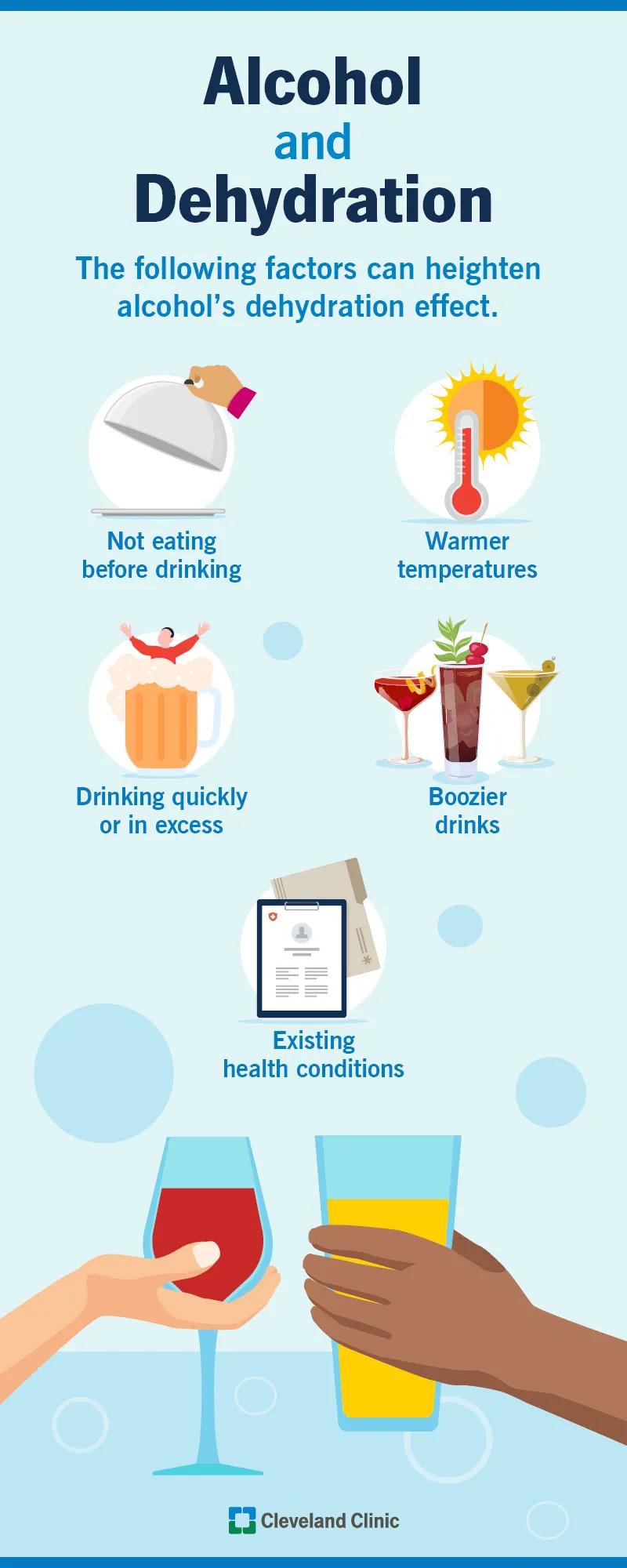
Image content: This image is available to view online.
View image online (https://assets.clevelandclinic.org/transform/872faf42-ecd0-4c35-8d19-d79934bba1a2/alcohol-dehydration-infographic)
Alcohol increases dehydration risk on its own, but the effect can be heightened, too, notes Zumpano. Factors that accelerate dehydration include:
Maintaining proper fluid balance in your body can also be more difficult if you have certain health conditions, like diabetes, kidney disease, liver disease or heart issues. Adding alcohol to the mix can more easily throw hydration levels off kilter.
All alcohol — whether it’s beer, wine or a liquor like tequila, vodka or whiskey — is dehydrating, Zumpano emphasizes. But is one of those choices more dehydrating than the others? The answer is more complicated than you might think.
The reason? If you’re dealing with a “standard serving” of each type of alcohol, they all basically hit the same when it comes to dehydration. That’s because each serving is equal in total alcohol content.
But if you pound down more of a boozier drink, you’re going to feel the effects. That’s why liquor, which has a higher alcohol by volume (ABV), can be particularly troublesome when filling glasses.
“If you’re consuming liquor at the same volume as beer — like 12 ounces of a strong margarita compared to 12 ounces of an average beer — you may get dehydrated a lot quicker,” explains Zumpano.
And even within each alcohol category, ABVs can vary widely. Take beer, for example. A simple domestic lager may fall in the 4% to 5% range. A craft IPA, on the other hand, can run 8% or higher.
“Some beers may have twice the amount of alcohol as others,” she cautions. “They don’t hit the same. It’s something to be aware of.”
While alcohol in a mixed drink is the main driver of dehydration, what else you splash into your glass can also contribute, says Zumpano. You can increase your risk by adding:
Advertisement
NA beers typically contain less than 0.5% ABV. That’s not enough alcohol to trigger the physiological response that starts you down the road toward dehydration, says Zumpano.
“The water in NA beer usually outweighs any alcohol-related fluid loss you might see,” she adds.
So, what can you do to limit your dehydration risk when you’re tipping back alcoholic drinks? Start by following this formula: Drink 12 ounces of water after every alcoholic drink. (One beer, one water.)
“This slows your alcohol intake and helps keep you hydrated,” explains Zumpano. (As a bonus, it can even tamp down potential hangover effects.)
Other recommendations include:
Bottom line? Don’t make the mistake of thinking alcoholic beverages equal hydration because they’re a fluid. As odd as it may sound, you can get dehydrated from drinking.
“If you’re drinking a lot of beer or alcoholic seltzer, it can feel like you’re taking in a lot of liquid and staying hydrated,” says Zumpano. “But the alcohol offsets that because of the dehydrating factor. Take the steps to stay ahead of any problems.”
Advertisement
Advertisement

Sign up for our Health Essentials emails for expert guidance on nutrition, fitness, sleep, skin care and more.
Learn more about our editorial process.
Advertisement

Alcohol raises your risk of AFib, worsens existing disease and makes treatments less effective

That uneasy, anxious feeling after drinking is real, and it’s tied to how alcohol affects your brain and body
Drinking alcohol is known to raise your risk of various types of cancer
Long-term, heavy alcohol use can double your risk of chronic kidney disease

Your tolerance decreases with age, thanks to body changes, health conditions and medications you may take
‘Blackout rage gallons’ can lead to dangerous levels of alcohol consumption

Certain components found in wine like tannins and histamines may be the culprit
An enzyme deficiency or rosacea are potential causes of alcohol flush

Managing your weight through physical activity may lower your chances of getting this common cancer

It typically starts in October and winds down in early spring, with cases at their highest in the middle of winter
Anxiety disorders, health conditions and past trauma can make driving nerve-wracking — help is available
 Search










