Locations:





That uneasy, anxious feeling after drinking is real, and it’s tied to how alcohol affects your brain and body
Ever wake up after a night of drinking and feel uneasy, on edge or full of regret? It’s more than just a bad mood. It’s a real response that your body can have to alcohol — and it’s often called “hangxiety.”
Advertisement
Cleveland Clinic is a non-profit academic medical center. Advertising on our site helps support our mission. We do not endorse non-Cleveland Clinic products or services. Policy
But you don’t have to have an actual hangover to have this alcohol-related emotional experience the day after drinking. Addiction psychiatrist Hannah Snyder, MD, explains.
In the simplest terms, hangover + anxiety = hangxiety.
“This term refers to the emotional and sometimes physical symptoms that can come up the morning after you’ve had some drinks,” Dr. Snyder says.
When you’re in the act of drinking, alcohol can make you feel calm. But that’s only temporary. As its effects wear off, your brain shifts back — and that can trigger alcohol-related anxiety symptoms the next day.
One of the main symptoms — anxiety — is right there in the name. But hangxiety can also bring:
“It could be just a general anxious feeling or a sense of impending doom, like something bad is about to happen,” Dr. Snyder says. “You may also feel embarrassment about how you acted while drinking, like, ‘Why did I say that? Why did I do that?’
Alcohol anxiety can bring physical symptoms, too, like:
Hangxiety is a result of your brain chemistry — and, more specifically, how drinking affects your brain chemistry.
Advertisement
Alcohol boosts a calming chemical that helps you relax and feel sleepy. It also decreases another chemical that keeps you alert. At first, that shift feels good. But later, your body tries to rebalance.
“When that calming effect wears off and the alert feeling returns, that can contribute to feelings of anxiety,” Dr. Snyder explains.
A few factors can make you more prone to hangxiety or make the experience more intense, like:
“People who already experience anxiety, depression or other mental health conditions are at higher risk,” she notes.
And while some people turn to alcohol to try to cope with stress, it can backfire: “Overall, anxiety tends to increase with alcohol use over time,” she adds.
For most people, drinking-related anxiety is strongest the next day. But in some cases, it can last longer — especially if you try to ease the feeling by having more to drink.
“If you drink to reduce anxious feelings, you can end up extending the anxiety over multiple days,” Dr. Snyder says.
But hangxiety that continues for several days could be a sign of something more serious, like alcohol withdrawal or a mental health concern.
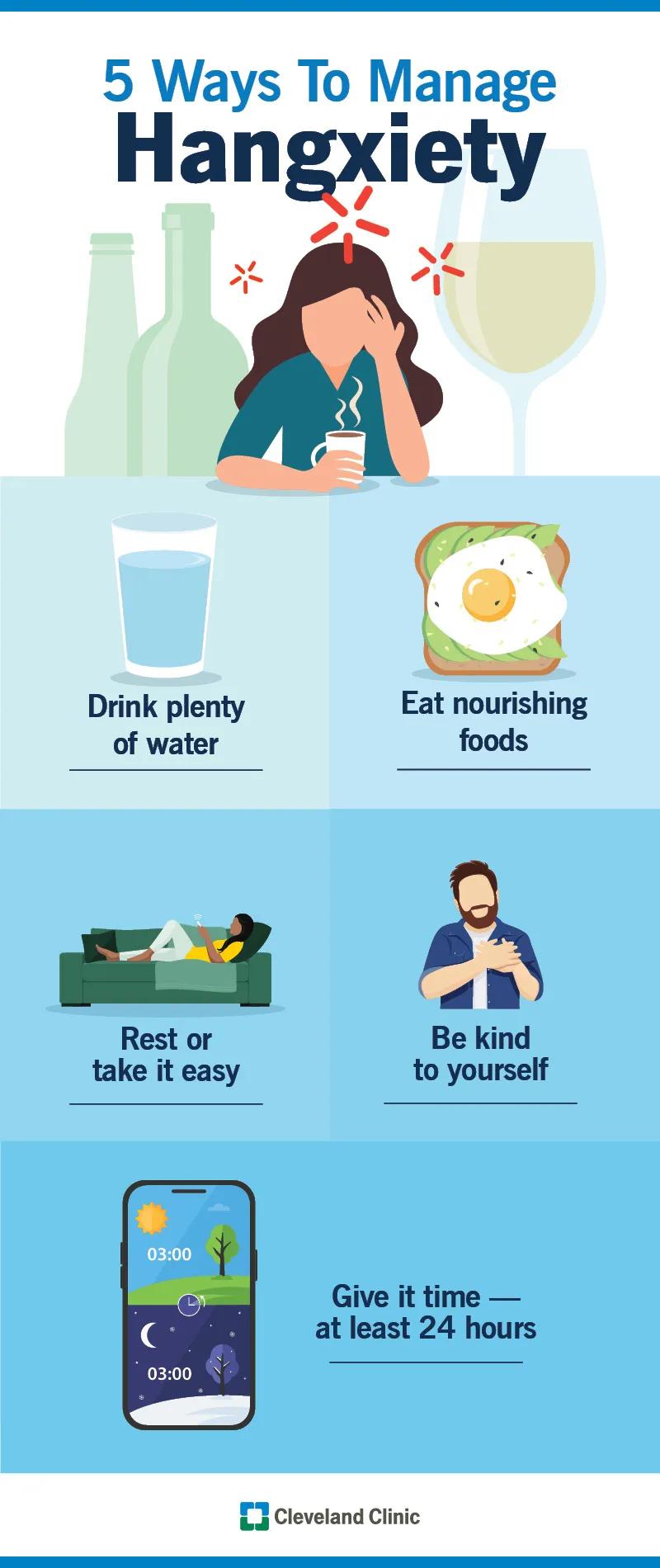
Image content: This image is available to view online.
View image online (https://assets.clevelandclinic.org/transform/9997c5b7-b458-4708-a298-e7caef3fe3bb/alcohol-anxiety-infographic)
There’s no quick fix for alcohol anxiety, but there are ways to care for your mind and body while you recover.
One more thing: The guilt and overall emotional malaise that hangxiety brings can make it all too easy to spiral into feelings of harsh self-talk. But that will only make you feel worse.
“Just try to be really gentle with yourself,” Dr. Snyder encourages. “Give yourself some space and grace to move through the feelings.”
The only guaranteed way to prevent hangxiety is to avoid alcohol entirely. But if you choose to drink, there are a few things you can do to reduce your risk.
"These habits can help lessen the impact alcohol has on your body and mood the next day,” Dr. Snyder says.
Advertisement
Occasional hangover anxiety can happen to anyone. But if it becomes frequent or severe, it may be worth taking a closer look at your relationship with alcohol.
“A quick way to check in with yourself about your alcohol consumption is to see if you keep drinking despite experiencing negative consequences,” Dr. Snyder recommends.
She suggests paying attention to whether:
All of these may be signs of alcohol use disorder. A healthcare provider can guide you in finding the help and support you need.
“If hangxiety is happening often or feels overwhelming, talking to a healthcare provider can help you understand what’s going on and what to do next,” Dr. Snyder encourages.
Advertisement

Sign up for our Health Essentials emails for expert guidance on nutrition, fitness, sleep, skin care and more.
Learn more about our editorial process.
Advertisement
Alcohol raises your risk of AFib, worsens existing disease and makes treatments less effective
Drinking alcohol reduces the release of a hormone that helps maintain your body’s fluid levels

Drinking alcohol is known to raise your risk of various types of cancer
Long-term, heavy alcohol use can double your risk of chronic kidney disease
Your tolerance decreases with age, thanks to body changes, health conditions and medications you may take
‘Blackout rage gallons’ can lead to dangerous levels of alcohol consumption
Certain components found in wine like tannins and histamines may be the culprit
An enzyme deficiency or rosacea are potential causes of alcohol flush

Managing your weight through physical activity may lower your chances of getting this common cancer

It typically starts in October and winds down in early spring, with cases at their highest in the middle of winter

Anxiety disorders, health conditions and past trauma can make driving nerve-wracking — help is available
 Search










