Locations:





 Search
Whether it’s crushed ice, a chilled gel pack or frozen corn, you’ve got options
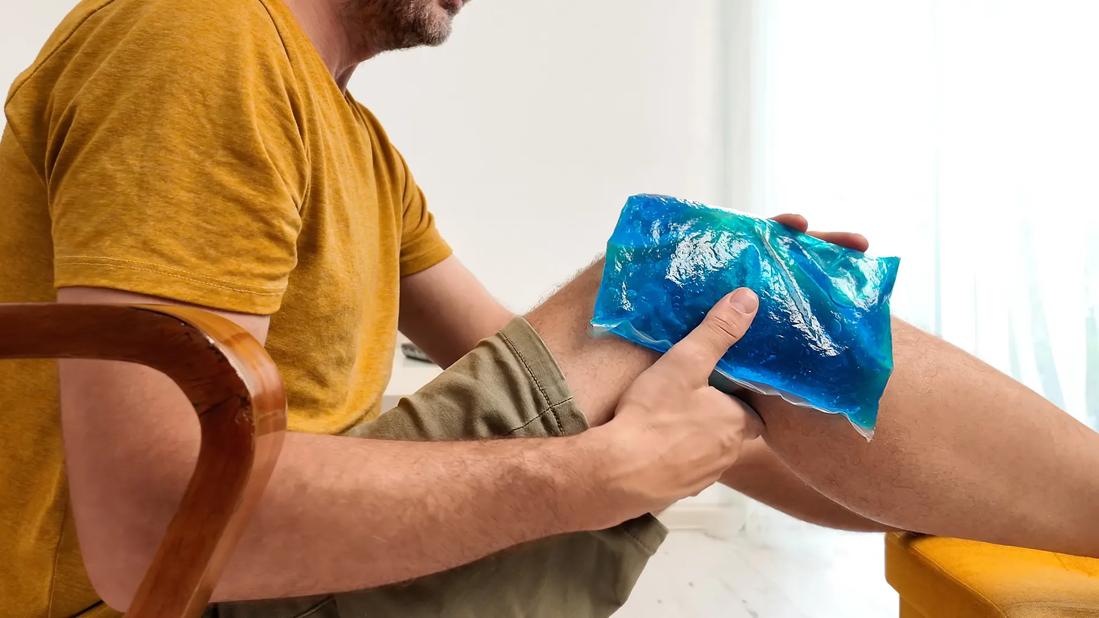
Image content: This image is available to view online.
View image online (https://assets.clevelandclinic.org/transform/399675fc-b490-4498-b5e1-186cce76b64e/ice-pack-knee-2162767836)
Person icing knee with a cold pack
Injuries happen. Maybe it’s a bruise after a stumble and tumble on an uneven sidewalk. Perhaps it’s a muscle aching in protest after being asked to do a little too much. Either way, you’re hurting.
Advertisement
Cleveland Clinic is a non-profit academic medical center. Advertising on our site helps support our mission. We do not endorse non-Cleveland Clinic products or services. Policy
Your first instinct to feel better? Bring on the ice!
Icing an injury is often one of the first steps in the healing process — and you’ve got plenty of cold compress options to consider. Certified athletic trainer Jason Cruickshank, AT, CSCS, breaks down a few choices and the ABCs of icing an injury.
A cold compress is chilled or frozen material you apply to your body to reduce swelling, pain and inflammation. It works its magic by constricting blood vessels and temporarily numbing injured tissue.
The two most straightforward cold compresses are:
“You don’t need anything fancy,” he adds. “If it’s cold, it should work for your needs.”
When the need for icing an injury presents itself, here are a few easy ways to answer the call.
Advertisement
The simple ice-in-a-bag option is often the quickest and easiest. Again, a bag of crushed ice works better than cubes because it can wrap around the injured area more easily and is more likely to stay in place.
What you’ll need: Ice (again, ideally crushed), a sealable bag and a thin cloth.
How to prepare and apply:
A bag of frozen corn, peas, green beans or any other vegetable is an easy sub for a bag of ice, notes Cruickshank. The collection of small veggies allows it to wrap around body parts like crushed ice, too.
A bonus? Once the veggies thaw, you’ve got a healthy head start on your next meal.
What you’ll need: A bag of frozen veggies and a thin cloth.
How to apply:
This one requires a little advanced prep, but it’s worth doing if you live in an active household where bumps and bruises are common. “An ice cup is ideal for targeting less intense injuries or tough-to-reach spots,” suggests Cruickshank.
What you’ll need: A disposable foam or paper cup and water.
How to prepare and apply:
Another plan-ahead option for icing injuries involves freezing a wet washcloth.
What you’ll need: A clean washcloth, water, a sealable bag and a thin cloth.
How to prepare and apply:
Advertisement
When icing, Cruickshank recommends keeping these tips in mind:
Icing offers the most benefit immediately after an injury to limit the swelling and dull pain, says Cruickshank. It’s OK to ice an injury again, too, but it’s best to wait at least an hour or two between sessions.
Continue icing on and off for a few days as part of the RICE method of injury care if the cold compress offers relief. (RICE is an acronym for Rest, Ice, Compression and Elevation.)
If your injury isn’t getting better within a few days, consider seeing a healthcare provider for an exam.
Advertisement

Sign up for our Health Essentials emails for expert guidance on nutrition, fitness, sleep, skin care and more.
Learn more about our editorial process.
Advertisement
Stretching, heating pads and massage guns can provide quick relief
Exercising at about 70% of your maximum heart rate can help you burn fat
These tiny saltwater larvae can get trapped under your swimsuit and trigger an itchy reaction called seabather’s eruption

Avoid triggering flare-ups and inflammation by wearing sunscreen and other sun-protective clothing daily
Cold-water immersion offers benefits like sore muscle relief, but the therapy comes with risks, too

Exercising while taking semaglutide and other GLP-1s helps prevent muscle loss and boosts metabolism

This flexible ‘speed play’ running workout mixes fast and slow paces to build endurance, boost fitness and keep your routine from getting ... too routine

Get ready to squeeze your glutes, lift your quads and reverse some crunches
Grocery shopping with a plan, paying attention to portion sizes and eating at your own pace can all help you put an end to this habit
Semaglutide and other GLP-1s work best as long-term medications

Antibiotics should be used for short periods alongside other treatments to help with inflammation











