Locations:





From playful movement to strength-building, kids need exercise to stay healthy and strong
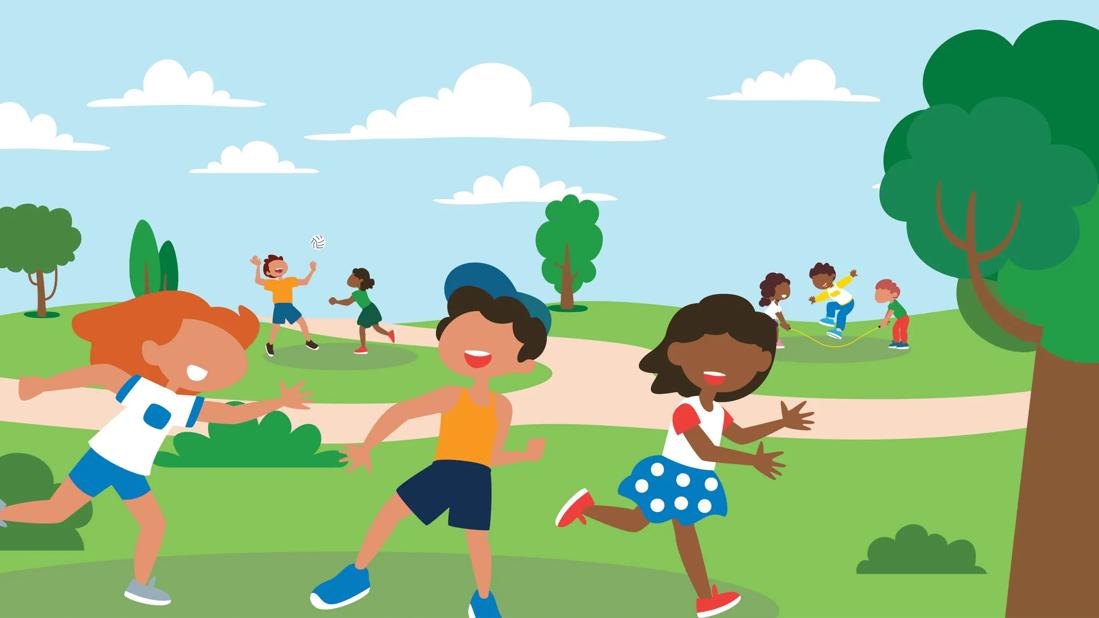
Image content: This image is available to view online.
View image online (https://assets.clevelandclinic.org/transform/6f65d787-4c11-4ab7-8b47-720019007500/kids-playing-park-2227406818)
Kids playing tag, volleyball and jump rope in a park
Kids these days are busier than ever. Between school, homework and jam-packed schedules, kids have less time for physical activity — and screen time is taking up much of what’s left.
Advertisement
Cleveland Clinic is a non-profit academic medical center. Advertising on our site helps support our mission. We do not endorse non-Cleveland Clinic products or services. Policy
But kids need to move their bodies. It’s important for healthy development and long-term wellness.
The good news is that exercise for kids doesn’t have to be complicated — or even structured. From recess games and chasing bubbles to strength training and sports, there are plenty of ways to keep kids active.
Exercise physiologist Christopher Travers, MS, shares ideas to support movement at every stage of kids’ development.
Kids aren’t meant to sit still. Their bodies are built to move — and they thrive when they do.
“Exercise helps kids burn energy, build confidence, sleep better and even focus better in school,” Travers says.
Regular exercise can also help:
What’s more, making exercise and movement part of a kid’s life sets the stage for an active adulthood, too.
“We want to teach healthy habits and good movement patterns while their brains and bodies are still developing,” Travers explains. “That can help them grow into healthy adults with more strength and fewer injuries.”
The U.S. Department of Health and Human Services recommends that children ages 6 to 17 get at least 60 minutes of physical activity every day. This includes a mix of aerobic and muscle-building activities.
Advertisement
It doesn’t have to be all at once. A quick game of tag counts. So does a brisk walk or run to the bus stop. Ditto for dribbling a basketball, playing active video games or swinging from the monkey bars.
“The best exercise for kids is whatever gets them moving,” Travers advises. “That might be organized sports for one child, or dancing in the living room for another.”
But studies show that most kids aren’t getting nearly enough. Need some ideas for your child? Travers shares some age-appropriate exercise suggestions.
For toddlers and preschoolers, exercise means active play. There’s no need for anything formal. Let them explore movement through games and imagination.
What works well? Encourage lots of:
“At this age, it’s all about having fun and being active throughout the day,” he adds. “Let them try everything and discover what they enjoy.”
Early school-age kids are ready for more structured movement, but play should still be the priority. This is the perfect time to develop big motor skills and body awareness.
Try activities like:
“This is the age to build a good foundation and teach them how to move well,” says Travers. “Don’t worry about reps or sets. Focus on fun.”
Kids this age may start participating in community sports and organized activities, too, like gymnastics or martial arts. Keep the pressure low and the encouragement high.
Tweens can take on more challenging physical activities. Their coordination is improving, and they may begin to show increased interest in sports or fitness.
“This is when you can start teaching bodyweight resistance exercises and helping kids understand how their body moves in space,” Travers suggests.
It’s also a good time to encourage stretching and mobility work to help prevent injuries during growth spurts.
In addition to play-time movement, like with younger kids, pre-teens may also benefit from exercises like:
Teenagers are typically ready for more structured exercise, especially if they’re already involved in sports. This age group can begin more intense strength training, emphasizing proper technique and supervision.
Advertisement
“Teenagers can lift weights, but they need guidance. Start with bodyweight, then progress to light resistance with a certified coach,” Travers advises.
Other recommended exercises include:
Not every kid is eager to move their bodies. And with social media, TV and video games vying for their attention, they may not be eager to get moving. Travers recommends these strategies to encourage more exercise in kids:
Advertisement
Exercise for kids shouldn’t feel like a chore. It should feel like fun.
“We’re too sedentary as a society, and that includes kids,” Travers says. “Kids don’t need fancy equipment or expensive activities or tons of equipment. They just need opportunities to play, move and build strength.”
So, get up, get moving, and let your kids lead the way.
Advertisement

Sign up for our Health Essentials emails for expert guidance on nutrition, fitness, sleep, skin care and more.
Learn more about our editorial process.
Advertisement

Celebrate individuality, create opportunities for cooperation, and stay calm and in control

The imaginary illness that routinely spreads on playgrounds offers some real-life lessons
Most kids start losing baby teeth around age 6 — but there’s some wiggle room in the timeline

Combat summer learning loss and keep young brains engaged with low-pressure learning

Heap on the praise for a job well done and stay consistent
Have their eyes evaluated shortly after birth, before their first birthday, and at ages 3, 5 and beyond
Routine screenings at school are normal and important
We don’t fully understand how cleanliness impacts immune system development, but we do know that preventing illness is important

Hormonal changes, a slower metabolism and muscle loss can make weight gain more common around menopause — healthy habits can help you manage it

Life-threatening complications include sepsis, stroke, pneumonia and more

Fruity-smelling breath can happen when your body burns fat for energy, and in some cases, can signal a medical emergency
 Search










