Locations:
Search IconSearch

These Lower Back Stretches and Exercises Can Help Relieve Pain

When your lower back hurts, stretching and staying active can be key to finding relief
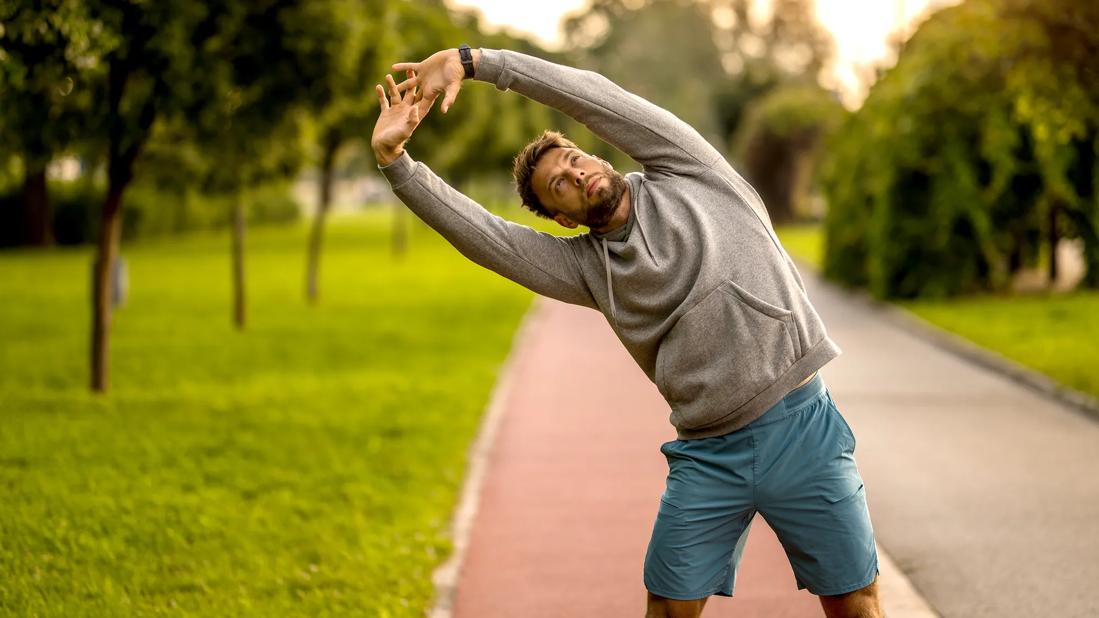
Person standing doing a side stretch on a walking path outside

Back pain has a way of disrupting even the simplest of tasks. When your lower back is painful, getting out of a seated position, standing long enough to do dishes or just bending over to pick up something off the floor can be difficult.

Advertisement

Cleveland Clinic is a non-profit academic medical center. Advertising on our site helps support our mission. We do not endorse non-Cleveland Clinic products or services. Policy

But rather than rest and stay still, physical therapist Patti Kopasakis, DPT, says it’s important to bring gentle mobility to the area.

“When you have lower back pain, your first instinct may be to rest, but that just adds more stiffness to the equation,” Dr. Kopasakis explains. “Gentle movement can help work things out. But the key is to listen to your body and not push through increased pain.”

Dr. Kopasakis shares some of the best exercises and stretches to relieve your lower back pain.

9 lower back stretches and exercises

If your pain is the result of trauma, like a fall or an accident, or if it’s associated with a cough, vomiting or other signs of illness, talk with a healthcare provider before attempting to stretch it out yourself.

But if your pain comes after a long day of sitting in an uncomfortable chair or after going too hard on yardwork, some light exercise and stretching may be just what you need.

“Listen to the feedback you’re getting from your body,” Dr. Kopasakis advises. “If things are hurting worse, that’s an indicator to back off.”

Before exercising or stretching, you’ll also want to make time for some deep breathing techniques, to loosen up your muscles and calm your nervous system.

Once your body is ready for it, give these stretches and exercises a try.

Advertisement

1. Lying trunk rotation

  1. Lie on your back with your knees bent so your feet are flat on the surface. Your knees should be touching or as close to touching as you can get comfortably.
  2. Gently and slowly move your knees to one side. Try to keep your shoulders and upper back pinned down. The goal is to feel a light stretch on the side opposite of where your knees are heading.
  3. When you feel that stretch, hold for five to 10 seconds.
  4. Gently bring your knees back to center. Then, lower them toward the other side.
  5. Repeat for three to five repetitions per side, or whatever feels good.

2. Supported cat-cow

  1. Place both your hands flat on a counter, desk or tabletop, keeping your arms straight at your elbows.
  2. Push on your hands as you gently round your back, bringing your head down toward your chest (cat).
  3. Drop your chest, pull your shoulders back toward each other and move your head to look up (cow).
  4. Slowly flow through both cat and cow three to five times, moving very gently.
  5. Once your pain has reduced, you can do this exercise on all-fours for a more challenging experience on the floor.

3. Side bend

  1. Stand with your arms stretched up straight over your head.
  2. Plant your feet firmly to the ground, about hip-width apart.
  3. Stretch your arms and upper body over to one side. Try to keep your hips straight, rather than lifting them up or sticking them out to the side as you stretch.
  4. Hold for three to five seconds.
  5. Return to center.
  6. Repeat this process three to five times on both sides.

4. Child’s pose

  1. Start in a tabletop position on the floor or on a bed (on your hands and knees).
  2. Touch your big toes to each other and spread your knees wide.
  3. Move your hips back so your bottom is resting on your heels. Your arms and hands should be on the surface below you, on either side of your head, reaching forward.
  4. Hold the pose for 10 to 30 seconds.

If getting down on all-fours is difficult for you, you can modify this stretch by placing both of your hands on a counter, desk or tabletop:

  1. Keeping your arms straight at your elbows, step your feet backward, keeping your feet about hip-width apart.
  2. Hinge at your hips, moving your backside back. Keep your back flat so that there’s a long straight line from your hands to your tailbone.
  3. Allow your neck to relax and hold this stretch for five to 10 seconds.

5. Seated lumbar extension

  1. Start by sitting on a firm surface like a bench, chair or the edge of your bed, with your feet planted flat on the ground.
  2. Keep your knees hip-width apart and lift your chest up to create a curve in your lower back, holding the pose for three to five seconds.
  3. Relax into a neutral position, and repeat for a total of five reps.

6. Seated hamstring stretch

  1. Start by sitting on a firm surface like a bench, chair or the edge of your bed, with your feet planted flat on the ground.
  2. Stretch one leg out in front of you, keeping your knee straightened.
  3. As you lift your leg, lengthen your spine so your head is straight and pressed firmly toward the ceiling.
  4. Once your leg is fully extended, reach your chest forward toward your knee until you feel the stretch on the back of your extended leg, keeping your back straight instead of rounding out.
  5. Hold this position for 10 seconds and repeat for three to five reps for each leg.

Advertisement

7. Bridge

  1. Lie on your back with your knees bent so your feet are flat on the surface. Keep your knees about hip-width apart. Place your arms along the sides of your body.
  2. Using your buttock muscles, lift your hips up. Ease into it. Don’t feel like you need to go too high too fast. Just lift slowly until you feel the stretch.
  3. Hold for three to five seconds, then lower back down.
  4. Rest for three to five seconds and repeat for about five reps.

8. Seated marching

  1. Start in a seated position, sitting tall with your back straight.
  2. Take a deep breath in.
  3. As you exhale, lift your right knee and left arm toward the ceiling at the same time.
  4. Lower your right knee and left arm as you inhale, and repeat with the opposite leg and arm.
  5. While doing this exercise, keep your lifted leg bent, as if you’re marching in place.
  6. Repeat this process for three sets of eight reps on each side.

9. All-fours stretching

  1. Start by kneeling on all-fours on the ground with your knees pressed firmly into the floor.
  2. Take a deep breath in and as you breathe out, engage your belly muscles by pulling your belly button towards your face, and slide one leg back, keeping your knee straight and your hips level.
  3. Hold that position for two to three seconds before inhaling and lowering your leg back down until you’re on all-fours.
  4. Repeat this process for three sets of eight reps on each side.

Advertisement

Back-up support

If your lower back is hurting, gentle stretching may provide some relief. But if your pain persists or worsens, or if you experience pain going down one of your legs, you’ll want to make an appointment with a healthcare provider to find other solutions. Consulting with a physical therapist may also help, as they can tailor any program to your specific goals and needs.

“The quickest route for people to get better is to come in and see a physical therapist or healthcare provider who can direct you on what your body needs based on your exam and your goals,” encourages Dr. Kopasakis.

“In general, you want to give yourself a couple of weeks or more before you start seeing significant changes. So, consistency is important.”

Advertisement

Cleveland Clinic icon
Health Essentials logo
Subscription icon

Better health starts here

Sign up for our Health Essentials emails for expert guidance on nutrition, fitness, sleep, skin care and more.

Learn more about our editorial process.

Related Articles

A woman demonstrating a side plank.
May 29, 2020/Exercise & Fitness

Why a Strong Core Can Help Reduce Low Back Pain

A physical therapist answers your questions

Man with back pain
April 24, 2019/Chronic Pain

Hands-On Help: How a Chiropractor Can Provide Lower Back or Sciatica Pain Relief

Manual therapy offers relief without the unwanted side effects of medication
Person doing overhand pull up at gym
April 16, 2026/Exercise & Fitness

How To Do Pull-Ups

Stay slow and controlled as you work your way up past the bar

Person with spray bottle and wipe, cleaning gym equipment
April 15, 2026/Exercise & Fitness

Gym Etiquette: What To Know Before You Hit the Fitness Center

Following a few simple gym rules can help you feel confident, avoid awkward moments and stay safe

Person doing a reverse lunge in a fitness studio
April 9, 2026/Exercise & Fitness

What Is Functional Strength Training?

Functional fitness encourages real-life actions to help you move more easily, safely and confidently

Person checking their fitness tracker on their phone and smartwatch
April 8, 2026/Exercise & Fitness

What Are Fitness Trackers? And Do You Really Need One?

These wearable devices can help you understand your body and stay active — but how you use them matters most

Magnifying glass over a pulse oximeter on a finger
April 8, 2026/Exercise & Fitness

How Can Increasing Your VO2 Max Improve Your Fitness and Health?

A higher VO2 max allows your body to better convert oxygen to energy to help fuel exercise and strengthen your heart and lungs

Person holding glass of water, about to take a medication capsule, with many floating capsules and exclamation point nearby
April 3, 2026/Chronic Pain

How Often Can You Take Ibuprofen?

Lower your risk by sticking to the right dose and avoiding long-term use without medical guidance

Trending Topics

Person walking outdoors, looking at smartphone

What Does It Mean To Be ‘California Sober’?

This ‘harm reduction’ approach to sobriety involves subbing one substance for another — a method that isn’t backed by research

Caregiver applying makeup to smiling teen

Is It OK for Your Kid To Wear Makeup? 5 Things To Consider

Educate your child about body image, expectations and skin care first

Person in long-sleeve swimwear, scratching at their itchy wrist

Is That a Chlorine Rash? What Your Skin Is Telling You

A true chlorine allergy is extremely rare — it’s far more likely that you have a damaged skin barrier

Ad