Locations:





Early warning signs include fatigue and stiffness
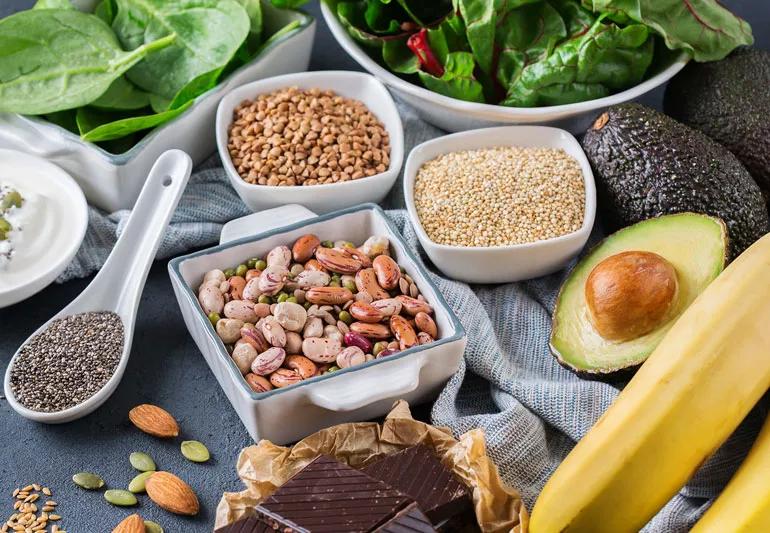
Image content: This image is available to view online.
View image online (https://assets.clevelandclinic.org/transform/2c9697e5-ae06-4535-b613-d584e5bc3c2f/magnesiumFoods-801110034-770x553_jpg)
Magnesium rich foods including bananas, nuts, avocados and chocolate
If you think back to high school chemistry, the element magnesium may vaguely conjure up memories of the periodic table. It’s used to make airplanes lighter. It’s used to make fireworks. It’s also found in a range of nutritious foods that your body uses to keep on keeping on.
Advertisement
Cleveland Clinic is a non-profit academic medical center. Advertising on our site helps support our mission. We do not endorse non-Cleveland Clinic products or services. Policy
Just as magnesium makes fireworks light up more brightly, it’s used by our bodies to liven up a range of functions. Magnesium in your body helps convert food into energy, regulates your nervous system and creates new proteins.
But researchers say about half of the U.S. population doesn’t get enough of this body-boosting nutrient.
For a lot of people, the effects of low magnesium, or magnesium deficiency, are mild and maybe not even noticeable. For others, it can be seriously detrimental to their well-being.
Naoki Umeda, MD, a specialist in integrative medicine, answers questions on what you need to know about this important mineral.
You may already be familiar with the stress-reducing and pain-relieving powers of magnesium sulfate (aka Epsom salt) in your bath. Magnesium is also recommended as a medication to combat migraines.
As a part of your diet, magnesium is important for your body’s day-to-day functions, too. The National Institutes of Health (NIH) says your body uses magnesium for a whole host of duties that keep you healthy, like:
“Ultimately, making sure your body is getting enough magnesium not only helps you maintain good health in general, it also may help you manage stress, migraines or muscle aches and pains,” Dr. Umeda says.
Advertisement
A lot of people are living with lower-than-recommended levels of magnesium. But the National Institutes of Health also says it’s not as common to have symptoms associated with inadequate magnesium levels. So, you may be low in magnesium and not even realize it.
“Magnesium deficiencies can be hard to diagnose, partly because many of the initial symptoms could indicate a wide variety of other health issues,” Dr. Umeda states. “And some people may not have any symptoms at all.”
Some of the first signs of magnesium deficiency can be:
If a magnesium deficiency goes untreated, things can get worse. Severe magnesium deficiency can result in:
It’s important to talk to a healthcare provider if you notice signs of a magnesium deficiency. They can run a blood test or check your calcium and potassium levels to help pinpoint the problem.
Certain medications and conditions may put you at a higher risk of magnesium inadequacy. (That’s what they call it when you don’t get the recommended amount of magnesium in your body, but you’re not exactly at the point of a magnesium deficiency.)
The NIH says you’re more likely to be at risk of magnesium inadequacy if you’re living with:
People over the age of 60 are also more likely to have low magnesium. As our bodies age, they become less able to absorb magnesium. Certain medications can also keep your body from absorbing magnesium.
Adult men need between 400 and 420 milligrams (mg) of magnesium each day. For women, the recommendation is 310 to 320 mg per day. Check out the magnesium content in some of your favorite foods.
Adding more magnesium into your diet is a good first step to overcoming the symptoms of a magnesium deficiency. Foods that are high in magnesium include:
This simple mango, avocado and black bean salad is a delicious way to give your magnesium levels a healthy boost. Both avocados and black beans are magnesium-rich.
Increasing your intake of vitamins and minerals should always start with a “food-first” approach. If your diet alone doesn’t do the trick, though, a magnesium supplement can help. There is a range of magnesium supplements available. Magnesium citrate is one of the most common. You’ll also find magnesium oxide, magnesium chloride, magnesium lactate and many more at your local pharmacy and online.
Advertisement
Which is right for you? Dr. Umeda says it’s a matter of personal preference. If you’re debating on a magnesium supplement, talk with a healthcare provider about which formula may be better for you.
“There’s no definitive scientific data to date that proves any one type of magnesium supplement is better than another,” he notes.
The magnesium options don’t end with a multitude of oral supplements. Magnesium has found a booming market in sprays, oils and gels. Proponents say rubbing or spraying your skin with magnesium can be as beneficial (some say even more beneficial) as ingesting it.
Dr. Umeda says the science hasn’t yet proven that to be true, though.
“There’s not enough evidence to say that topical sprays deliver magnesium to the body effectively,” he adds. “It’s better to stick with eating foods high in magnesium or use over-the-counter supplements.”
Magnesium deficiency is common, but left unchecked, it can be serious. Don’t ignore feelings of tiredness or weakness. Talk to a healthcare provider if you notice any of these signs to find out what’s behind your symptoms.
Advertisement

Sign up for our Health Essentials emails for expert guidance on nutrition, fitness, sleep, skin care and more.
Learn more about our editorial process.
Advertisement

They’re both essential minerals, but they do different jobs in your body

Magnesium is a powerhouse that helps with everything from muscle function to mental health

A healthy diet can easily meet your body’s important demands for magnesium

Despite rumors, science hasn’t shown that creatine causes hair loss

This South Pacific plant is often promoted for stress relief and relaxation, but there are a few things you should know before trying it

There’s limited research on whether the supplement can help you snooze — adopting proven sleep habits may be a better place to start

For most people, the risks outweigh the possible benefits

The compound that gives chili peppers their kick may support your health — and even help relieve certain types of pain

Managing your weight through physical activity may lower your chances of getting this common cancer

It typically starts in October and winds down in early spring, with cases at their highest in the middle of winter

Anxiety disorders, health conditions and past trauma can make driving nerve-wracking — help is available
 Search










