Locations:





This type of test can spot problems early, but it can come with tradeoffs, like false alarms, high cost and added stress
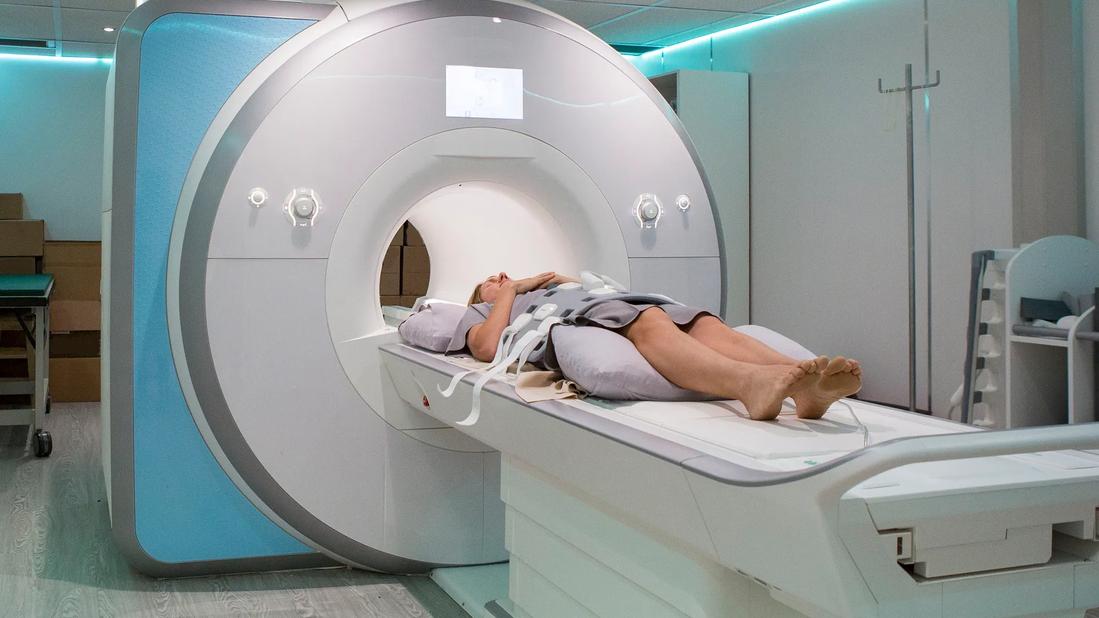
Image content: This image is available to view online.
View image online (https://assets.clevelandclinic.org/transform/6a491a7f-0bd2-46b9-89ed-d2af660f2aa4/MRI-full-body-scan-688386634)
Person lying on MRI table, ready to enter the MRI machine
Full-body MRI scans are getting a lot of attention these days as a way to check your health from head to toe. You might even hear people talk about them as a proactive step for early detection.
Advertisement
Cleveland Clinic is a non-profit academic medical center. Advertising on our site helps support our mission. We do not endorse non-Cleveland Clinic products or services. Policy
But are they actually useful, or could they just create unnecessary worry?
Concierge medicine physician Erine Erickson, MD, and neuroradiologist Sarah Stock, MD, explain what these scans can (and can’t) do and how to decide if getting one is right for you.
MRI, short for “magnetic resonance imaging,” uses strong magnets and radio waves to create detailed pictures of soft tissues inside your body. A full-body MRI looks at multiple areas of your body in one session.
“A full-body MRI is a specialized imaging study that scans from the top of your head down to your upper thighs, sometimes all the way to your feet,” Dr. Erickson explains. “Instead of focusing on just one organ or joint, it pieces together multiple regions into a single survey.”
A full-body MRI (aka whole-body MRI or total body MRI) can identify a broad range of diseases and concerns, like:
If you’re getting a full-body MRI, expect your entire appointment to take about one to one-and-a-half hours.
Advertisement
There are a few reasons why you might consider a full-body MRI. A healthcare provider can talk you through each of them so you can get a better sense of how this imaging may benefit you.
One of the biggest benefits of a full-body MRI is that it may find conditions before they cause symptoms, which may allow for earlier treatment.
“This type of image has the potential to detect disease in an earlier and possibly more treatable stage,” Dr. Stock says. “It may detect cancer before it spreads, an aneurysm before it bleeds or a narrowed artery before it causes a stroke.”
Full-body MRI isn’t currently recommended as a routine screening test for most people. But if you’re at higher risk for certain conditions, it can be a helpful surveillance tool.
“It’s most useful in select high-risk groups, like with strong cancer syndromes or family histories,” Dr. Erickson says.
Your healthcare provider may recommend a full-body MRI if you have a hereditary condition that predisposes you to developing cancer, like:
Another major benefit of full-body MRI is that, unlike a whole-body CT scan, it doesn’t involve radiation.
If you’ve been worried about developing a particular condition, the results of your full-body MRI may help you feel like you can breathe a sigh of relief.
“For certain conditions, including some cancers, a normal whole-body MRI can be very reassuring,” Dr. Erickson notes. “Still, it’s important to know that this type of imaging doesn’t rule out every disease, and very small or early findings may not appear on MRI.”
The goal of full-body MRI is early detection. But that broad approach also comes with some important limitations — ones that, again, should be discussed with a healthcare provider before you sign up.
Dr. Erickson and Dr. Stock explain some of the potential downsides.
A full-body MRI may reveal findings that, simply put, you don’t really need to know about.
“There’s a potential for ‘overdiagnosis,’ or the diagnosis of a condition that would not have gone on to cause significant symptoms or death,” Dr. Stock says. “This is a growing issue in medicine as a whole — a side effect of advances in early detection.”
Research shows that about 95% of people who undergo a full-body MRI will have at least one abnormal finding. But more than 90% of these are harmless cysts, nodules or other changes that don’t affect overall health.
Advertisement
“That means many people go through extra testing, anxiety and sometimes even biopsies for results that turn out to be harmless,” Dr. Erickson adds. “This is where having a physician who knows your health history can help put those findings into context.”
“Occasionally, MRI findings could be a false alarm, so there’s the potential for needing unnecessary procedures afterward,” Dr. Stock cautions.
Here’s an example: Full-body MRI includes specialized images to detect prostate cancer. If it finds anything suspicious, you’ll need a follow-up with a urologist. That may lead to blood testing and a biopsy.
But inflammation can sometimes lead to false positives — which means you could end up undergoing additional appointments, tests and procedures that you didn’t need.
No type of imaging is perfect, including full-body MRI. So, there’s a chance of false negatives, too.
“Some cancers and other diseases aren’t reliably detected on MRI,” Dr. Erickson explains. “A normal scan doesn’t guarantee perfect health.”
A whole-body MRI isn’t a replacement for regular appointments with your healthcare providers either. Even if your results are normal, you’ll need to keep up with recommended screenings and exams, like:
Advertisement
Findings from a full-body MRI can take an emotional toll, even when they’re minor.
“Not all ‘abnormalities’ detected by whole-body MRI are serious,” Dr. Stock reiterates. “But learning about them can still be stressful.”
Some people go in hoping for reassurance but leave with new uncertainties and follow-up appointments.
Full-body MRI screening isn’t as detailed as focused imaging of an individual joint or organ, Dr. Stock clarifies.
“If your provider recommends an imaging test for your symptoms, a tailored exam can often provide more information about the problem than a full-body exam,” she says.
Focused diagnostic exams are also more likely to be covered by insurance than a full-body MRI.
Full-body MRI isn’t recommended as a routine screening test for everyone. Avoid it if you have:
Advertisement
“Even for otherwise healthy people without specific risk factors, in some cases, the downsides may outweigh the benefits,” Dr. Erickson cautions. “Whether it adds value depends on your risk profile, family history and health goals.”
These factors are best weighed with a doctor who knows your health history.
Health insurance companies rarely cover full-body MRIs in healthy people who don’t have specific risk factors. That makes it an out-of-pocket medical expense, which can run $2,500 or more.
Ultimately, we can’t tell you whether a full-body MRI is “worth it” or not. That’s something you have to decide for yourself — hopefully, in partnership with your healthcare provider.
The answer depends largely on your personal risk and what you hope to gain. A full-body MRI may be helpful if you:
“Full-body MRI can be a powerful tool in carefully chosen circumstances, but it’s not a shortcut to perfect health,” Dr. Erickson reiterates. “Partner with your physician — especially one who follows you closely and understands your health history, family background and personal goals — to decide whether it’s right for you.”

Sign up for our Health Essentials emails for expert guidance on nutrition, fitness, sleep, skin care and more.
Learn more about our editorial process.
Advertisement

While an ultrasound shows your muscles and tendons, an MRI also shows your joint cartilage, bones and heart chambers
What to know about cardiac implants and imaging tests
CTs and MRIs use different technologies to show different things — neither is necessarily ‘better’ than the other

Researchers say components of a snail’s mucus could help hydrate your skin and prevent future wrinkles

A light touch, a little pressure and an occasional physical or chemical exfoliation can help keep your skin clean, clear and bright

Consider the severity and location of your arthritis to decide on the right support
Eyes typically increase to full size during two growth spurts in childhood

Pre-birth injections and monoclonal antibodies can help prevent serious complications
Eyes typically increase to full size during two growth spurts in childhood

To start, opt for calorie-dense foods that are rich in protein and healthy fats
Pre-birth injections and monoclonal antibodies can help prevent serious complications
 Search










