Locations:





Start with taking your medication, then move on to gentle movements and simple tasks

Image content: This image is available to view online.
View image online (https://assets.clevelandclinic.org/transform/5929a8b0-a8f4-4693-ae82-7f71e3cb1c39/morning-routine-2153393836)
Person sitting at dining room table doing a crossword puzzle
If getting ready in the morning feels like it takes longer than it used to, you’re not alone. Parkinson’s disease can make everyday activities more challenging, especially when stiffness and slowed movements are at their worst.
Advertisement
Cleveland Clinic is a non-profit academic medical center. Advertising on our site helps support our mission. We do not endorse non-Cleveland Clinic products or services. Policy
Building a routine that works for you can help make mornings less stressful and easier to manage. Psychologist Taylor Rush, PhD, shares advice on how to make the most out of your morning.
Mornings are an “off” period for many people with Parkinson’s. When your dopamine levels drop naturally overnight and yesterday’s medications wear off, symptoms tend to return or worsen.
“Many people living with Parkinson’s take their last dose of medications in the evening, usually two to four hours before going to bed,” notes Dr. Rush. “By the time they wake up, they’ve been off medications for 10 to 12 hours, and they’re met with considerably heightened symptoms.”
You might feel unable to get moving — almost like you’re stuck to the bed. Your muscles and joints may feel rigid or stiff. And you could have difficulty with early-morning tasks, like brushing your teeth or buttoning a shirt.
About 70% of people living with Parkinson’s report having early-morning off periods, with nearly half experiencing them every day.
If your symptoms are worse in the morning, Dr. Rush recommends the following strategies for managing your symptoms and improving your quality of life.
Some medications, like carbidopa and levodopa (Rytary®), can take 30 minutes to an hour to kick in. So, keep your meds by your bedside and take them as soon as you’re able.
Advertisement
It helps to take them with a full glass of water, too, because dehydration can also worsen Parkinson’s symptoms.
Don’t feel pressured to rush through your morning. Instead, try to cushion your downtime with an activity that gets your brain going while your body warms up to the medication.
“During that first hour of waking up, you don’t need to do anything that requires a whole lot of physical exertion,” advises Dr. Rush.
Consider watching the news, reading a book, putting together a puzzle or getting caught up on email — anything that helps dissolve brain fog without putting unnecessary pressure on your body.
Supporting your mental health goes a long way when you’re living with Parkinson’s.
Ground yourself in mindfulness activities, like deep-breathing exercises, meditation or even painting. The goal is to clear your head, mentally prepare you for the day, and reduce your stress and anxiety before life gets in the way.
“A chronic neurologic condition like Parkinson’s wears on you over time,” says Dr. Rush. “It helps to do things that make you feel good about yourself or make you feel less stressed.”
If you’re feeling helpless, depressed or worried about the future, consider talking with a therapist who can help.
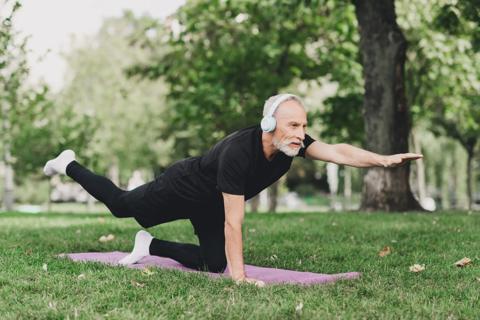
“Gently start your day with slow, controlled movements so you feel more confident later on in the day,” advises Dr. Rush. Once your symptoms start to subside and you’re ready to get moving, try:
These gentle activities help set you up for more rigorous movement in the afternoon.
“Know your body and when your best energy windows are, as they can be different for each person,” she adds. “People with Parkinson’s usually feel their best between 10 a.m. and 2 p.m. That’s the time when you may want to do more exercises or take a group class.”
Protein can disrupt your body’s ability to absorb Parkinson’s medications fully. So, it’s often best to hold off on eating breakfast for at least an hour or two after taking them.
But that may not always be possible for everyone.
“If you tend to be hungry first thing in the morning or you’re not sure what to eat, ask your healthcare provider for recommendations,” suggests Dr. Rush. “They may recommend low-protein, high-energy foods, like oatmeal or fresh fruit.”
When you’re living with Parkinson’s, mornings are often the most difficult part of the day. So, save strenuous exercises and more complicated tasks for the middle of the day when you’re feeling most energetic and able. That way, you can take your time in the morning to care for your needs and manage your symptoms.
Advertisement
“It helps to anchor your day in self-care before you move on to other things,” encourages Dr. Rush.
“Taking the morning to care for your needs and manage your symptoms will help you feel more confident for the rest of the day.”
Advertisement

Sign up for our Health Essentials emails for expert guidance on nutrition, fitness, sleep, skin care and more.
Learn more about our editorial process.
Advertisement
Aerobic, strength training, flexibility and balance exercises are all important parts of maintaining movement

Speech therapy can help you communicate clearly, swallow safely and maintain important skills

Eat fruits, vegetables, legumes, whole grains, lean proteins and healthy fats to help manage symptoms of this degenerative brain condition

Poor air quality, pesticides and chemicals — along with genetic factors — can increase your risk of this brain condition

While depression and anxiety are common and can worsen other symptoms, focusing on your emotional health can help

Why seeing a neurologist can save you time and money
Yes, there is a connection between this injury and disease, and not just for athletes who play high-impact sports

Consider the severity and location of your arthritis to decide on the right support

Managing your weight through physical activity may lower your chances of getting this common cancer

It typically starts in October and winds down in early spring, with cases at their highest in the middle of winter

Anxiety disorders, health conditions and past trauma can make driving nerve-wracking — help is available
 Search










