Locations:





Aerobic, strength training, flexibility and balance exercises are all important parts of maintaining movement
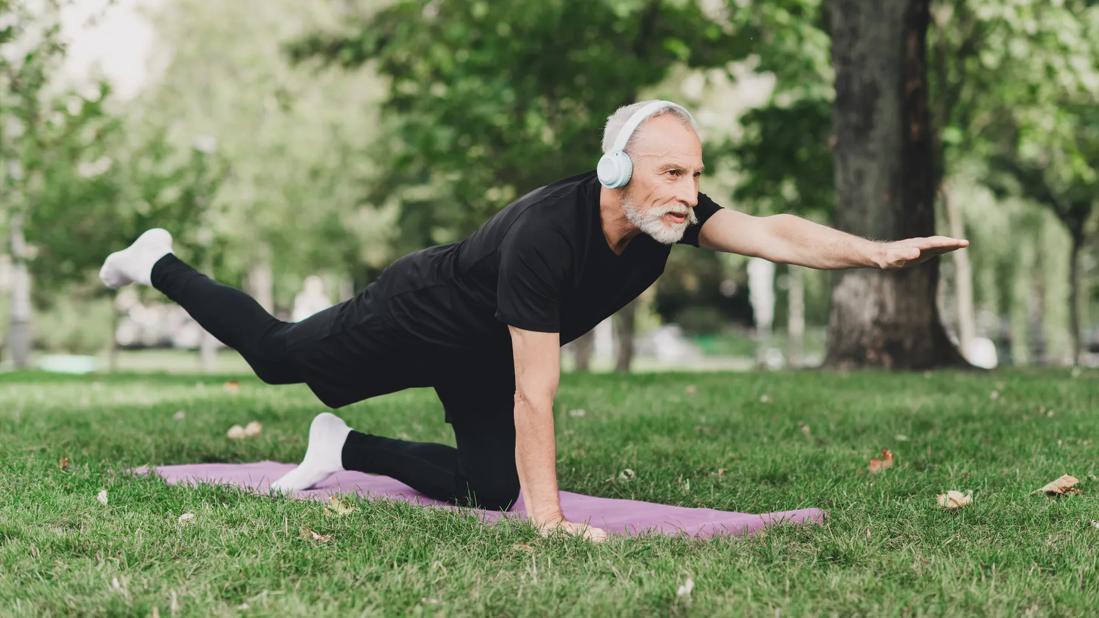
Image content: This image is available to view online.
View image online (https://assets.clevelandclinic.org/transform/fb010368-25e8-416c-8313-5f441c4fcfed/exercise-for-parkinsons-2268287573)
Older person doing dog bird yoga pose on exercise mat outside
If you’re living with Parkinson’s disease, exercise is a very important part of managing your symptoms and maintaining your independence. In fact, medication combined with Parkinson’s-specific exercises is your best tool to prevent progression of the disease.
Advertisement
Cleveland Clinic is a non-profit academic medical center. Advertising on our site helps support our mission. We do not endorse non-Cleveland Clinic products or services. Policy
Research supports that regular physical activity can help improve your walking, balance and strength. Exercise can even have neuroprotective benefits for your brain.
Neurologic physical therapist Amy Chan, PT, DPT, NCS, explains which exercises matter most and how to build a routine that works for you.
Parkinson’s causes a significant drop in dopamine, which is essential for performing smooth, coordinated movements. When dopamine declines, motor symptoms like stiffness, slower movement, poor posture, and balancing problems become more common.
Moderate-to-high intensity exercise can increase the amount of dopamine available in your nervous system.
“Exercise also helps improve non-motor symptoms like depression, difficulty sleeping, brain fog and other cognitive issues,” says Dr. Chan. “These are all areas that are affected by Parkinson’s, and the non-motor symptoms can greatly affect your quality of life.”
Research also suggests that exercise at a moderate or vigorous intensity may help your brain adapt and form new connections.
“In the last 20 years, we’ve learned that if you consistently do the right exercises, it can have this neuro-protective benefit,” she adds. “It causes your nervous system to change and possibly slow down the progression of Parkinson’s disease.”
Advertisement
Scientists continue to study whether exercise can reverse the effects of Parkinson’s. But there’s strong evidence that when it’s paired with medication, it can improve your quality of life.
“The earlier you start exercising, the more brain cells you can protect,” says Dr. Chan.
With Parkinson’s disease, aim for a well-rounded workout routine that includes four main types of exercise:
“When it comes to exercise, the most important thing is to have a well-rounded routine that you can do safely and consistently,” says Dr. Chan. “Having a daily routine can really make a difference.”
If you’re not sure where to start, a physical therapist can help create a plan that incorporates aerobic exercises and other physical activities. They may suggest some of the following, which can help improve the way you move and how you tackle everyday activities.
“When we work on flexibility exercises, we focus a lot on the extension and rotation of your trunk,” says Dr. Chan. “Trunk rotation helps improve your flexibility and strengthen your muscles so you can sit up straight and feel less stiff when you’re turning or picking something up.”
Your abdominal and back muscles play an important role in everyday tasks like bending over, getting in and out of bed and standing up from a chair. Functional exercises like sit-to-stands help ease those processes by strengthening your lower body.
Advertisement
Squats help strengthen major muscle groups, from your core and back to your glutes and hamstrings. These muscles help perform a variety of everyday movements — and this variation, designed specifically for people with Parkinson’s, also helps with posture.
This exercise works out your core and hip strength. You’ll be down on the floor for this one, so make sure you use a yoga mat, pillow or other soft surface beneath your knees.
Advertisement
Planks are another core total body workout. A strong core supports posture, balance and mobility.
Building a consistent routine is just as important as choosing the right exercises. Dr. Chan recommends these tips:
Advertisement
Most importantly, don’t wait until your Parkinson’s symptoms become severe to start exercising. The earlier you start a physical fitness routine, the more muscle and strength you preserve.
And remember: If something ever feels wrong or you experience pain while working out, stop what you’re doing and ask a professional for guidance.
“Everyone with Parkinson’s should have a physical therapy evaluation,” advises Dr. Chan. “That way you can learn how to exercise safely and stay ahead of the game.”

Sign up for our Health Essentials emails for expert guidance on nutrition, fitness, sleep, skin care and more.
Learn more about our editorial process.
Advertisement

Start with taking your medication, then move on to gentle movements and simple tasks

Speech therapy can help you communicate clearly, swallow safely and maintain important skills

Eat fruits, vegetables, legumes, whole grains, lean proteins and healthy fats to help manage symptoms of this degenerative brain condition

Poor air quality, pesticides and chemicals — along with genetic factors — can increase your risk of this brain condition

While depression and anxiety are common and can worsen other symptoms, focusing on your emotional health can help

Why seeing a neurologist can save you time and money

Managing your weight through physical activity may lower your chances of getting this common cancer

Physical activity, even a couple times a week, can potentially benefit your sex life and overall health over time
Managing your weight through physical activity may lower your chances of getting this common cancer

It typically starts in October and winds down in early spring, with cases at their highest in the middle of winter

Anxiety disorders, health conditions and past trauma can make driving nerve-wracking — help is available
 Search










