Locations:





 Search
Mentally going to a peaceful place can ease stress and boost your health
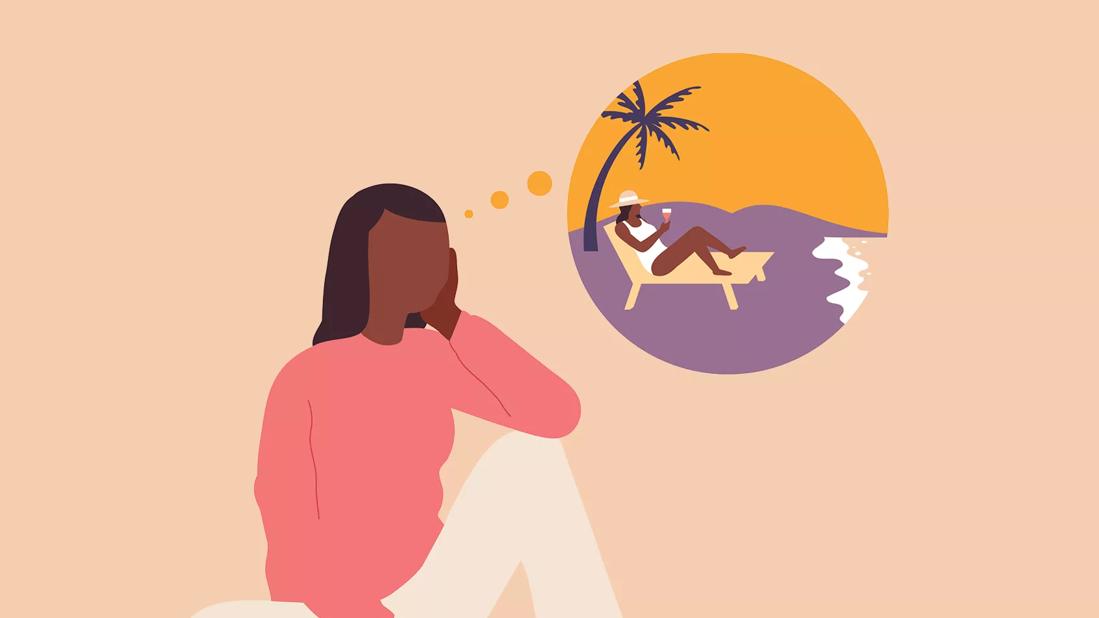
Want to get away? Doing so can be as easy as closing your eyes and using “guided imagery” to take you to a place where there’s no room for the frustrations of daily life.
Advertisement
Cleveland Clinic is a non-profit academic medical center. Advertising on our site helps support our mission. We do not endorse non-Cleveland Clinic products or services. Policy
The concept is simple: Imagine a peaceful place — a sun-soaked beach, for instance — and then mentally transport yourself to the tranquil setting. The idea is to build a sense of calm and ease tension to lift your mood.
Ahhhhh… Sounds good, right? So, let’s find our way there with the help of health psychologist Grace Tworek, PsyD.
Guided imagery is a relaxation technique designed to reduce stress. “We deal with so many stressors in life — and these stressors can result in negative effects on our overall health,” says Dr. Tworek.
Physical and emotional signs of stress can include high blood pressure, exhaustion, depression and many more symptoms that take a toll on your body.
Dr. Tworek compared managing stress to setting the temperature in your home.
“Think of stress as making your body run hot,” explains Dr. Tworek. “When we learn to relax through mental exercises like guided imagery, it’s like turning on the AC to bring that temperature down.
“It sets the thermostat to make you more comfortable and — with practice — allows your body to learn to regulate itself.”
It starts with directing your thoughts toward a special place. Maybe it’s a beach, a forest path or a bench along a quiet walkway. Whatever it may be, close your eyes and build the scene in your mind.
Advertisement
Focus on your senses, working through them one by one. What might you see? Do you hear noises? Is there a scent in the air? Can you feel the breeze on your skin?
“It’s about immersing yourself and focusing on specific details,” says Dr. Tworek.
Many people start their guided imagery journey with a voiced script that asks questions to help build the framework of your setting. (A quick Google search can provide a host of resources.) Therapists can assist in setting and personalizing the scene, too.
The more you do the exercise, the less you may need a script or outside assistance.
“Once you practice it regularly, your brain may start to fully form the scene without the prompts,” notes Dr. Tworek. “It becomes easier to return back on your own when you need to.”
By mentally removing yourself from a stressful situation, guided imagery can bring immediate results. Expect your breaths per minute to decrease as you enter a state of calm. Your heart rate might also dial it down a few notches.
Frequent practice can help make this exercise effective during stressful moments, as well.
“When you’re able to slow things down physiologically, it helps your mood,” says Dr. Tworek. “Life just feels better.”
That can also lead to the following boosts:
Dragging the stress of your day to bed is a surefire way to lie awake at night. Guided imagery can help you detach from those worries to catch some ZZZs. “Removing yourself from stressful thoughts can promote the relaxation you need to fall asleep,” notes Dr. Tworek.
A key tip: If you’re still awake in bed after 20 minutes, try going to a different room for a guided imagery session. Returning once you’re in a more relaxed state may make it easier to doze off.
Guided imagery can help you disconnect from physical pain. “By bringing in pleasant mental images, it’s sometimes possible to decrease feelings of pain,” says Dr. Tworek. “You bring your mind to a better moment, meaning you’re less focused on your pain.”
One study even indicated that guided imagery could be an effective tool to significantly reduce pain intensity in those who have cancer.
Negative thoughts often fuel depression and anxiety, so going to a positive place in your mind can help counteract those feelings.
So, what’s the best way to get started on a guided imagery expedition? Here are a few tips:
Advertisement
Anyone who has stress could benefit from guided imagery — so that basically covers pretty much everyone on the planet.
“We all experience stress one way or another, and finding ways to manage that is beneficial,” says Dr. Tworek. “It’s important to allow yourself the time to relax. We all need that mental break. Make sure you take it.”
Advertisement
Learn more about our editorial process.
Advertisement

Breathing, exercise, mindfulness and more can help you unwind and step away from your stress

From breath meditation to yoga nidra, all types of meditation aim to help you feel calmer, more relaxed and present
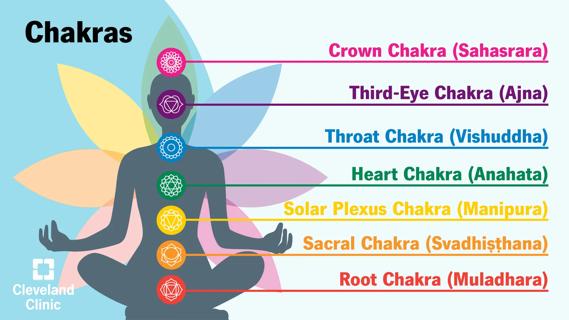
Different types of yoga poses, meditation and breathwork may help you feel more emotionally balanced
Sensory deprivation therapy can help relieve stress, improve sleep and decrease physical pain
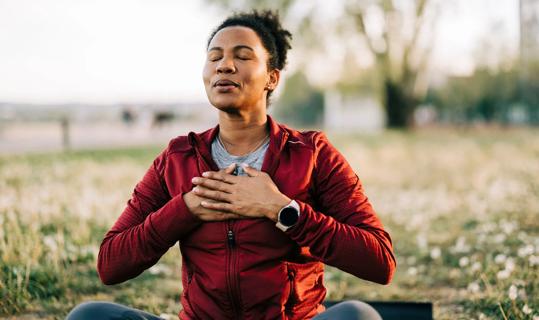
You don’t need to have years of experience to reap the rewards of meditation — with benefits for your whole body, you only need a couple minutes to get started

While walking, be mindful of your body, your mind, your place in the world and all five of your senses as you pave a path forward, one step at a time

Thunder, waterfalls and heavy rain — these low-frequency sounds might help cancel out disruptive noises and thoughts

Immersing yourself in nature can improve both your mental and physical health

Wearing a scarf, adjusting your outdoor activities and following your asthma treatment plan can help limit breathing problems
Your diet in the weeks, days and hours ahead of your race can power you to the finish line

When someone guilt trips you, they’re using emotionally manipulative behavior to try to get you to act a certain way











