Locations:


Hand sanitizer is a good option when you’re on the go, but it shouldn’t replace soap and water as your primary means of keeping your hands clean
You already know the importance of handwashing: It helps kill germs and prevents the spread of infections. But can hand sanitizer do the same thing? And if so, how well?
Advertisement
Cleveland Clinic is a non-profit academic medical center. Advertising on our site helps support our mission. We do not endorse non-Cleveland Clinic products or services. Policy
Family medicine physician Charles Garven, MD, explains the benefits and drawbacks of hand sanitizer and why washing your hands with soap and water is the more effective way to get clean.
The active ingredient in hand sanitizer is ethyl alcohol or isopropyl (rubbing) alcohol. These ingredients kill bacteria and viruses by dissolving their protein layer.
But the ingredient alone isn’t enough: It also needs to be the right strength. Check the label to see if it contains at least 60% ethyl alcohol or 70% isopropyl alcohol.
“The alcohol content has to be high enough to kill bacteria and viruses,” Dr. Garven says. “If the alcohol isn’t the right strength, the product won’t disinfect.”
Hand sanitizer works differently from soap and water to support hand hygiene.
“Hand sanitizer can chemically kill certain germs, but soap and water physically remove germs and harmful substances from your hands,” Dr. Garven explains.
But what does that actually mean? Let’s take a closer look at hand sanitizer’s limitations.
You might’ve noticed that hand sanitizer labels say they kill “99.9% of germs.” This is because they don’t have the power to kill some nasty bugs like Clostridioides difficile (C. diff) and norovirus.
Advertisement
“Washing your hands thoroughly removes all types of germs,” Dr. Garven states. “Hand sanitizer can’t do that.”
When you wash your hands, soap helps loosen dirt, grime, grease and germs from your skin so the water can rinse them off. But hand sanitizers can’t do that — because they don’t physically wash anything away.
That means hand sanitizers can’t get rid of:
“Hand sanitizers with at least 60% alcohol can effectively kill certain types of germs,” Dr. Garven says. “But soap and water are more effective than hand sanitizers at removing germs from your hands.”
Have you ever used hand sanitizer a few times in a row and noticed a buildup or film on your hands? When that happens, head to the sink and grab some soap, stat.
“Hand sanitizers create a film on your hands,” Dr. Garven explains. “After you’ve used it a few times, that film gets thick enough that it can actually trap germs inside, rather than kill them.”
When your hands feel coated or like there’s a residue, it’s time to wash off that film and start over.
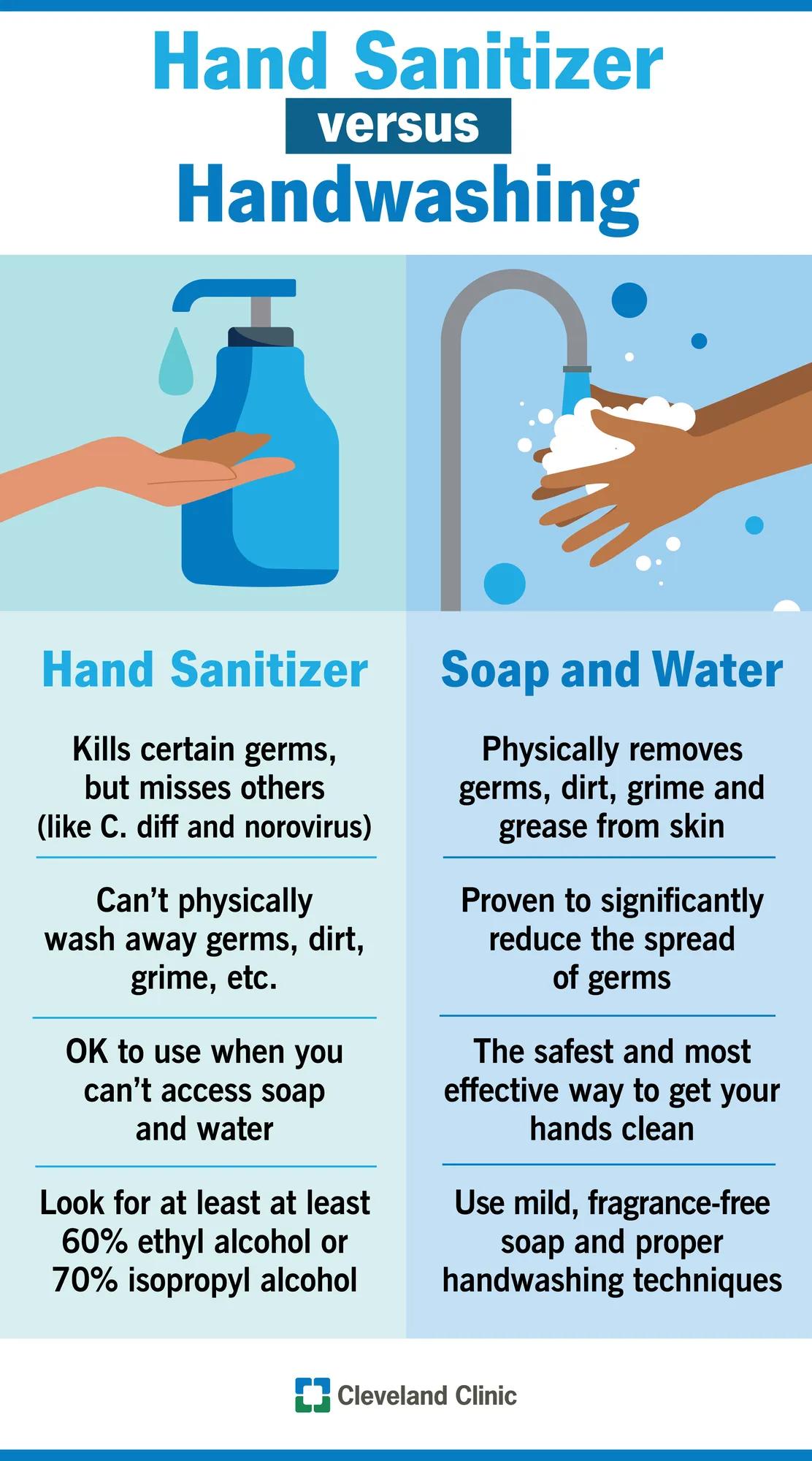
Image content: This image is available to view online.
View image online (https://assets.clevelandclinic.org/transform/c6bce1c5-24d9-4cc6-8f8c-60ff3a3c9743/HandSanitizerVsWashingHands-infographic-800x1439)
If you’re on the go and don’t have access to soap and water, hand sanitizer is certainly better than nothing.
“It’s a safe and effective means of killing germs,” Dr. Garven acknowledges. “But whenever possible, you should opt for old-fashioned handwashing.”
Advertisement
The U.S. Centers for Disease Control and Prevention (CDC) reports that regular handwashing can help reduce the spread of germs by up to 21%. You should wash your hands when:
“When given the choice, always use mild, fragrance-free cleansers to wash your hands,” Dr. Garven advises. “These soaps are gentler than hand sanitizer. They’re also more effective, as long as you use proper handwashing techniques.”
There’s no harm in keeping a hand sanitizer in your purse or car. It certainly has its place in the toolbox of ways to stay clean and protect yourself (and those around you) from germs. But soap and water do the trick even better — so handwashing should be your consistent, go-to method of cleaning your hands whenever it’s an option.
“If the COVID-19 pandemic taught us anything, it’s that there are all kinds of germs on surfaces, including the flu, respiratory viruses and bacteria,” Dr. Garven says. “It’s an important habit that we should all be keeping up with.
Advertisement

Sign up for our Health Essentials emails for expert guidance on nutrition, fitness, sleep, skin care and more.
Learn more about our editorial process.
Advertisement
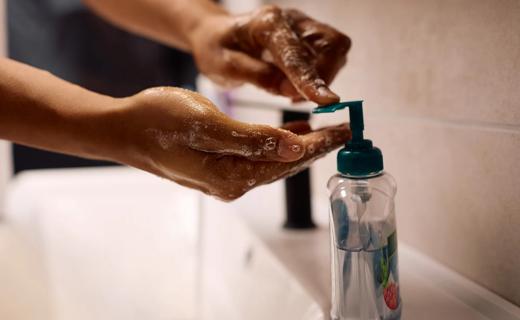
Antibacterial soap hasn’t been shown to be any more effective at killing germs than regular soap and water

Your dollar bills, coins and cards are covered in germs — but they’re very unlikely to make you sick
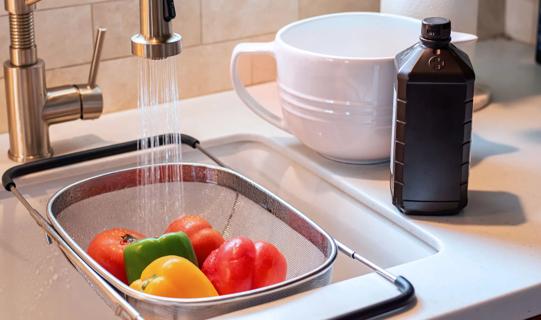
It’s a great disinfectant for around your home, but not for your skin

Bathing once a day is the general guidance, but you could also have reasons to soap up twice a day or not at all
You’re sharing your sheets with dust mites, bacteria and lots of dead skin, so you’ll want to keep your bedding fresh
You may notice itching, redness and swelling after wearing or using laundered items
An icy blast may boost mental clarity, increase circulation and give your skin a little glow — but don’t overdo it

Researchers found potentially harmful germs on 95% of wristbands

A combination of lifestyle and health factors may be behind the trend

The plant-based milk option is low in calories and high in heart-healthy fats
Some birth control methods — and how you use them — may lighten or stop your period
 Search