Locations:





 Search
Get a gait analysis and look for adequate cushioning and support before hitting the pavement

Image content: This image is available to view online.
View image online (https://assets.clevelandclinic.org/transform/52719708-a529-42fc-8a5b-8d4f9cd31879/shopping-running-shoe-1349072033)
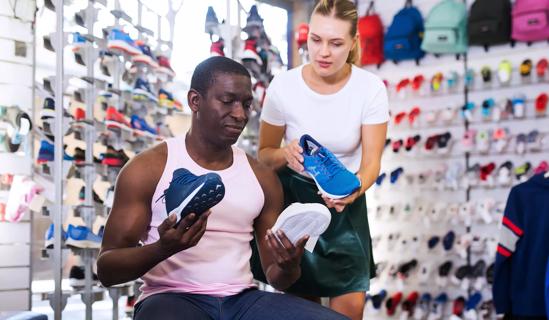
Person looking over a new running shoe in a store
Choosing the right running shoe isn’t just about style or brand loyalty: It directly impacts performance, comfort and injury prevention.
Advertisement
Cleveland Clinic is a non-profit academic medical center. Advertising on our site helps support our mission. We do not endorse non-Cleveland Clinic products or services. Policy
The wrong shoe could lead to plantar fasciitis, tendonitis, stress fractures and joint pain. But the right shoe will support how your foot strikes the ground, how your arch functions and how your joints absorb impact as you rack up the miles.
Whether you’re training for a marathon or walking around your neighborhood, podiatrist Christina Schilero, DPM, explains what to look for when you’re on the hunt for the best running shoes.
When shopping for the best running shoes, it helps to focus on fit, gait, cushioning and terrain.
Based on these criteria, a well-fitted running shoe can:
“When footwear aligns with your natural way of walking, your body works smarter, not harder,” says Dr. Schilero. “When a running shoe doesn’t match how your foot moves, it can change how your body absorbs impact with every step.”
It helps to visit a specialty running store where professionals can give recommendations. You may also want to:
Advertisement
Here’s how fit, gait cushioning and terrain features pay off.
The best running shoes should feel immediately comfortable. When choosing a new running shoe, use these tips for fit and comfort:
Fit is just one piece of the puzzle — your gait matters, too.
A gait analysis is a simple running test that evaluates your running form and how your foot strikes the ground when you move.
“Flat feet, high arches and flexible arches all load differently,” says Dr. Schilero. “Even a simple in-store treadmill assessment can provide helpful insight into the kind of running shoe that best fits your feet.”
Some runners benefit from stability features that help control excessive inward rolling (overpronation). Others with neutral gait patterns do best in neutral shoes.
If you’re not sure what best supports your feet, get a gait analysis and ask to try on different styles to see what feels comfortable for you.
Other features to look for include:
This feature refers to the height difference between your heel and the front of your foot. Higher-drop running shoes are more comfortable for heel strikers, while lower-drop shoes encourage midfoot and forefoot strikes.
“Switching drop levels abruptly can strain your Achilles tendon or calf, so transitions in height should be gradual,” notes Dr. Schilero.
Your shoes should feel comfortable right away — more like a firm handshake and less like a squeeze. It helps to have:
“Toe box space is critical,” says Dr. Schilero. “Cramped toes can lead to black nails, blisters and nerve irritation.”
Think of cushioning like a shock absorber in your core. More isn’t always better for you — it depends on your stride and your overall running goals.
Dr. Schilero suggests the following for different running styles:
Advertisement
Where you run matters, too. You want to match the outsole of your running shoes to your environment. Dr. Schilero recommends:
Remember, the best running shoes should feel comfortable right off the rip. They shouldn’t need weeks of painful break-in. That said, your body may need time to adapt, especially if you’re switching styles, cushioning levels or heel drops. To help that process, try:
“If discomfort persists beyond mild muscle soreness, reassess the fit or model of your running shoe,” advises Dr. Schilero.
Whatever you choose should stand some serious distances, at least for a little while. Most running shoes last about 300 to 500 miles, depending on weight, terrain and running styles.
You know you need a new running shoe when you have:
As long as your new running shoes fit comfortably and support your natural movement across different environments, you’ll be ready to run in no time.
Advertisement

Sign up for our Health Essentials emails for expert guidance on nutrition, fitness, sleep, skin care and more.
Learn more about our editorial process.
Advertisement
Look for good cushioning, sturdy arch support and quality material
Leaving footwear on invites germs, bacteria, toxins and other unwanted guests into your home
If they don’t fit well in the store, they won’t fit any better at home
One thing is for sure: This footwear definitely kicks up controversy
The years can literally reshape your feet
Dulling feeling in your feet could cause problems
The lack of arch support in the popular footwear can lead to numerous aches and pains
Choose fit and function over fashion

This ‘harm reduction’ approach to sobriety involves subbing one substance for another — a method that isn’t backed by research
Educate your child about body image, expectations and skin care first

A true chlorine allergy is extremely rare — it’s far more likely that you have a damaged skin barrier











