Locations:





New research may shed some light on the debated topic
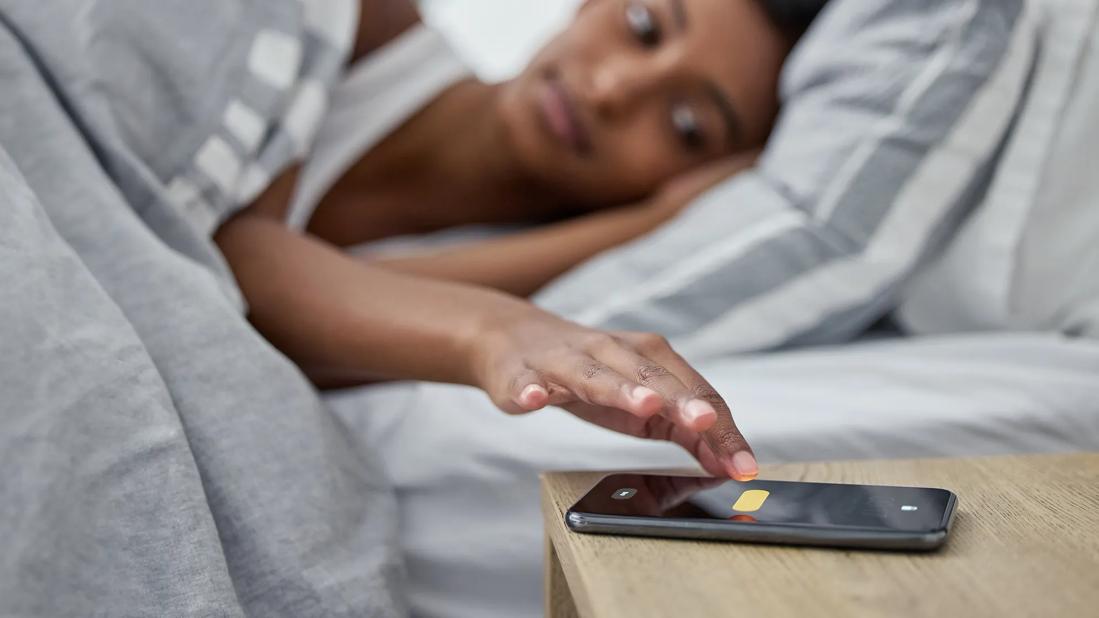
Image content: This image is available to view online.
View image online (https://assets.clevelandclinic.org/transform/2fe69a31-317a-408a-9178-f8a0f3b5a94a/alarm-snooze-1346209084-r)
Person in bed hitting snooze on their cell phone
You stayed up a wee bit too late (again) binge-watching Yellowstone. Or perhaps your 18-month-old was crying at 2 a.m. … and again at 3:45 a.m. Whatever the reason, there are times when hitting that snooze button is awfully tempting.
Advertisement
Cleveland Clinic is a non-profit academic medical center. Advertising on our site helps support our mission. We do not endorse non-Cleveland Clinic products or services. Policy
There’s a good chance you’ve heard that the snooze button is bad for you and getting quality sleep.
But new research has been receiving a lot of attention for suggesting snoozing that alarm may not have that much of an impact on sleep quality.
So, is snoozing bad for you?
As with many situations in life, the answer isn’t so straightforward, says behavioral sleep medicine psychologist Alicia Roth, PhD. Dr. Roth discusses what this new research shows.
Dr. Roth says that a sleep routine that works for one person may not work as well for others.
So, what does this newer research show?
She adds that it’s important to note that these are preliminary studies with a low sample size.
“That makes it hard to generalize what’s right for everyone,” Dr. Roth stresses. “What we suggest clinically in the real world is to try to minimize snoozing. The research may show that it doesn’t hurt people, but it certainly doesn’t help.”
Advertisement
One thing to consider with using the snooze button is that it may not help your body get the restorative sleep you need.
“Much of the latter part of our sleep cycle is comprised of REM sleep, or dream sleep, which is a restorative sleep state,” Dr. Roth explains. “And so, if you’re hitting snooze, then you’re disrupting that REM sleep.”
We all have different arousal thresholds during different stages of sleep, and if we’re disrupting late-stage REM sleep, it can cause a “fight-or-flight” response, which increases our blood pressure and heartbeat.
In fact, many people mistakenly think they can operate on fewer than seven hours of sleep per night. But research shows that over time, insufficient sleep contributes to weight gain, cardiovascular risk and even death.
Another consideration? While some people can get conditioned to hitting snooze and actually get used to it, Dr. Roth says if a person feels the need to do so again and again, it could be an indicator that they’re either not getting enough sleep or they might have an underlying sleep disorder such as obstructive sleep apnea or chronic insomnia.
When it comes to snoozing, healthcare professionals can’t make a blanket statement or offers absolute truths. For some of us, snoozing may work.
So, if you tend to hit snooze and feel fine, then Dr. Roth says there’s really no need to change your habits.
But if you find yourself hitting snooze every day and feel like you’re not getting quality sleep, she says then it’s time to look at your sleep habits.
“The evidence is clearer on the cons of snoozing, especially those for sleep who have sleep disorders,” emphasizes Dr. Roth.
Advertisement

Sign up for our Health Essentials emails for expert guidance on nutrition, fitness, sleep, skin care and more.
Learn more about our editorial process.
Advertisement
Nocturnal emissions are a natural part of growing up and nothing to worry about

There’s limited research on whether the supplement can help you snooze — adopting proven sleep habits may be a better place to start
Head to bed in a bra to reduce breast pain, nipple irritation and stretch marks

These brief episodes of sleep last only seconds, but they can have serious consequences when they happen at the wrong time

Your chronotype reflects when your body naturally wants to sleep and wake — and why your energy peaks when it does

Putting on socks at night can help regulate your core body temperature to bring on ZZZs
The term refers to how long it takes you to fall asleep, which can be a key factor in overall sleep quality

A little ‘prep work’ before going to bed can help you get the quality sleep your body needs

Hormonal changes, a slower metabolism and muscle loss can make weight gain more common around menopause — healthy habits can help you manage it

Life-threatening complications include sepsis, stroke, pneumonia and more
Fruity-smelling breath can happen when your body burns fat for energy, and in some cases, can signal a medical emergency
 Search










