Locations:





Using a familiar song can help you time chest compressions to do the work of a stopped heart
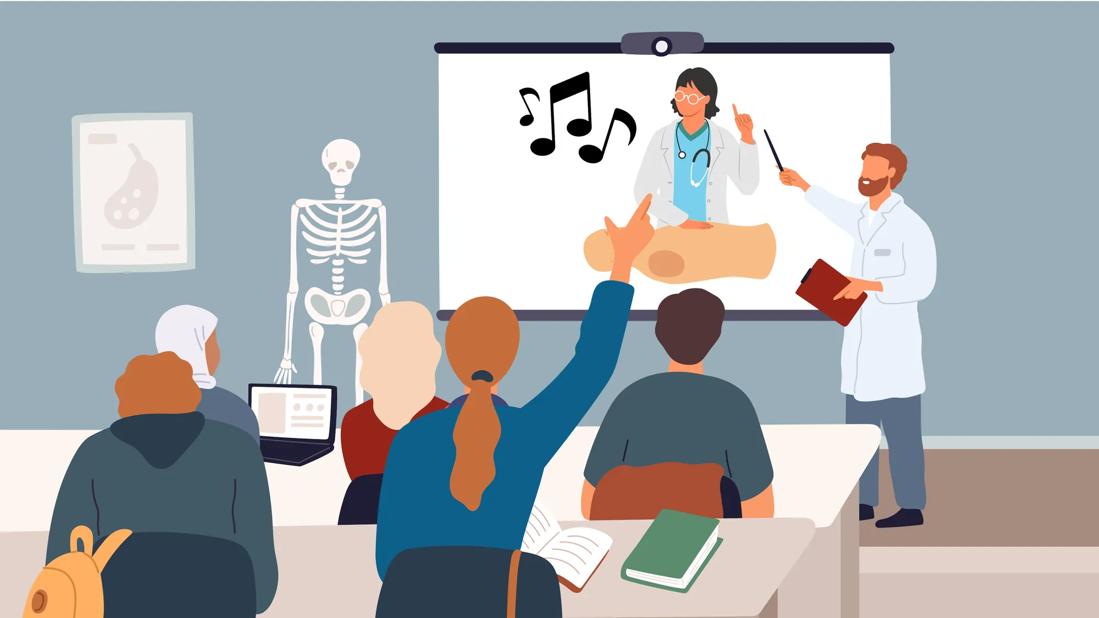
Image content: This image is available to view online.
View image online (https://assets.clevelandclinic.org/transform/ee14e0c6-9889-4c99-94e2-de4007713966/cpr-song-2162495721)
Healthcare provider leading a CPR class, instructing how to do the CPR song
It’s said that music moves the heart. Sometimes, it can be in a lifesaving way.
Advertisement
Cleveland Clinic is a non-profit academic medical center. Advertising on our site helps support our mission. We do not endorse non-Cleveland Clinic products or services. Policy
Certain tunes match the rhythm recommended for CPR (cardiopulmonary resuscitation). The beats of these “CPR songs” offer a helpful way to time chest compressions to manually pump a stopped heart in cardiac arrest.
We asked cardiologist Ashish Sarraju, MD, to put together a playlist and explain why CPR songs work so well.
One of the most important parts of CPR is performing chest compressions at a certain pace. The right tempo helps circulate blood to the brain and other vital organs until a person’s heart can be restarted after cardiac arrest.
Current guidelines recommend delivering CPR at a rate of 100 to 120 compressions per minute. The well-timed beats of CPR songs fall into that range.
“When you’re doing CPR, you don’t want to go too slow and you don’t want to go too fast,” says Dr. Sarraju. “A song can provide auditory guidance to help you find the right rhythm.”
Many popular tunes fall within the recommended CPR tempo of 100 to 120 beats per minute (bpm). The classic CPR song? That would be “Stayin' Alive” by the Bee Gees, which delivers both the desired bpm (103) and message.
But if ‘70s disco isn’t your jam, there’s no shortage of heart-pumping choices covering many genres.
Advertisement
The American Heart Association has a public playlist called Don’t Drop The Beat that includes more than 250 tunes. Each song features a rhythm between 100 and 120 bpm. Aside from the Bee Gees hit, the wide-ranging playlist includes:
Though you may have a favorite from the list, the specific song matters less than keeping the beat. Any tune that helps you maintain the recommended compression rate can serve as your mental metronome.
During a cardiac emergency, it’s easy for adrenaline to take over. Some people naturally speed up. Others slow down without realizing it.
Having a familiar song in your head can help you maintain a steady rhythm throughout CPR. (It should be noted that research shows we remember music — particularly its tempo — with amazing clarity.)
“The goal is long-term retention,” emphasizes Dr. Sarraju. “If you can mentally recall the beat, it helps you keep your compressions at the recommended pace during what can be a stressful situation.”
Music should be a memory aid — not a distraction. Dr. Sarraju recommends:
Keeping the song in your head: Mentally recalling the rhythm or humming along is enough. You don’t need to blast the tune. CPR situations require communication, like talking with emergency dispatchers. You don’t want distracting external sounds.
Focusing on compression quality, not just speed: The rhythm helps with timing, but you still need to push hard enough and allow the chest to fully recoil between compressions. Each compression should be about 2 inches deep.
Staying fresh: Doing CPR can be tiring, and fatigue can reduce the quality of compressions even if they’re backed by the power of music. If possible, switch rescuers every two minutes.
If someone experiences cardiac arrest outside of a hospital, research shows that CPR dramatically improves their chances of survival. The sooner chest compressions start, the better, too.
“For every minute a person goes without CPR, the chance of survival decreases by about 7% to 10%,” reports Dr. Sarraju.
Advertisement
And while remembering a song can help you keep the right rhythm to do CPR, it’s no substitute for proper training. Dr. Sarraju encourages everyone to take a course to learn how to do chest compressions.
“If you’ve never taken a CPR class, it’s worth doing,” he advocates. “Knowing what to do in those first few minutes could make all the difference while you’re waiting for emergency medical services to arrive.”
Advertisement

Sign up for our Health Essentials emails for expert guidance on nutrition, fitness, sleep, skin care and more.
Learn more about our editorial process.
Advertisement

Coughing away a heart attack could delay medical help

Different medications can help manage different aspects of this condition

Finding a dentist you trust, establishing stop signals and bringing a support person can help you feel more comfortable

Fainting or nearly fainting with exertion are red flags worth taking seriously — but sometimes family history is the only clue

Anything that raises your heart rate or causes dehydration can worsen obstruction, leading to symptoms
While the ADHD medications are similar, some differences may make one more effective for you than the other

Anxiety disorders, health conditions and past trauma can make driving nerve-wracking — help is available

It typically starts in October and winds down in early spring, with cases at their highest in the middle of winter

Hormonal changes, a slower metabolism and muscle loss can make weight gain more common around menopause — healthy habits can help you manage it

Life-threatening complications include sepsis, stroke, pneumonia and more

Fruity-smelling breath can happen when your body burns fat for energy, and in some cases, can signal a medical emergency
 Search










