Locations:
Search IconSearch

What Can You Eat After Wisdom Teeth Surgery?

Building meals around soft and easy-to-swallow foods can help the healing

In the days after wisdom teeth surgery, every meal comes with a bit of a risk assessment. Food you normally eat without a second thought can suddenly seem questionable, given your sore mouth.

Advertisement

Cleveland Clinic is a non-profit academic medical center. Advertising on our site helps support our mission. We do not endorse non-Cleveland Clinic products or services. Policy

So, what can be on your plate? Let’s set a menu with the help of oral and maxillofacial surgeon Alan Martinez Lopez, DDS.
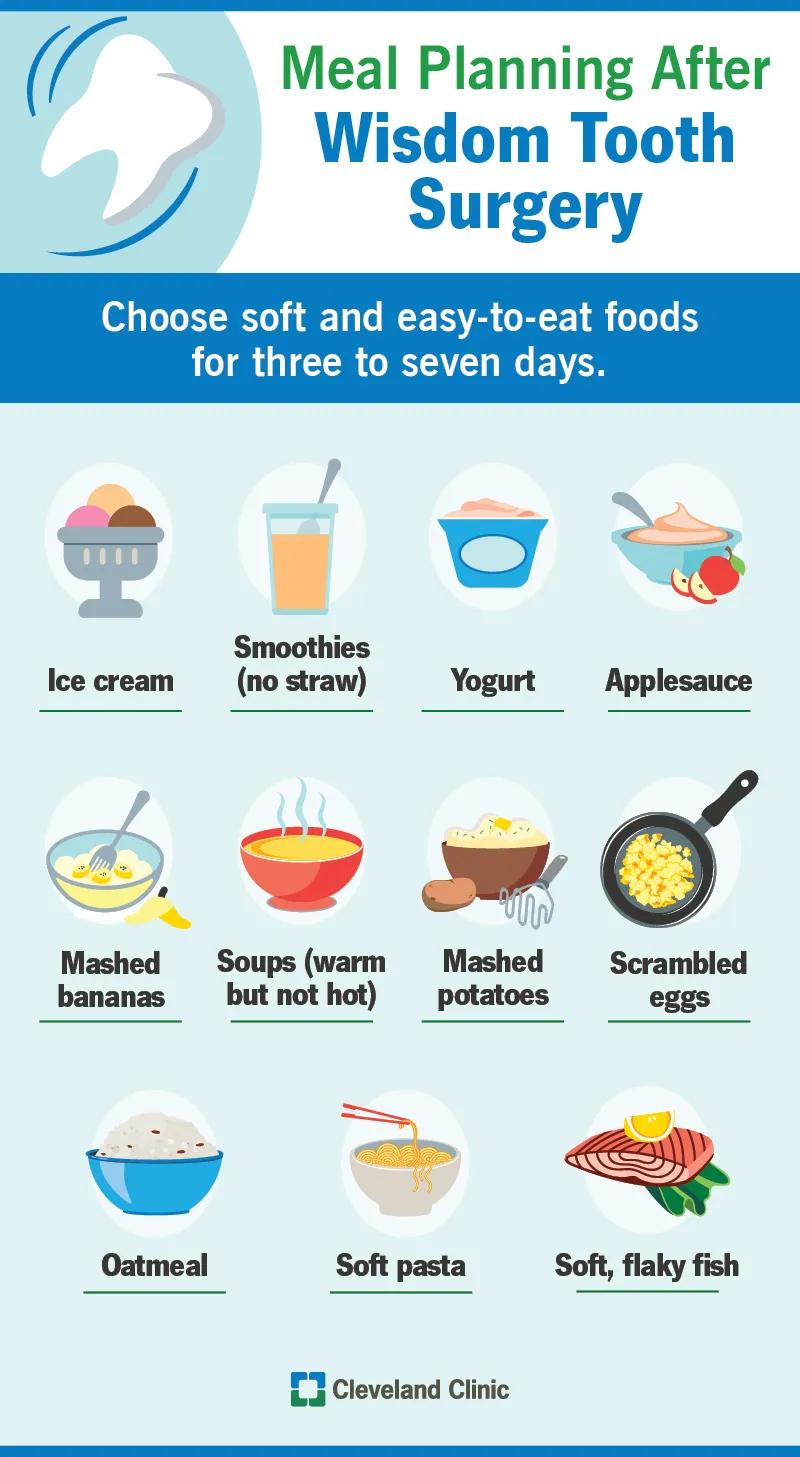
Foods to eat after wisdom tooth surgery, like applesauce and scrambled eggs

Best foods to eat after wisdom teeth removal

Meals should focus on easy-to-eat foods for three to seven days after wisdom teeth removal. That means soft and smooth foods that require little to no chewing, says Dr. Martinez. Lukewarm or even cool dishes are better options, too.

Choosing foods that check these boxes will help you avoid irritating the tooth extraction sites, which can slow recovery and lead to complications like dry socket.

The right foods can also make eating more comfortable — a definite plus after teeth extraction.

The following foods should be easy to swallow while also delivering nutrients and calories your body needs during recovery. The list starts with the softest foods and builds toward choices that may be better tolerated after a few days.

  • Ice cream: Let’s start with the fun stuff! (You did just have surgery, after all.) A scoop of creamy ice cream can help soothe mouth discomfort. But keep to basic ice cream, and avoid varieties with crunchy or ooey-gooey add-ins.
  • Smoothies: A blended smoothie walks the line between liquid and solid, which is perfect after surgery. Plus, it can be made nutrient-dense with your favorite ingredients. Eat it with a spoon, as sucking through a straw is a no-no. (More on that later.)
  • Yogurt: No chewing required! Plus, yogurt is cool enough to ease pain in your gums. Again, no crunchy add-ins.
  • Applesauce: The smooth texture of applesauce makes it a go-to food after your wisdom teeth come out. (As you might expect, it’s better to stay away from chunky applesauce that may require some chewing.)
  • Mashed bananas: Mush up a banana and it can be eaten with minimal mouth movement. Plus, its mild flavor means it probably won’t irritate your open wounds.
  • Soups: A brothy soup can provide nutrients without irritating the extraction site. Keep chunky ingredients to a minimum — and remember to let that bowl cool down before taking a spoonful.
  • Mashed potatoes: Want to fill your belly with comfort food while you recover? Soft and fluffy mashed potatoes can get the job done while taking it easy on your mouth.
  • Scrambled eggs: Fluffy and tender, protein-rich scrambled eggs will fill your belly without putting stress on your healing areas.
  • Oatmeal: A simple bowl of warm oatmeal can offer gentle comfort while satisfying your hunger. But try to make it smoother in texture instead of chewy.
  • Soft pasta: Cooking pasta until it’s oh-so-tender can give you a filling meal while dealing with a still-sore mouth a few days in. Make sure to let the pasta cool before eating. Keep any sauces mild. (Think butter and olive oil instead of marinara.)
  • Soft flaky fish: Once you’re beyond the first few days of recovery, a flaky fish like cod or tilapia is a good and substantial option. Fish is tender and breaks apart easily when chewing.

Advertisement

Foods to avoid after wisdom teeth removal

Your goal in the days after surgery will be to avoid eating anything that slows healing. That includes foods that dislodge the protective blood clots that form in the extraction sites to keep out bacteria.

Plus, let’s be honest here: Nibbling on the wrong foods can just hurt. “You’ll feel it if you eat something you shouldn’t,” cautions Dr. Martinez. “It can hurt a lot.”

Try to stay away from:

  • Crunchy food: Munching on crunchy foods (like chips or crackers) can scrape the areas where you just had teeth removed, which won’t be a pleasant feeling. Hard pieces can also get lodged in the healing area and cause discomfort.
  • Hard food: It takes force to bite and chew hard food (like nuts or raw carrots), which can put painful pressure on areas where wisdom teeth once resided. There’s a risk of hard pieces of food getting trapped in the extraction sites, too.
  • Chewy food: Food that requires prolonged chewing (like bagels or jerky) can strain your jaw and put extra stress on the healing areas. They may also get stuck in or near freshly removed tooth spots.
  • Hot food: Eating high-temperature foods (like hot soup or a baked casserole) might loosen the clot in the open tooth hole and trigger bleeding. Hot food also can increase swelling and make a sore mouth hurt more.
  • Spicy food: Ever drip a little hot sauce on an open cut? It stings a lot. Expect the same burning sensation if spicy foods (like some salsa or curry) come in contact with your post-surgery mouth.
  • Sticky food: Foods that cling to your teeth and gums (like peanut butter or marshmallows) can be difficult to clean away, especially near the extraction sites. Chewing sticky foods also may disturb or pull at the surgical site.
  • Small food: Itsy-bitsy foods (like rice or seeds) are prone to getting trapped in the extraction sites, which can lead to irritation and infection.
  • Alcohol: Tipping back an alcoholic beverage can interfere with the clotting you need to close tooth extraction sites. It can also increase your risk of bleeding. Plus, alcohol doesn’t mix well with pain medications or antibiotics.
  • Sipping drinks through straws: The suction created by drinking with a straw can undo blood clots and lead to in extraction sites. Those clots offer protection to allow for healing. Losing one can lead to dry socket.

The good news when it comes to that list? Everything can be back on the table once your mouth heals in about a week. Slowly add foods back in as your mouth feels better and you eat with no issues.

“It’s only a temporary adjustment,” reassures Dr. Martinez, “but it’s a necessary one.”

Advertisement

Cleveland Clinic icon
Health Essentials logo
Subscription icon

Better health starts here

Sign up for our Health Essentials emails for expert guidance on nutrition, fitness, sleep, skin care and more.

Learn more about our editorial process.

Related Articles

Person sitting in dental exam chair, speaking with dental provider
July 23, 2026/Oral Health

Should You Keep Your Wisdom Teeth?

While most people have their wisdom teeth removed, keeping them can come with benefits
Panoramic X-ray of jaw and teeth
June 3, 2026/Oral Health

Teeth vs. Bones: Are They the Same?

While similar in some respects, teeth and bones have key differences, like durability and structure

Person pressing on their face near their teeth and temples in pain
April 3, 2025/Oral Health

Can Wisdom Teeth Cause a Headache?

Wisdom teeth can cause headaches when they emerge or if they become impacted
Mouth smiling showing gem on tooth
April 2, 2025/Oral Health

Are Tooth Gems Safe?

Tooth gems may be safe when your dentist applies them, but there are still risks
X-ray of teeth, with wisom teeth highlighted red, with dental tools on top of X-ray
January 29, 2025/Oral Health

Do Wisdom Teeth Have To Be Removed?

Extraction isn’t always necessary, but getting the ‘extra’ teeth out may limit future issues
Person lifting up lift to show teeth and gums
January 14, 2025/Oral Health

How To Know if Your Gums Are Healthy

Your gums may need a closer look by a dentist if they’re bleeding, feeling extra tender or becoming red
Patient in dental chair examining their whitened teeth in mirror, with dental provider nearby
May 14, 2026/Oral Health

Brighten Your Smile: The Best Ways to Safely Whiten Your Teeth

A variety of OTC products and professional treatments can be effective at removing stains on teeth

Hands squeezing toothpaste onto a toothbrush over a sink
March 25, 2026/Oral Health

Fluoride: Benefits, Safety and What To Know

Fluoride has the power to make your teeth stronger
Trending Topics

Hand holding mason jar of kefir

Is Kefir Good for You?

This superfood is loaded with vitamins, minerals and nutrients

Teenage boy lying on sofa, looking through smartphone

Looksmaxxing: What It Is and Why It Can Be Harmful

This online subculture may contribute to self-esteem issues in teenage boys

Person with hand on their head, leaning against wall, with the room spinning

Why Loose Ear Crystals Make You Dizzy and How To Fix Them

When these tiny particles of calcium carbonate come loose, it throws your sense of balance out of whack

Ad