Locations:





Mineral sunscreen offers broad-spectrum sun protection and can be a good choice for sensitive skin
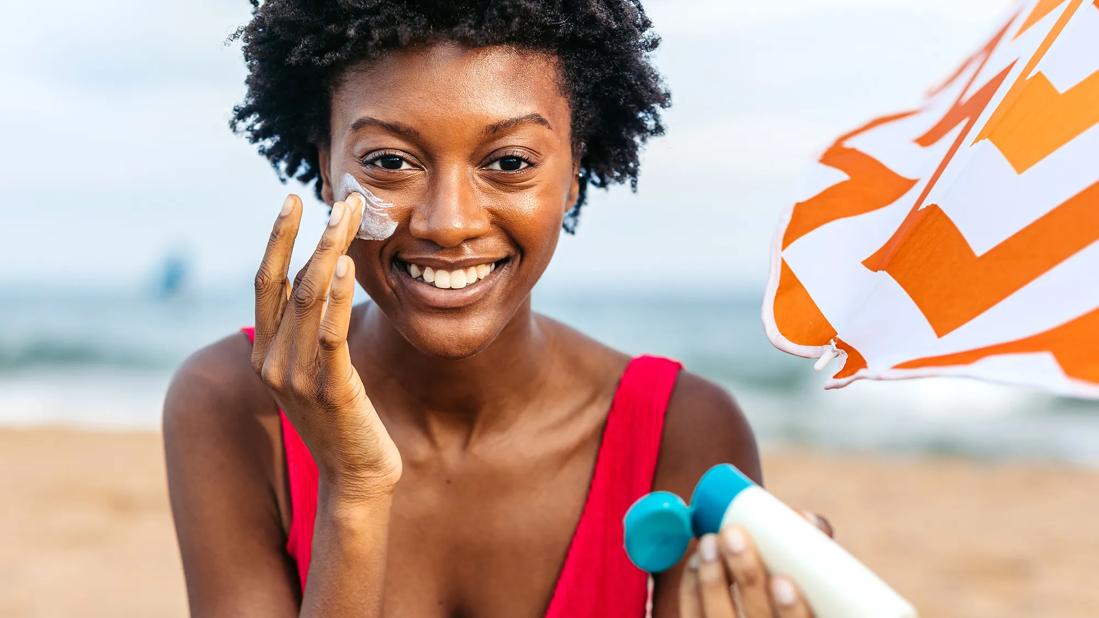
Image content: This image is available to view online.
View image online (https://assets.clevelandclinic.org/transform/0581ae00-3285-4e41-ad3e-00ff141ea4d1/person-applies-sunscreen-at-beach-2217465191)
Person applying sunscreen to their face while at the beach
Mineral sunscreen has become increasingly popular. But what exactly is it? And is it right for you?
Advertisement
Cleveland Clinic is a non-profit academic medical center. Advertising on our site helps support our mission. We do not endorse non-Cleveland Clinic products or services. Policy
“The best sunscreen is the one you’re willing to wear every day,” says dermatologist Taylor Bullock, MD. “Mineral sunscreens can be a great choice for certain people."
There are two main types of sunscreen:
Both types can help protect your skin from UVA rays (which are responsible for premature aging) and UVB rays (which cause sunburns). Both UVA and UVB contribute to skin cancer.
Some people may tell you that mineral sunscreen works by reflecting the sun’s rays — but that isn’t entirely accurate.
“Both mineral and chemical sunscreens work primarily by absorbing ultraviolet radiation and converting it into a small amount of heat,” Dr. Bullock explains. “Mineral sunscreens reflect and scatter some UV light, but not to the extent many people have been led to believe.”
The real power in mineral sunscreen comes from these active ingredients:
Advertisement
Like any effective sunscreen, mineral sunscreen can help:
Mineral sunscreen also may be more comfortable, especially if you have sensitive skin that gets irritated by chemical sunscreen. Your skin doesn’t absorb much zinc oxide or titanium dioxide. So, mineral sunscreen is less likely to clog your pores or cause other reactions.
“Mineral sunscreens are often a great choice for people with sensitive skin, rosacea or eczema, or for people who have experienced irritation from certain chemical sunscreen ingredients,” Dr. Bullock suggests.
One complaint about mineral sunscreen from generations past is that it can leave a white or grayish cast on your skin. But the formulations have improved significantly in recent years.
“Modern formulations are much more cosmetically elegant than what many people remember from years ago,” Dr. Bullock shares. In other words, they’re a far cry from that thick, white goop that covered your nose at summer camp.
Many dermatologists recommend mineral sunscreens during pregnancy, but that doesn’t mean chemical sunscreens are off-limits.
“Both can be appropriate options,” Dr. Bullock notes. “But some dermatologists may prefer to recommend mineral sunscreens during pregnancy because they don’t get absorbed much by your skin, and they’ve long been used safely in pregnancy.”
Protecting your skin from the sun is especially important during pregnancy. Hormonal changes can make some people more prone to melasma, sometimes called the “mask of pregnancy.” And sun exposure can make it worse.
“UV exposure can make dark patches from melasma much more noticeable and much more difficult to treat,” Dr. Bullock explains. “Daily sunscreen use is one of the best ways to help prevent that.”
Choosing the right sunscreen is only half the battle. You also need to use it properly.
“Most sunscreen failures happen because people either don't apply enough or don’t reapply often enough,” Dr. Bullock states.
Follow these tips:
When shopping for a mineral sunscreen, Dr. Bullock recommends focusing less on brand names and more on ingredients and ease of use.
Look for:
Advertisement
As for application options, sprays may be more convenient, but lotions and creams typically provide more reliable coverage.
“The challenge with sprays is that many people simply don’t use enough,” Dr. Bullock says. “If you use a spray sunscreen, apply it generously and rub it in for even coverage.”
And never forget that sunscreen is just one part of a complete sun-protection strategy.
“No sunscreen blocks 100% of UV radiation,” Dr. Bullock points out. “The best approach combines sunscreen with shade, protective clothing, hats and sunglasses.”
Advertisement

Sign up for our Health Essentials emails for expert guidance on nutrition, fitness, sleep, skin care and more.
Learn more about our editorial process.
Advertisement

The sun’s sneaky rays can cause temporary eye damage or raise your risk for future problems
UVA rays from tanning beds increase your risk of skin cancer, wrinkles and eye damage
This cooling gel can help soothe sunburned skin, but it can’t cure the burn
You know it’s not good if you’ve been holding onto it for more than three years or if it’s changed in color, consistency or smell
The convenient option is good for touch-ups, but it shouldn’t replace your traditional sunscreen

Look for a UPF rating of 50+ for optimal protection against UV rays

A sunburn will leave you itchy and red, while sun poisoning can feel like an allergic reaction
A cool shower, aloe vera gel, anti-itch treatments and cool compresses can provide fast sunburn relief

Hormonal changes, a slower metabolism and muscle loss can make weight gain more common around menopause — healthy habits can help you manage it

Life-threatening complications include sepsis, stroke, pneumonia and more

Fruity-smelling breath can happen when your body burns fat for energy, and in some cases, can signal a medical emergency
 Search










