Locations:





Try seated and standing exercises to help lengthen and strengthen the muscles that support your plantar fascia
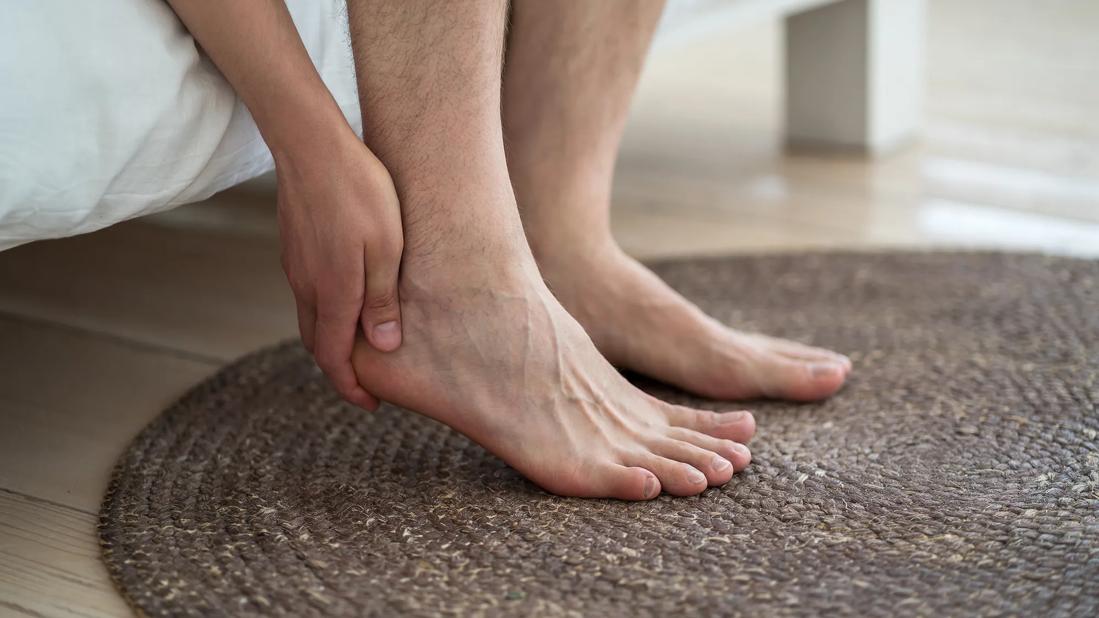
Image content: This image is available to view online.
View image online (https://assets.clevelandclinic.org/transform/0392ad3e-b688-4756-bc0c-59bb7036625f/plantar-faciitis-pain-2177452526)
Hand rubbing their heel, sitting on edge of bed
Plantar fasciitis can be a real pain in the kicker.
Advertisement
Cleveland Clinic is a non-profit academic medical center. Advertising on our site helps support our mission. We do not endorse non-Cleveland Clinic products or services. Policy
With plantar fasciitis, you can over-stress the thick band of tissue that runs from your heel to your toe on the bottom of your foot (plantar fascia) — either from being on your feet all day or from over-use and exercise. When this happens, it can get in the way of almost anything.
Fortunately, podiatrist Samantha Figas, DPM, recommends a number of stretches and exercises that you can do at home to help relieve some of that tension.
There are several stretches and exercises you can use during your daily routine to help relieve plantar fasciitis, alongside other treatments, like NSAIDs and rest.
“Stretching is the most important treatment for plantar fasciitis because it helps make the tissues more flexible, lowers tension and eases pain,” says Dr. Figas.
Many people with plantar fasciitis also have tight calf muscles. Calf muscles connect to your Achilles tendon, which wraps around your heel and connects with the plantar fascia at the bottom of your foot. This means a tight calf can make your plantar fascia tight, too.
Dr. Figas recommends stretching for at least 10 minutes a day when treating plantar fasciitis. It can take several months for the pain to fully go away and it could come back. So, it’s important to keep stretching even after you feel better.
Advertisement
Here are five plantar fasciitis stretches and exercises to try.
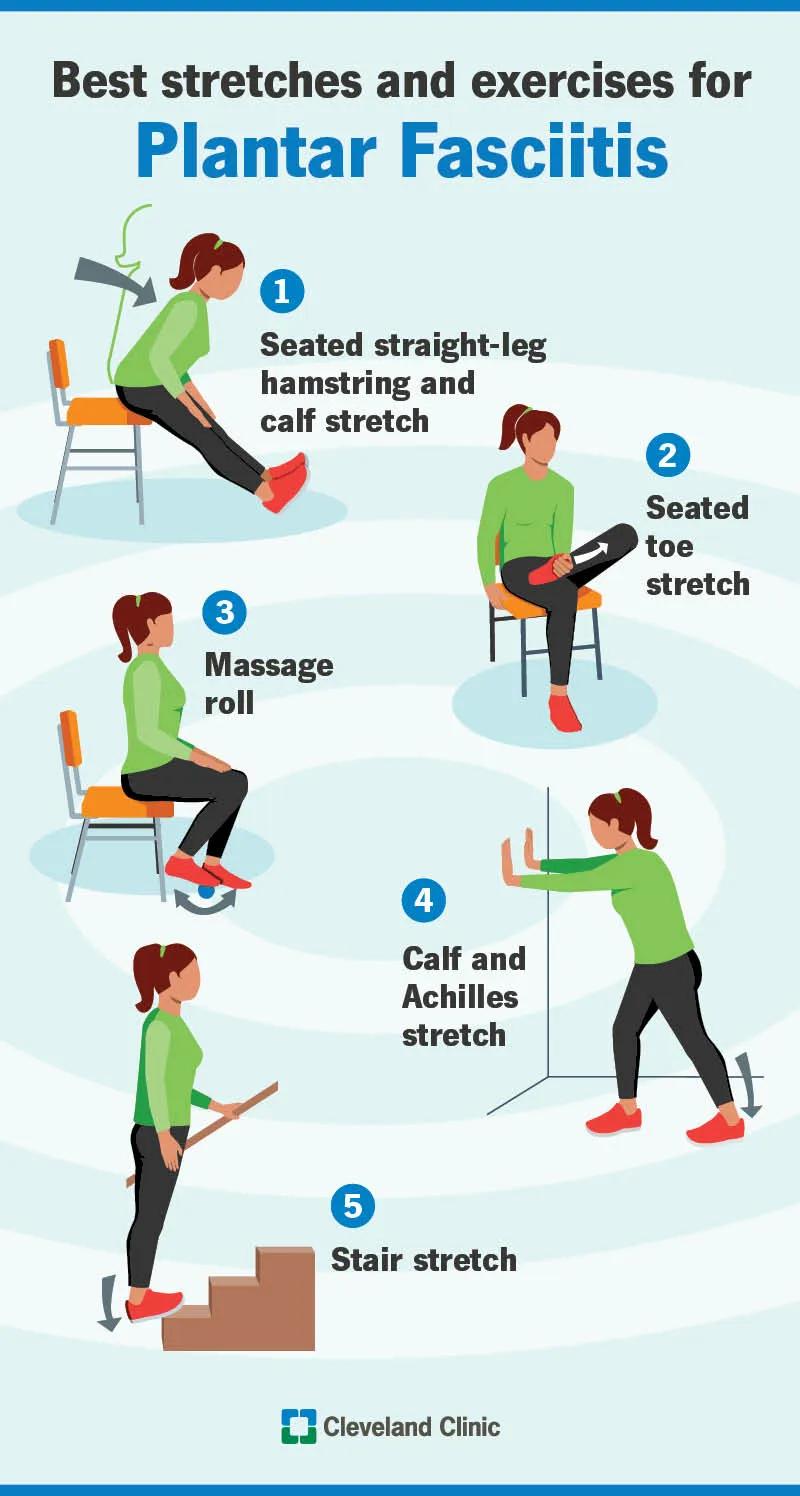
Image content: This image is available to view online.
View image online (https://assets.clevelandclinic.org/transform/c4c9360d-638a-443e-926d-1b3677f4e09a/YogaEasePlantarFasciitisPain-Infographic)
This stretch helps loosen tight muscles and stretch the connective tissue in your back and legs to better support your feet.
For a deeper stretch focused on your plantar fascia, try the following:
Try this massage to relieve muscle tension in your feet while sitting at your desk or kitchen table. It can be done a few times a day. You’ll need a rollable object, like a frozen water bottle, golf ball or tennis ball. A frozen water bottle specifically can also help treat inflammation associated with plantar fasciitis.
This deep stretch focuses on the back of your legs.
Advertisement
This stretch helps relieve tension in your calf and Achilles tendon, which helps relieve some of the pain associated with plantar fasciitis.
Remember, it’s important to follow your healthcare provider’s recommendations for treating plantar fasciitis. But if you’ve dealt with this sort of pain before, or if you’re planning to go on a long walk or hike where your feet may be further affected, these stretches and exercises can help prevent or reduce plantar fasciitis pain in the future.
“Plantar fasciitis is considered an overuse injury. You’ll often have to modify your activities in order to allow this condition to heal,” notes Dr. Figas.
“Avoiding high-impact activities like running, jumping or jogging can help with healing. You can also continue low-impact activities like walking, biking or swimming, as long as this doesn’t aggravate your symptoms.”
Advertisement

Sign up for our Health Essentials emails for expert guidance on nutrition, fitness, sleep, skin care and more.
Learn more about our editorial process.
Advertisement
Footwear that offers cushioning plus heel and arch support can help you relieve and manage symptoms

These home treatments can help

This experimental peptide isn’t approved to treat or prevent any health condition
This modern twist on a traditional sauna may help support heart health, soothe sore muscles, manage pain and more

Managing your weight through physical activity may lower your chances of getting this common cancer

Physical activity, even a couple times a week, can potentially benefit your sex life and overall health over time
Not always — but wearing flip-flops too often for too long can leave your feet, legs and back feeling the strain
It helps to build up your strength and balance before tackling these more resistance-heavy TRX exercises
Managing your weight through physical activity may lower your chances of getting this common cancer

It typically starts in October and winds down in early spring, with cases at their highest in the middle of winter

Anxiety disorders, health conditions and past trauma can make driving nerve-wracking — help is available
 Search










