Locations:





See a provider if intrusive thoughts, fears or compulsive behaviors are affecting life with your newborn
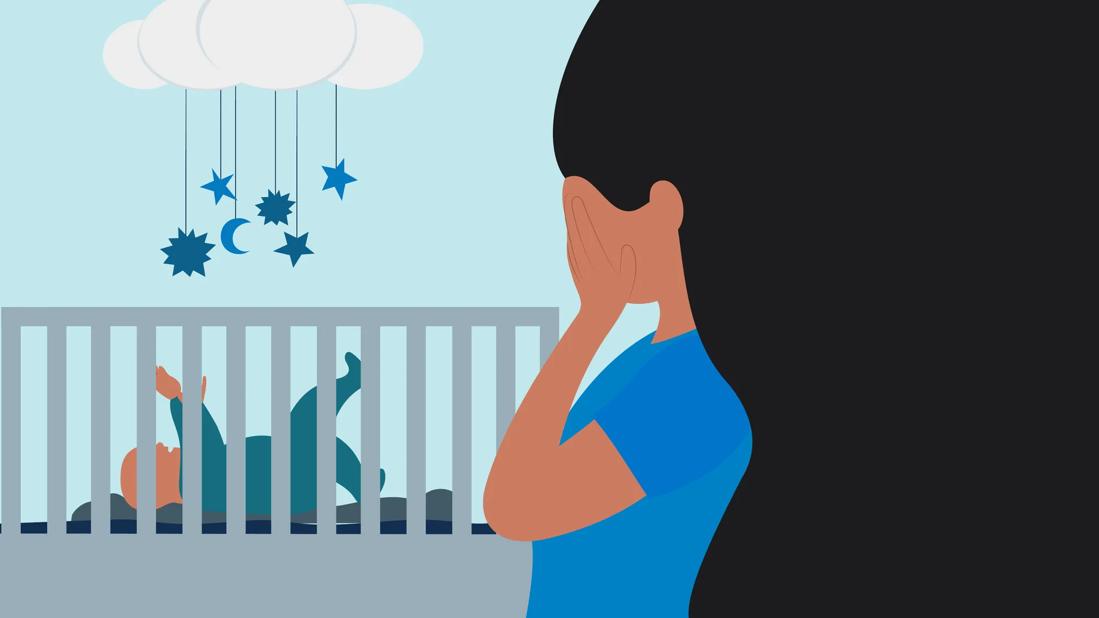
Image content: This image is available to view online.
View image online (https://assets.clevelandclinic.org/transform/fe187104-2439-4a9f-b30b-cca2db044954/postpartum-ocd-182193894)
Mother with hands over her face, with newborn in their crib
It’s common to feel worried and overwhelmed when a new baby enters the picture. But what if you’re having dark, intrusive thoughts that scare or upset you — or even affect your behavior?
Advertisement
Cleveland Clinic is a non-profit academic medical center. Advertising on our site helps support our mission. We do not endorse non-Cleveland Clinic products or services. Policy
Those are classic signs of postpartum OCD. It’s more common than you might think. And it’s treatable.
Perinatal mood and anxiety disorder specialist Adele Viguera, MD, explains why it happens and how to get help.
Postpartum OCD is diagnosed using the same criteria as obsessive-compulsive disorder at any other time in life. The term “postpartum OCD” just means that your OCD symptoms started or got worse after having a baby.
“‘Postpartum OCD’ isn’t a formal term, but it’s a very real phenomenon,” Dr. Viguera says. “You can have a worsening of a preexisting OCD diagnosis or it can start for the first time after having a baby. A lot of women are affected by it.”
While we’re focusing on postpartum health here, OCD symptoms can also appear — or flare up — during pregnancy. Providers use the term “perinatal OCD” because it describes worsening symptoms throughout this period.
“The combination of hormonal changes, sleep deprivation and stress that come before and after childbirth makes it a time of increased risk,” she explains. “But it’s much more likely to begin in the postpartum period.”
What sets postpartum OCD apart from typical new-parent anxiety is its severity.
“When the worry becomes so overwhelming that it interferes with your ability to function, it becomes a disorder,” Dr. Viguera says.
Advertisement
Common symptoms include:
People with postpartum OCD often have obsessive thoughts about accidentally, or even intentionally, harming their baby. These intrusive thoughts can be violent or even sexual.
“These intrusive thoughts about harm are actually the most common type of obsession in postpartum OCD,” Dr. Viguera says. “Contamination fears and checking behaviors are also typical.”
These thoughts and behaviors often give rise to intense feelings of guilt, shame and fear.
“That really is one of the most distressing thoughts a new mom can have,” she continues. “And they’re often very ashamed to even talk about it.”
Dr. Viguera stresses that having disturbing, unwanted thoughts about your infant child is not the same as acting on them. In fact, being alarmed by those thoughts is a sign you’re unlikely to hurt your baby.
“The intrusive thoughts people with postpartum OCD have feel scary and deeply upsetting,” she notes. “They’re not consistent with the way they normally think, and go against everything they believe and value as a parent.”
In postpartum psychosis, those same thoughts often seem normal or justified to the person having them. That’s why postpartum psychosis is so dangerous to mother and baby alike.
An important part of the treatment process is understanding that those thoughts don’t define you as a person or a parent.
The biggest risk factor for postpartum OCD is having OCD before you get pregnant. Research shows that women with preexisting OCD often see their symptoms get worse after having a baby.
Advertisement
If you’ve not been treated for OCD before getting pregnant, other factors may increase your risk, like:
“It’s also common for postpartum OCD to occur alongside postpartum depression,” Dr. Viguera adds. “Studies show one-third to nearly half of women with postpartum OCD also have depression symptoms. The good news is that, with treatment, both conditions will improve.”
Postpartum OCD isn’t really the kind of thing you can wish away, or that you “grow out of” as you get more used to caring for your new baby. It’s not just some phase that new parents go through. It’s a medical issue that requires medical management.
Advertisement
“Unfortunately, once OCD declares itself, you’ll always be predisposed to it,” Dr. Viguera says. “Like many chronic conditions, it can come and go. But stress, sleep deprivation, hormonal changes or lack of support can all trigger a flare-up.”
Psychiatrists often address postpartum OCD with a combination of medication and therapy.
Dr. Viguera adds that the most effective treatment for postpartum OCD is cognitive behavioral therapy (CBT). This specialized therapy helps you gradually face your fears while resisting the urge to perform compulsive behaviors.
The most common medications used to treat postpartum OCD are called selective serotonin reuptake inhibitors (SSRIs).
“SSRIs are considered the first choice for treatment,” she reports. “If you're breastfeeding, SSRIs are generally safe to use — only very small amounts pass into breast milk, and there's little evidence they cause harm.”
Depending on your symptoms and your mental health history, you may benefit from other therapeutic approaches, too, like:
Depending on your symptoms and your mental health history, you may benefit from other approaches, too. That’s why it’s crucial that you’re open with your provider about any thoughts, feelings and urges you’re having. Hard as they can be to talk about, that conversation helps tailor your treatment plan to your specific needs.
Advertisement
Even with the best treatment available, your symptoms may not disappear completely. But turning down the volume on intrusive thoughts and obsessive behaviors can make it easier to enjoy your day-to-day life — not to mention parenting.
“If perinatal or postpartum OCD is well managed, you can lead a high quality of life,” Dr. Viguera reassures. “Some of the symptoms may still be there, but you won’t be as bothered by them.”
If you’re awake at 3 a.m. reading about perinatal mental health issues like postpartum OCD, it’s probably time to reach out to a professional for help.
“That’s a good litmus test,” Dr. Viguera says. “Here’s another one: If you’re unable to carry on with your usual daily tasks, that’s when you know you’re dealing with a disorder.”
Having a new baby at home changes everybody’s daily life. But if you’re not sleeping, bathing, eating or taking your medications, you need some extra support.
Another red flag? Your intrusive thoughts have become so upsetting or overwhelming, you don’t feel able to safely parent your child.
“We often see women who avoid their baby completely because they’re so scared they’ll do something wrong,” Dr. Viguera reiterates. “They might say, You change the baby’s diaper, or You hold the baby — I’ll just stay in my room.”
But you don’t have to wait for your situation to be that serious to raise the alarm. As a new parent, there’s no such thing as an inappropriate time to ask a medical professional for help. If you’re worried — about your new arrival or yourself — it’s worth talking about.
Being home with a new baby can feel isolating in the best of circumstances. It can be even worse when it feels like your brain is forcing you into dark corners against your will.
Remember: Having scary thoughts doesn’t mean you’re dangerous. And you aren’t alone in this struggle.
“A lot of women are terrified to share that they’re having these thoughts,” Dr. Viguera empathizes. “But we try to normalize it and say, We see this. It happens. We can help. It doesn’t mean you’re going to go through with it.”
The key is getting the right diagnosis — and the right care. If you’re struggling, talk to your Ob/Gyn, primary care doctor or a mental health provider. There is help. And there is hope.

Sign up for our Health Essentials emails for expert guidance on nutrition, fitness, sleep, skin care and more.
Learn more about our editorial process.
Advertisement

Your period may return weeks or months after delivery — it can be heavier, lighter or no different from before

Yes, new fathers can experience mood changes after bringing baby home
But if you’re worried, don’t hesitate to call your doctor or midwife
Heavy bleeding, pain and persistent sadness could be something more serious

Having sex after giving birth isn’t only about being medically ready
It’s normal to experience some changes
Belly wraps provide physical support after you give birth

Sad feelings and teariness that persist are a sign

Hormonal changes, a slower metabolism and muscle loss can make weight gain more common around menopause — healthy habits can help you manage it

Life-threatening complications include sepsis, stroke, pneumonia and more

Fruity-smelling breath can happen when your body burns fat for energy, and in some cases, can signal a medical emergency
 Search










