Locations:





Screen time is all about balancing quality and quantity
From TVs and video games to tablets, smartphones and laptops — screens are, for better or worse, a part of our lives.
Advertisement
Cleveland Clinic is a non-profit academic medical center. Advertising on our site helps support our mission. We do not endorse non-Cleveland Clinic products or services. Policy
But when it comes to monitoring your kid’s screen time, how much is too much?
The answer depends on your child’s age, how they’re using the device and whether screen use is monopolizing time that could be used for healthier activities.
“Screen time can be harmful — but it can also have a place in your child’s life,” says pediatrician Noah Schwartz, MD. “It’s really all about finding a balance and working to address your kids’ specific needs.”
Dr. Schwartz helps us understand screen time recommendations for kids.
In the simplest terms, screen time is exactly what it sounds like: time spent looking at a screen (any screen). That includes ... ahem, what you’re doing at this very moment.
“Time spent on anything with a screen is screen time,” Dr. Schwartz says.
So, screen time can include time you or your child spends:
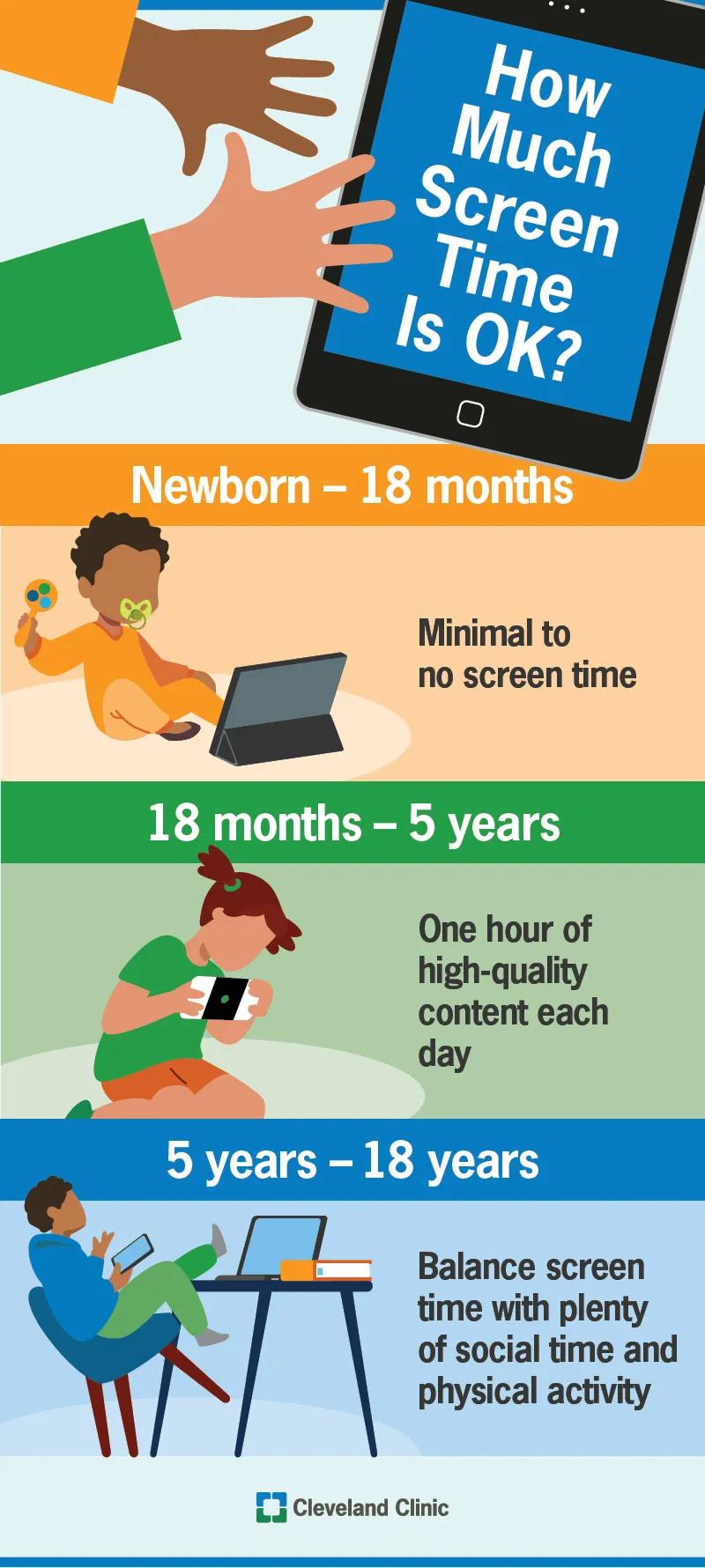
Image content: This image is available to view online.
View image online (https://assets.clevelandclinic.org/transform/9d4b1c63-5846-4967-b77c-424211c52ada/ScreenTimeForKids-infographic-800x1780)
The American Academy of Pediatrics (AAP) has shifted away from measuring screen time by the clock alone. Today’s guidelines instead consider things like:
Advertisement
It’s an acknowledgment that not all screen time is the same.
Kids use screens to do schoolwork, to research their interests, to keep up with their friends and more. They can also use them for less-productive reasons, of course.
So, considering why and how they’re using technology is important to determining whether they’re consuming too much of it.
“Talking to grandparents on FaceTime or reading an eBook is a much more engaging and positive experience for toddlers than vegging out in front of the TV. And learning how to code is a more positive use of screentime for teens than doomscrolling on social media,” Dr. Schwartz illustrates.
Consider these recommendations:
A little screen time won’t derail your child’s development. But staying glued to a tablet for hours can create problems, especially when digital entertainment becomes the default.
“There’s a difference between using screen time as a tool so you can get dinner on the table and using it as a babysitter,” Dr. Schwartz notes.
He shares some ways that excessive screen time can affect your kids.
There’s a reason that healthcare professionals recommend strict limits on screen time for the youngest of children. It’s this: Children learn to talk and identify social cues as they interact with parents, caregivers and other real-life people. Screens can’t replace that experience.
“Younger kids need back-and-forth interaction,” Dr. Schwartz says. “They need those responsive, emotional connections to develop language and learn social cues.”
Sure, some children’s programs try to mimic two-way communication by asking questions and pausing for a response. But that’s no substitute for real-life, face-to-face conversation.
Stimulating content and lights from screens can make it harder for kids to fall asleep and stay asleep.
“Sleep is so important to growing children, but screens are constant stimulation, especially if used close to bedtime,” Dr. Schwartz says.
That’s why experts recommend keeping bedrooms screen-free zones and avoiding screens for at least an hour before bedtime.
Advertisement
Kids are built to move — to run, jump, roll around in the grass and do it all over again.
Time spent staring at a screen often means less time moving their body. (After all, there are only so many hours in a day.)
“If the kid is camped out in front of the TV for hours on end, that’s time they aren’t spending being physically active,” Dr. Schwartz states.
Kids need to exercise to build muscle, develop coordination and grow properly. Excessive screen time can also lead to mindless snacking and poorer eating habits, which don’t contribute to a healthy, active life.
As children grow into tweens and teens, the concerns about too much screen time extend beyond their physical health.
Research has linked excessive screen use and social media exposure to higher rates of mental health challenges, like:
Again, the quality of content matters. Social media feeds, endless scrolling and algorithm-driven videos in particular can expose kids to content that may not be healthy, age-appropriate or good for their emotional well-being.
Limiting screen time is all about creating a healthy balance.
The good news? Kids don’t need elaborate plans or expensive activities to pull them away from a screen. You can try:
Advertisement
When your child does use screens, Dr. Schwartz recommends making it an intentional experience by:
If you're wondering whether your child is getting too much screen time, the answer may be less about calculating the exact number of hours and more about considering what their screen time is replacing.
When screens crowd out sleep, exercise, social connection and real-world experiences, it’s not just the screen that’s the problem — it’s everything your child is missing out on.
That doesn’t mean parents need to go zero-tolerance on the TV.
Advertisement
“Sometimes, screens are a practical tool that helps busy families get through the day, and you don’t have to feel guilty about your kids engaging with technology in a healthy way,” Dr. Schwartz recognizes.
“The goal doesn’t have to be to eliminate screens. It’s to make sure they're a complement to a healthy, active childhood — not the default setting.”

Sign up for our Health Essentials emails for expert guidance on nutrition, fitness, sleep, skin care and more.
Learn more about our editorial process.
Advertisement
Being mindful of your negative news habit can help you bring it to an end

It isn’t a recognized mental health disorder, but research shows that problematic social media use can negatively affect your mental health, self-esteem and sleep
Too much blue light, especially from digital sources, may lead to eye strain and computer vision syndrome
When done in excess, watching TV can disrupt your sleep and lead to physical inactivity and social isolation

Imagination, completing tasks and social interactions are all key benefits for your brain
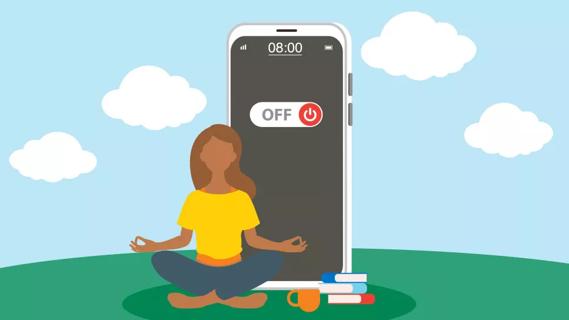
Identify your triggers, set ground rules for your break and start practicing mindfulness
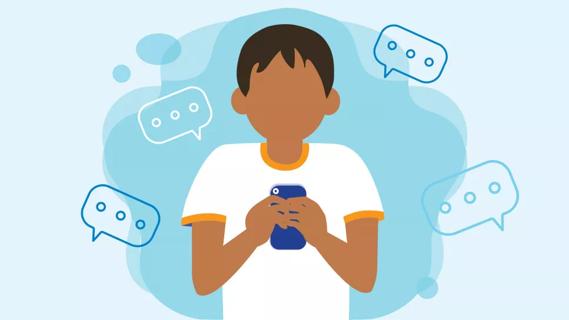
Too much screen time and unrealistic expectations and perceptions and can lead to an increased risk of anxiety and depression

It can affect your child’s development, but not in a way you might think

Hormonal changes, a slower metabolism and muscle loss can make weight gain more common around menopause — healthy habits can help you manage it

Life-threatening complications include sepsis, stroke, pneumonia and more

Fruity-smelling breath can happen when your body burns fat for energy, and in some cases, can signal a medical emergency
 Search










