Locations:





At-home options aren’t your best bet — instead, consider noninvasive laser treatments with a dermatologist
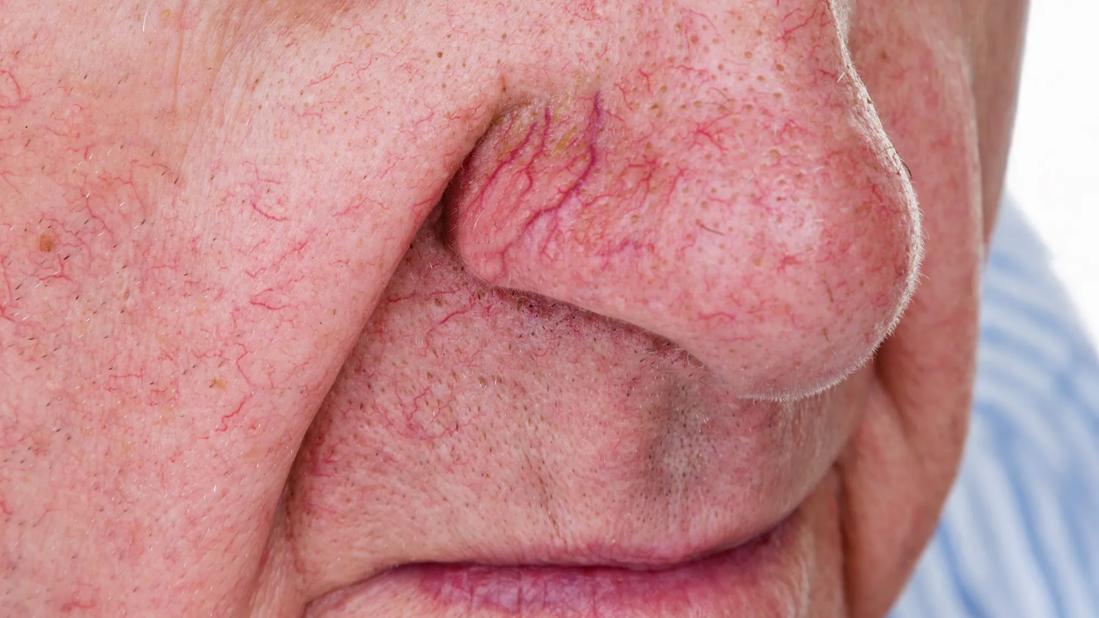
Image content: This image is available to view online.
View image online (https://assets.clevelandclinic.org/transform/66edea0d-4aed-40b3-892a-6849df8311e8/spiderVeinsFace-460278395-770x533-1-jpg)
Spider veins on nose and cheeks of a face
Spider veins (telangiectasias) can become more common as you age. While you may notice these teeny-tiny blood vessels on your legs, you may also start to see them on your face. These red, blue or purple clusters that look like spiderwebs (or even tree branches) tend to appear along your cheeks and nose.
Advertisement
Cleveland Clinic is a non-profit academic medical center. Advertising on our site helps support our mission. We do not endorse non-Cleveland Clinic products or services. Policy
Though they aren’t usually a cause for concern from a medical perspective (and rarely cause symptoms), facial spider veins can impact your appearance and affect your confidence. A dermatologist may suggest cosmetic treatments like laser therapy to help reduce their appearance.
The most common cause of spider veins is sun-damaged skin (photoaging), says dermatologist Christine Poblete-Lopez, MD.
Some other known causes of telangiectasias on your face include:
Women are more likely to experience spider veins than men, and spider veins become more common after the age of 80.
Other risk factors include:
Certain lifestyle changes can prevent spider veins from forming. Dr. Poblete-Lopez recommends that you:
Advertisement
“As the most common cause of spider veins is photoaging, or sun exposure and aging, the former is within our control,” notes Dr. Poblete-Lopez. “We can do this by protecting our skin from the sun on a daily basis, and not only when we’re going out. The other recommendations are also all within our control — and keeping your body healthy includes keeping our skin healthy.”
Unfortunately, you can’t get rid of spider veins at home. (At-home options like applying a cold compress or using a cold face roller may provide temporary results, if any.)
Your best bet to get rid of those facial spider veins — and the only real way — is by paying a visit to a dermatologist’s office.
Your doctor may recommend a noninvasive laser treatment that specifically targets vessels, heats them up and causes them to collapse. But it’s not a quick fix.
“We’re not talking about a one-time treatment. Telangiectasias would require laser therapy for three to four sessions every three to four months,” stresses Dr. Poblete-Lopez. “After that, you would need a touch-up treatment every six months to one year as needed.”
Yes, it’s possible for spider veins to reappear on your face, says Dr. Poblete-Lopez.
“Undergoing a laser treatment doesn’t mean we’ve gotten rid of your spider veins,” she explains. “We’ve merely closed the blood vessels down, and they can reopen.”
Spider veins on your face are typically harmless. But if seeing those colorful clusters of broken capillaries on your face makes you unhappy, there are ways to reduce their appearance.
Talk to your healthcare provider or dermatologist to discuss which lifestyle changes or treatment options may be best for you.
Advertisement

Sign up for our Health Essentials emails for expert guidance on nutrition, fitness, sleep, skin care and more.
Learn more about our editorial process.
Advertisement

Exercise, a healthy diet and compression socks can all help, but it’s also important to see your provider

Moisturizing, running a humidifier and adjusting your shower routine may help keep itchiness and irritation at bay

Excessive exposure to saltwater can dehydrate skin and hair, despite having a few benefits
Look for emollients, humectants and occlusives to hydrate, soothe and protect your skin

This multitasker can help keep your skin clear, support wound healing and disinfect surfaces around your home

This gentle facial cleanser removes dirt, oil and most makeup without drying out your skin
With time and patience and trial and error, you may be able to find relief from keratosis pilaris (KP) symptoms
Warm water, lotion, cooking oils or nail polish remover may all help to loosen the adhesive

Managing your weight through physical activity may lower your chances of getting this common cancer

It typically starts in October and winds down in early spring, with cases at their highest in the middle of winter

Anxiety disorders, health conditions and past trauma can make driving nerve-wracking — help is available
 Search










