Locations:





Earlobe piercings heal quicker and are less painful than cartilage piercings — proper cleaning and care are important
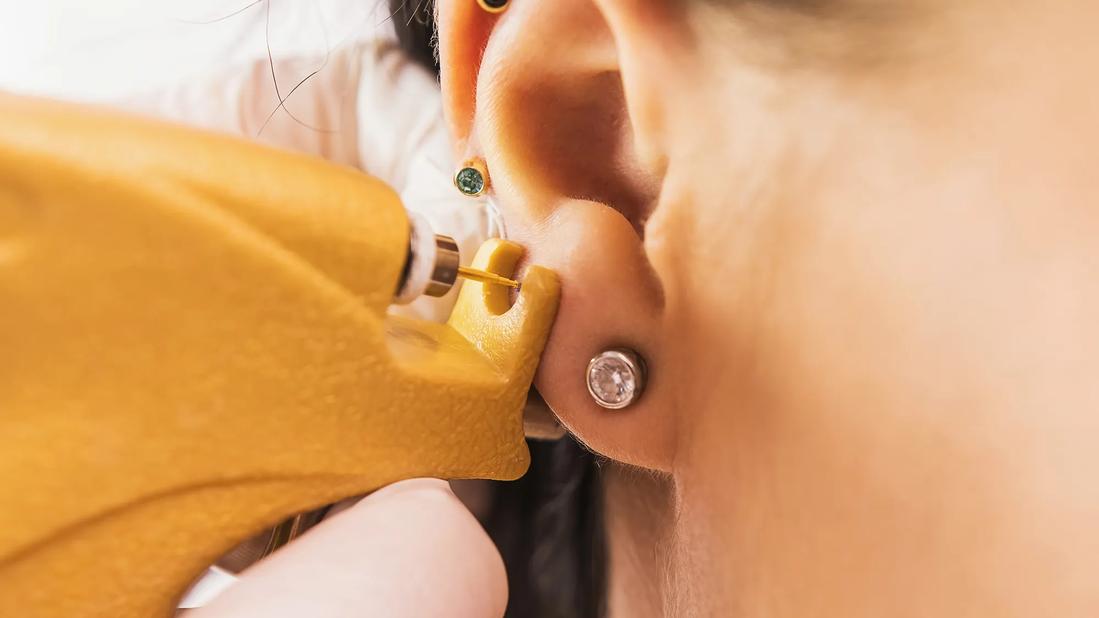
Image content: This image is available to view online.
View image online (https://assets.clevelandclinic.org/transform/e728b457-bbe6-4846-aaf1-1b44cbd338e0/getting-ear-pierced-1362533352)
Ear being pierced with a piercing gun
Getting your ears pierced can be a rite of passage in some families and cultures.
Advertisement
Cleveland Clinic is a non-profit academic medical center. Advertising on our site helps support our mission. We do not endorse non-Cleveland Clinic products or services. Policy
Earlobes are the most pierced body part in the United States — 84% of women and 64% of men in the U.S. rock pierced lobes. Cartilage piercings are the next most common.
But caring for that bling takes some responsibility to ensure proper healing. We talked with family medicine physician Shannon Thompson, DO, about how long ear piercings take to heal and what you can do to keep them clean and infection-free.
How much an ear piercing hurts depends on the location, piercing method and your pain tolerance.
Ear piercing is typically described as feeling something like a quick pinch, followed by some throbbing. You may find that the area is sensitive to the touch until it’s fully healed.
Earlobes are fatty tissue, so they don’t have many nerves in them. They hurt the least.
Other parts of your ear are made of cartilage. They’re thicker and have more nerves. So, those piercings tend to be more painful.
It’s often said that piercing needles may hurt less than piercing guns. Dr. Thompson also recommends needles for piercing children. That’s because piercing guns aren’t always sterilized between uses.
Some piercers may use a numbing cream to help with pain. Or you can rest an icepack or an ice cube on your ear for a bit before the procedure.
Advertisement
“Cold numbs the area and confuses the brain about where the pain’s coming from,” Dr. Thompson explains. “Taking an extra-strength acetaminophen (Tylenol®) an hour before your procedure could help lessen the pain, too.”
But stay away from taking aspirin or ibuprofen (Advil®) beforehand. Those medications tend to thin your blood and could cause more bleeding.
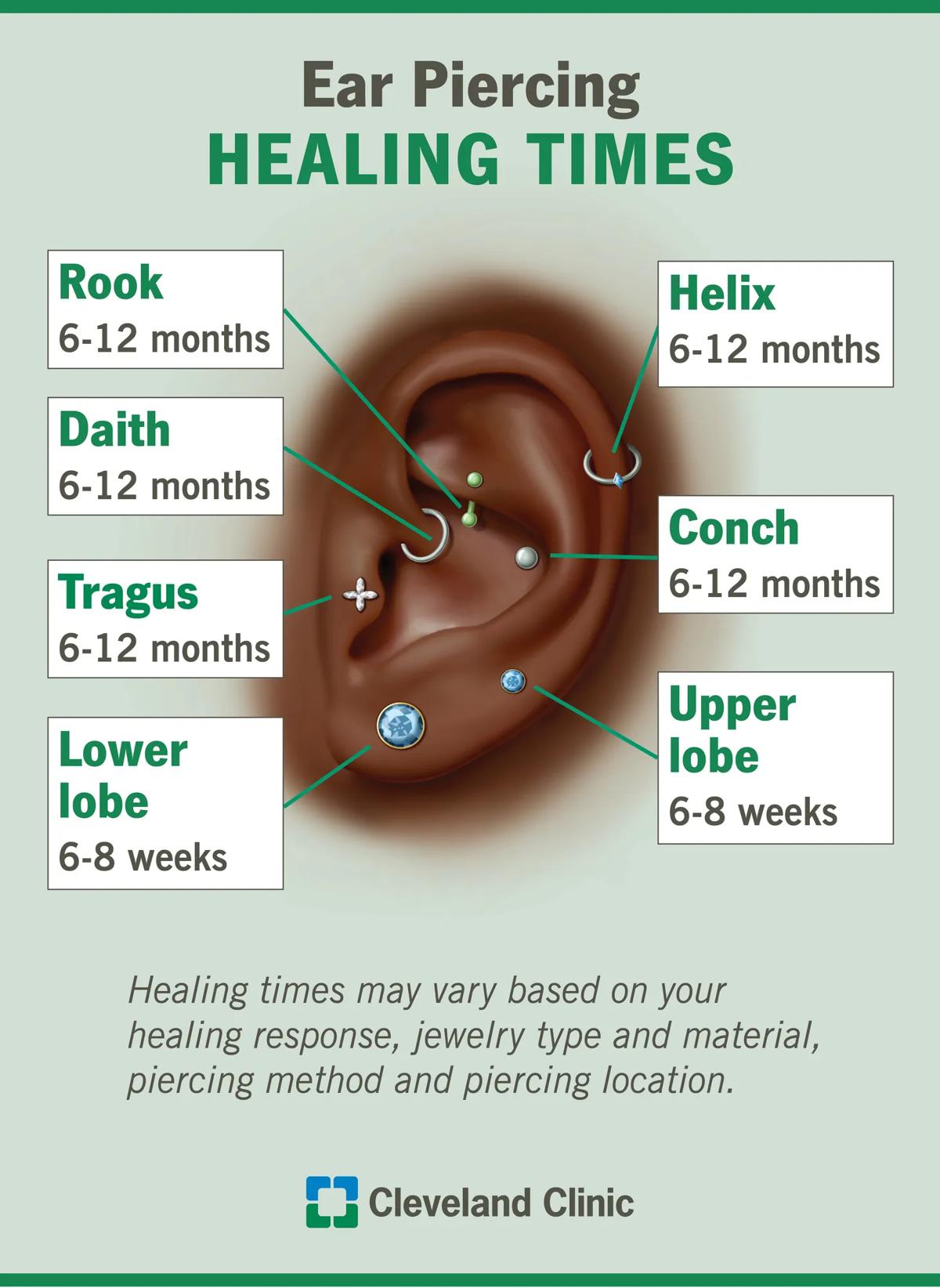
Image content: This image is available to view online.
View image online (https://assets.clevelandclinic.org/transform/742faa4a-d9ac-417a-8994-6bed81daabe5/kindsOfEarPiercings-infographic-r2)
Ear lobe piercings tend to heal in about six to eight weeks. Cartilage piercings take longer. They may take up to six months or a year to fully heal.
“Cartilage doesn’t get as much blood supply as soft tissue, which means it doesn’t repair itself quickly and heals slowly,” Dr. Thompson shares.
Expect that it will take between six and 12 months for these piercings to heal:
Why the wide range of healing times? There are several factors that can affect how long it will take for a cartilage piercing to heal. And the location of the piercing is just one of them. Piercings may heal faster or slower depending on:
You shouldn’t change your earrings until your piercing is fully healed. Watch for these signs of a healed piercing:
When you do switch earrings, choose hypoallergenic materials that don’t contain alloys, like nickel (which you often find in costume jewelry). The safest choices are typically:
Even after it’s healed, don’t leave your earrings out for more than a few hours. Earring holes, particularly in your earlobes, can close quickly.
Clean your piercing twice a day by lathering up antibacterial soap and water on a clean washcloth.
“Some people will tell you to use antibiotic creams, tea tree oil and other products, but I don’t advise it,” Dr. Thompson shares. “Some people can have allergic reactions to them, and they don’t help you heal any faster.”
Follow these tips to help your piercing heal:
In the past, it was recommended to rotate your piercing regularly. It was said that would keep the jewelry from sticking to your skin. That’s not recommended anymore.
Advertisement
“It’s better to wait until the healing process is well underway, which may be weeks to months, before purposefully spinning a piercing,” Dr. Thompson clarifies. “A piercing is essentially a puncture wound. And the more it’s disturbed, the more it can complicate the healing process.”
That said, while you’re cleaning your piercing, look or feel for the earring backs to be sure they're in place. It’s not common, but your skin can start to grow over the back of your earring as it heals. If it gets absorbed by your skin, contact a healthcare professional to have your earring removed safely.
It’s expected that you’ll have some redness, swelling or pain for a couple of days after getting your ears pierced — those are normal signs of healing. But if those symptoms don’t get better, or they resolve only to come back, it could be an infection.
Signs of an infected piercing include:
If you think you have an infected ear piercing, seek care from a healthcare professional, like a primary care physician, dermatologist or an urgent care facility.
Advertisement

Sign up for our Health Essentials emails for expert guidance on nutrition, fitness, sleep, skin care and more.
Learn more about our editorial process.
Advertisement
Soap, water and an antibiotic ointment are your best bet

It isn’t risk free and shouldn’t replace the aftercare recommended by your piercer
Understand the risks and take precautions against infection
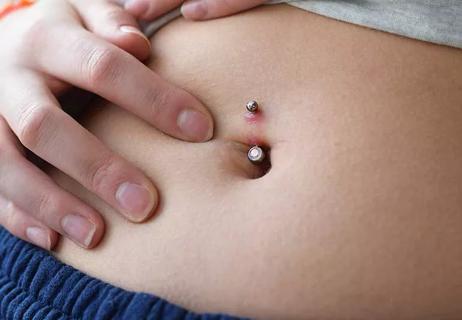
Twice-a-day cleaning with a saltwater solution can help you resolve (and avoid) problems

A dermatologist explains why it happens and how to address it

Removing the piercing as early as possible is important for avoiding complications

Addiction recovery tends to happen in phases, but the process isn’t always clear-cut

Not always — but wearing flip-flops too often for too long can leave your feet, legs and back feeling the strain

Rapid weight loss can cause loose skin, facial volume loss and body contour changes
Swallowing too much air, certain foods and drinks, and digestive conditions can all make you belch more
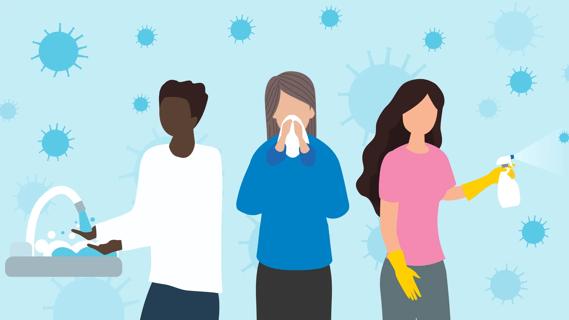
From poor hand hygiene and ventilation issues to contaminated food, many factors can make infectious diseases spread quickly
 Search










