Locations:





The color and shade of your urine offer a window to your health
Your pee may not be the most interesting thing about you, but it can be surprisingly informative. One day, it’s pale yellow and forgettable. The next, it may be darker, cloudier or some strange color.
Advertisement
Cleveland Clinic is a non-profit academic medical center. Advertising on our site helps support our mission. We do not endorse non-Cleveland Clinic products or services. Policy
Most of the time, a bit of variation is perfectly explainable and no big deal. But there are times when color changes may be your body’s way of drawing attention to an issue.
So, what can the color or appearance of your pee tell you? Let’s find out from urologist Adam Cohen, MD.
When you’re healthy and hydrated, the color of your urine should fall somewhere between pale yellow and light straw. The tint comes from pigments in waste products that your kidneys filter from your blood.
“It’s completely normal for the color of your urine to vary a little day by day,” says Dr. Cohen, “but it should stay within a certain range of yellow.”
Urine is mostly water, so how hydrated you are affects the color of your pee. If you don’t drink enough fluids, your urine gets more concentrated and turns a darker shade of yellow or even amber.
But you may also see odd urine changes that bring in other sections of the crayon box. Usually, there’s a simple explanation. Certain foods, food dyes and medications can temporarily turn your urine a different hue.
But sometimes, an attention-grabbing color may be a sign of an infection or a bigger health issue.
“If you see something really unusual, don’t just ignore it — but also, don’t panic!” advises Dr. Cohen. “Many changes can be easily explained, though some may require tests to diagnose the cause.”
Advertisement
Let’s explore what is typical and what deserves some extra attention when it comes to the color of your pee.
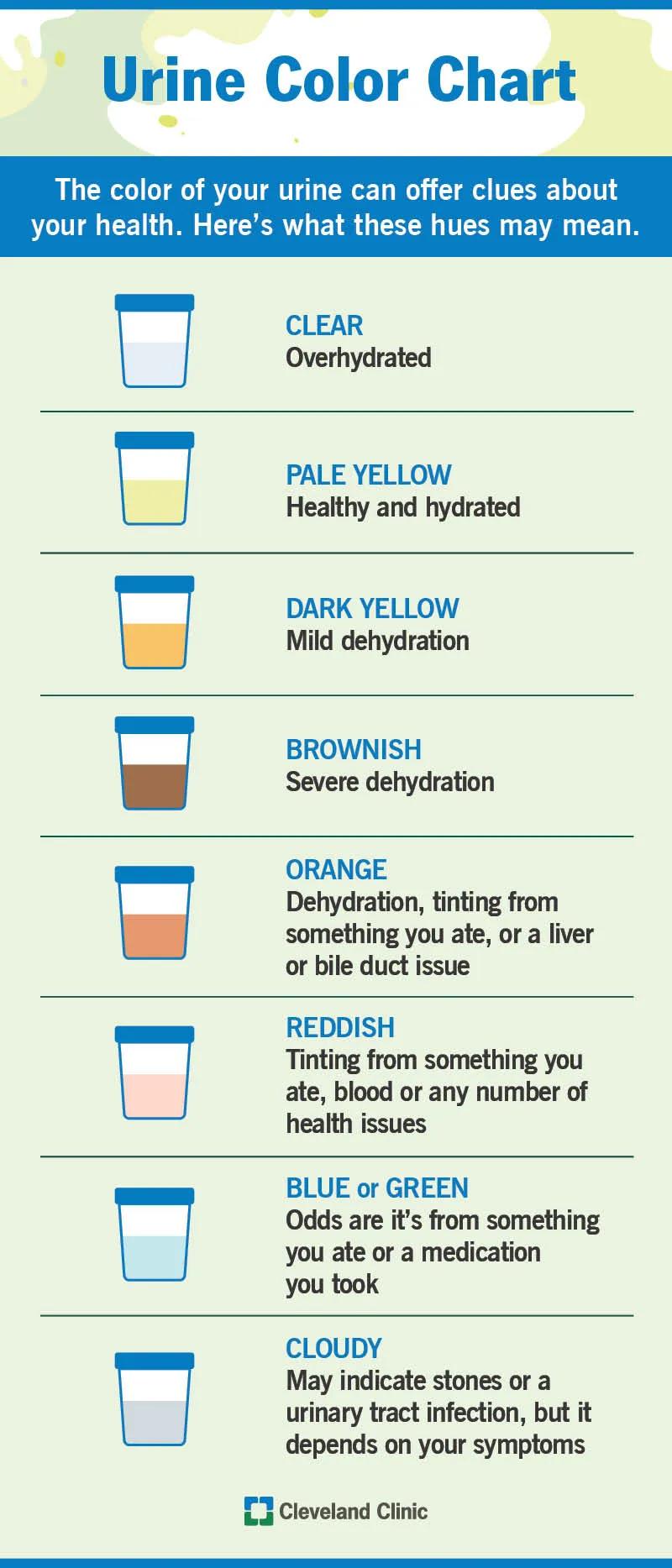
Image content: This image is available to view online.
View image online (https://assets.clevelandclinic.org/transform/d1eb3c97-3de5-4ed4-93a2-c9dd94182b7c/UrineColor-infographic-800x1867)
Clear urine sends a clear message: You may be drinking too much fluid. Overhydrating can dilute your pee to the point where you can’t see the color of any waste products flowing out, says Dr. Cohen.
Occasional clear pee isn’t a big deal, especially if you’re well hydrated. But if it’s ongoing, you may be lowering salt and electrolyte levels below what your body needs.
What if your urine is clear and you’re not knocking back glass after glass of water? That may signal an underlying kidney problem or diabetes, so it’s best to see a doctor to get some answers.
As explained, urine that falls in the lighter yellow category usually signals that everything is working right and you’re healthy and hydrated.
Slightly darker urine is a sign of mild dehydration, says Dr. Cohen. This can happen if you’ve been outside sweating on a hot day or just finished a workout.
Once you drink some water, the color of your pee should lighten and go back to normal.
Brownish-looking urine typically means your dehydration has crossed a line into a more worrisome status. Get fluids ASAP.
If drinking doesn’t lighten up your urine, see a healthcare provider. A flow that’s dark brown could be caused by bile in your urine, a sign of liver disease. Rusty or brown-colored pee is also a symptom of porphyria, a rare disorder affecting the skin and nervous system.
Other potential causes include injury to your kidney’s cell lining due to dehydration or old, broken-down blood products. Each of these requires a closer look.
If your pee looks orange, it could be a sign of several things. You may be dealing with:
Rehydrate and contact your doctor if the orange color doesn’t disappear.
The explanation for a reddish pee color is probably as simple as what you ate. Vibrantly colored foods like beets, blueberries or rhubarb — or something with red food dye — may tint your tinkle.
But if you haven’t eaten anything like that, pink or reddish urine may be cause for concern. It could be a sign of:
Contact your doctor as soon as possible if the color doesn’t return to yellow quickly.
OK … this is definitely different. Most likely, it’s the result of something you ate (think heavily dyed foods), supplements (like certain B vitamins) or medications (such as the aptly named Urogesic Blue).
Advertisement
However, a rare genetic disease involving higher-than-normal levels of calcium in your blood (hypercalcemia) can turn your urine blue or green, notes Dr. Cohen. Ditto for certain bacteria that can infect the urinary tract.
See a healthcare provider if you continue to urinate this color or are having bothersome urinary symptoms.
Urinary tract infections and kidney stones can cause urine to become a bit cloudy, milky or murky. Dehydration also could be the trigger.
Drink plenty of water if your pee turns hazy and call your doctor if the symptoms persist. Note that cloudy urine alone doesn’t necessarily indicate a problem or urinary tract infection if you aren’t having any other symptoms.
You can tell a lot by looking at the color of your urine in the bottom of the bowl. Medical professionals can tell even more by doing the kind of analysis that comes with a urine test during a regular physical examination.
So, you’re not just putting urine in a cup at your doctor’s appointment. You’re also providing information — and that can be one of the best things you can do for your health.
Advertisement

Sign up for our Health Essentials emails for expert guidance on nutrition, fitness, sleep, skin care and more.
Learn more about our editorial process.
Advertisement

These moisture sensors can help kids’ brains and bladders make the connection needed to end overnight accidents
Most kids grow out of bedwetting over time, but certain strategies can help — including having them evaluated for other medical conditions
Unless you have other symptoms, green urine is probably a souvenir from food, dyes or medicine
Dehydration, diet and diabetes are a few possible reasons
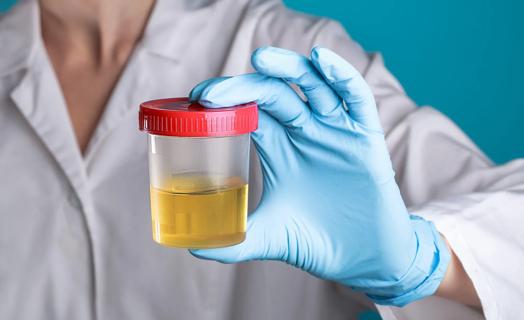
Urine can contain bacteria, viruses and more — don’t drink it or use it to clean wounds
Don’t ‘go with the flow’ if you have issues with urge incontinence or a contagious infection

Going seven times a day is average, but more or less can be OK, too, as long as you’re not experiencing drastic changes

An enlarged prostate, diuretics and bladder irritants can all contribute

Managing your weight through physical activity may lower your chances of getting this common cancer

It typically starts in October and winds down in early spring, with cases at their highest in the middle of winter

Anxiety disorders, health conditions and past trauma can make driving nerve-wracking — help is available
 Search










