Locations:





Most breast pain isn’t a sign of cancer, but certain symptoms deserve a closer look
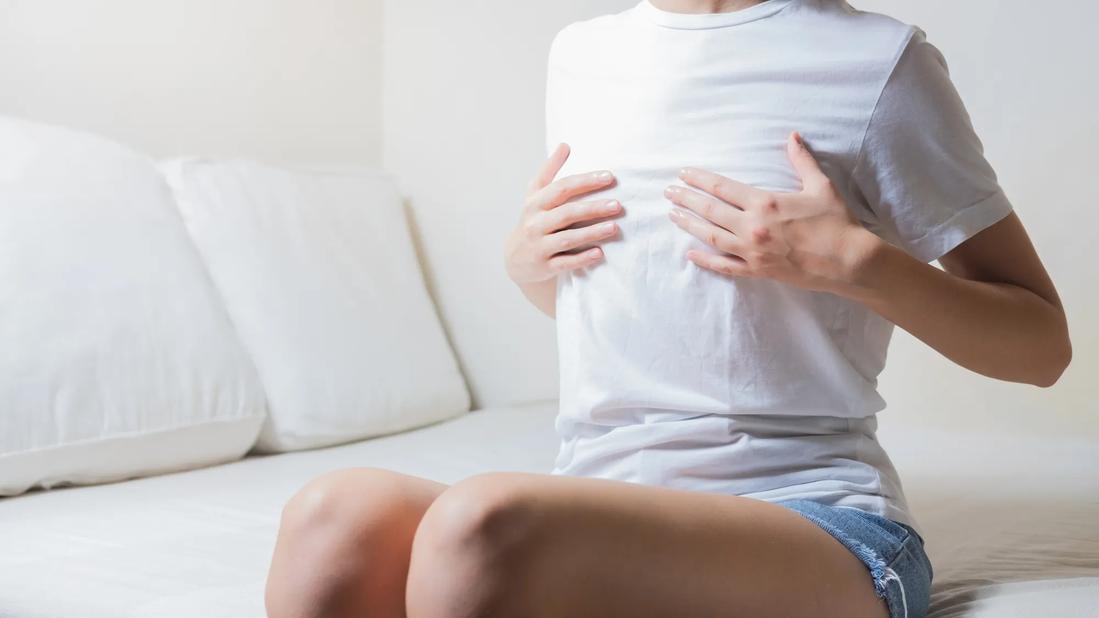
Image content: This image is available to view online.
View image online (https://assets.clevelandclinic.org/transform/add49db6-28bf-40fc-9f79-94e076a774b4/breast-pain-1186362479)
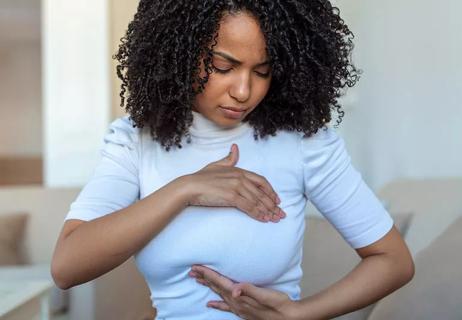
Person sitting on edge of bed with their hands pressed on their breasts
Few things can make your mind race faster than pain in your breast.
Advertisement
Cleveland Clinic is a non-profit academic medical center. Advertising on our site helps support our mission. We do not endorse non-Cleveland Clinic products or services. Policy
The good news? Breast pain is very common — and breast cancer or other serious concerns rarely cause it.
Still, breast pain sometimes deserves a closer look.
Breast health specialist Lakshmi Khatri, MD, explains what may be causing your pain and when it’s time to call a healthcare provider.
Let’s get the scary stuff out of the way: Breast pain usually isn’t related to breast cancer.
“Breast pain is very, very common,” Dr. Khatri says. “It’s actually very rare for breast cancer to present as pain.” (You can go ahead and exhale now.)
Most often, breast pain is related to less concerning causes, like:
While most breast pain is caused by something harmless, the following situations deserve more attention.
Breast pain often ebbs and flows. But breast pain that sticks around is worth getting checked.
Advertisement
“If you have long-lasting pain in one area of one breast, that’s something we’d want to evaluate with imaging,” Dr. Khatri says.
Even then, don’t assume the worst. A small number of women with persistent pain in one area of their breast are ultimately diagnosed with breast cancer — but most have another, noncancerous explanation for their symptoms.
Hormonal changes throughout your menstrual cycle can cause breast pain. But that cyclical pain typically becomes less common after you enter menopause.
“Breast pain after menopause isn’t automatically a major concern,” Dr. Khatri reassures. “But if you develop persistent breast pain after menopause — especially if it’s in one area or comes with other changes to your breasts — it’s worth scheduling an evaluation.”
Breast pain that comes with a new lump should always be checked.
Most lumps turn out to be harmless cysts, especially if you haven’t reached menopause. Others may be fibroadenomas or other benign breast changes. “The important thing is to know what your own breast tissue normally feels like,” Dr. Khatri emphasizes. “If you notice a new lump or something else that’s obviously different, don’t hesitate to get it checked out.”
Breast pain that’s accompanied by changes in how your breasts look deserves medical attention.
Talk with a healthcare provider if you notice:
Conditions other than breast cancer often cause these symptoms.
“Eczema commonly affects the nipple and surrounding skin,” Dr. Khatri notes. “But because more serious conditions can look similar, it’s important to seek care for any new changes.”
Breast pain can also signal an infection like mastitis, particularly if you’re breastfeeding. Call a healthcare provider if your breast pain comes with signs of an infection, like:
Prompt treatment can help keep a breast infection from becoming more serious.
It’s normal for your breasts to feel sore after a fall, sports injury or other trauma.
But don’t ignore pain that lasts more than a few days or comes with a new lump or other breast changes. Your healthcare provider can determine whether additional testing is needed.
Schedule an appointment if you have any breast change that feels new or unusual for you. A healthcare provider will examine your breast and decide whether imaging, such as a mammogram or breast ultrasound, is appropriate. Getting new or unusual symptoms checked is the best way to get answers — and peace of mind.
Advertisement
“If something doesn’t feel normal for you, don’t hesitate to come in,” Dr. Khatri encourages. “We’d much rather evaluate something that turns out to be nothing serious than miss something important.”
Advertisement

Sign up for our Health Essentials emails for expert guidance on nutrition, fitness, sleep, skin care and more.
Learn more about our editorial process.
Advertisement
No two breast cancer lumps feel exactly alike — know what’s normal for your breasts and get any changes checked out

Dry skin, eczema, allergies and infections can all cause itchiness — but in some cases, itching may signify a more serious health condition
A breast abscess feels like a hot, hard and painful lump — seek support from a healthcare provider at first signs of an infection
Bacterial infections, breast abscesses and clogged milk ducts can all cause inflammation in your breasts
Any mass or abnormal area that you feel for more than three days should be checked out

Managing your weight through physical activity may lower your chances of getting this common cancer
Not all breast lumps signal cancer, and not all breast cancer causes lumps — it’s important to know the facts
The kind of testing you need depends on your symptoms

Hormonal changes, a slower metabolism and muscle loss can make weight gain more common around menopause — healthy habits can help you manage it

Life-threatening complications include sepsis, stroke, pneumonia and more
Fruity-smelling breath can happen when your body burns fat for energy, and in some cases, can signal a medical emergency
 Search










