Locations:





No two breast cancer lumps feel exactly alike — know what’s normal for your breasts and get any changes checked out
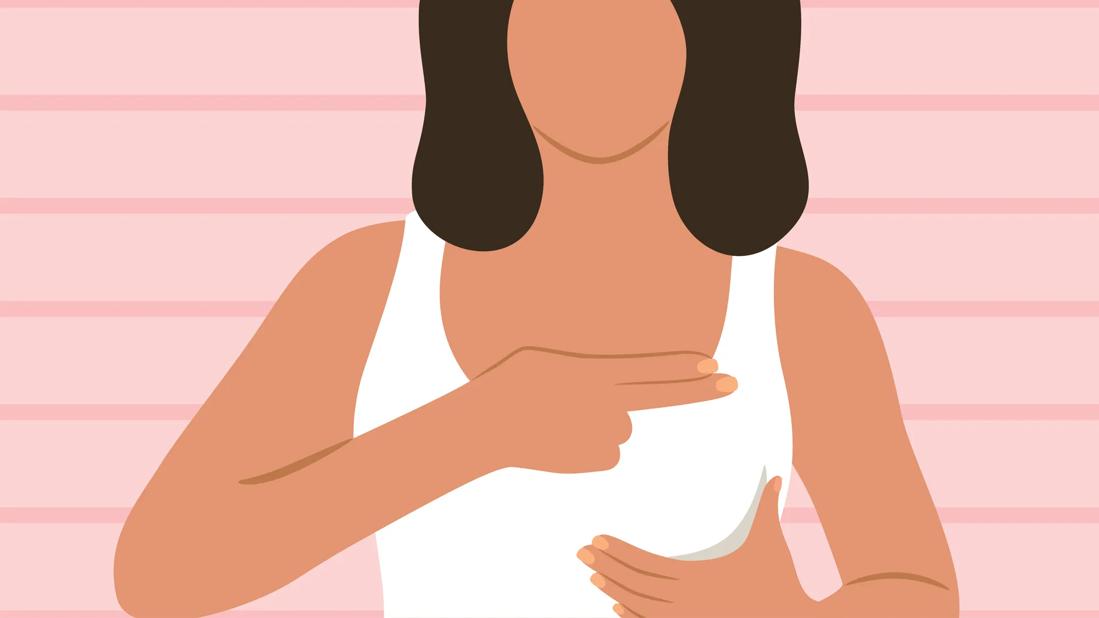
Image content: This image is available to view online.
View image online (https://assets.clevelandclinic.org/transform/66c7af80-847f-46fa-a1f7-ed154a7953eb/breast-self-exam-1727889140)
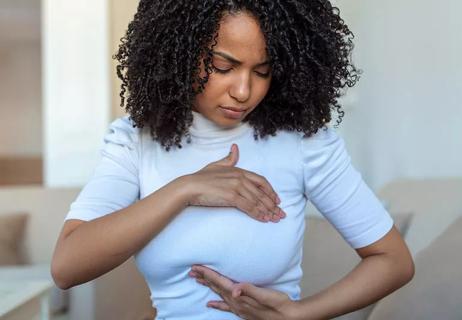
Person doing a breast self-exam
Feeling a lump in your breast can be frightening, so let’s make one thing clear from the jump: The vast majority of breast lumps aren’t cancer.
Advertisement
Cleveland Clinic is a non-profit academic medical center. Advertising on our site helps support our mission. We do not endorse non-Cleveland Clinic products or services. Policy
Still, it’s important to notice any changes in your breasts. But how can you tell what’s normal — and what deserves a closer look?
Breast health specialist Lakshmi Khatri, MD, explains what breast cancer lumps can feel like, plus other warning signs to watch for and when it’s time to get checked.
One of the trickiest things about breast cancer is that there isn’t one “typical” kind of lump. Two people can have breast cancer, and their lumps can feel completely opposite. Breast cancer lumps can feel different depending on the kind of cancer, the size of the tumor and your breast anatomy.
Without medical imaging tests, like mammograms or breast ultrasounds, there’s no reliable way to know whether a breast lump is cancer or something more routine, like a cyst.
In other words, you can't diagnose breast cancer by feeling alone. A breast cancer lump may be:
Making things even more complicated: Healthy breast tissue can also feel lumpy.
“I describe normal breast tissue as feeling like cobblestones,” Dr. Khatri says. “There are lots of little nooks and crannies.”
As you can’t rely on how a lump feels as a surefire sign that it’s cancer, it can help to look for other clues, too.
Advertisement
Of course, you should pay attention to new lumps or bumps — but Dr. Kahtri points out that some breast cancers don’t come with a noticeable lump at all. So, it’s also important to notice changes like:
Getting familiar with your breasts is important. The better you know your body, the more likely you are to notice changes that could be something serious. So, you may have heard about the importance of performing regular breast self-exams (in addition to having annual well-woman exams and mammograms).
But resist the urge to jump to conclusions based on your own exam. If you notice anything different about your breasts, it’s time to call a women’s health provider.
“Even experienced clinicians can’t tell which lumps are cancerous for certain by feel alone,” Dr. Khatri clarifies. “Self-exams are an important first step to noticing a change. But a change isn’t necessarily a red flag for cancer.”
For example, lumps that are smooth, soft and compressible are often cysts, especially in younger women. Your provider will likely still recommend further testing, like a breast ultrasound, to be certain.
“The most important thing isn’t memorizing what a breast cancer lump feels like,” Dr. Khatri emphasizes. “It’s knowing what your breasts normally feel like, so you’ll recognize when something changes.”
Advertisement

Sign up for our Health Essentials emails for expert guidance on nutrition, fitness, sleep, skin care and more.
Learn more about our editorial process.
Advertisement
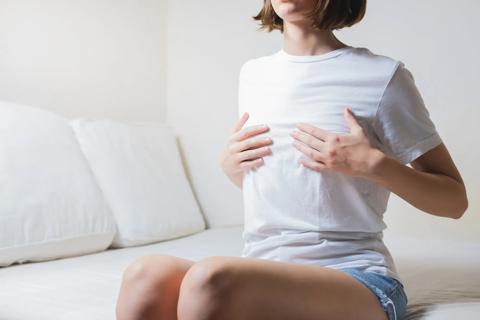
Most breast pain isn’t a sign of cancer, but certain symptoms deserve a closer look

Dry skin, eczema, allergies and infections can all cause itchiness — but in some cases, itching may signify a more serious health condition
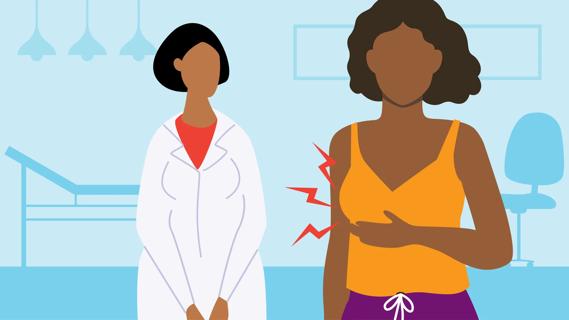
A breast abscess feels like a hot, hard and painful lump — seek support from a healthcare provider at first signs of an infection
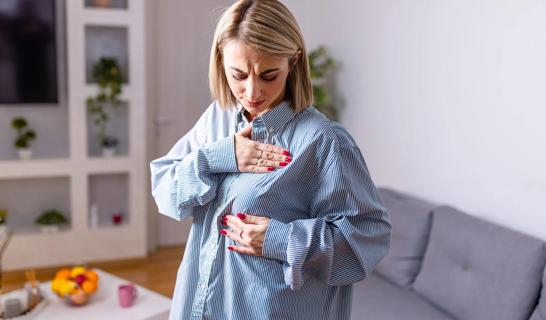
Bacterial infections, breast abscesses and clogged milk ducts can all cause inflammation in your breasts
Any mass or abnormal area that you feel for more than three days should be checked out

Massaging your breast tissue can help reduce breastfeeding pain, treat lymphedema and find cancer early

Head to bed in a bra to reduce breast pain, nipple irritation and stretch marks

For large breasts, wearing a bra may provide support that helps alleviate back pain — but if you’re comfortable without one, go for it!

Managing your weight through physical activity may lower your chances of getting this common cancer

It typically starts in October and winds down in early spring, with cases at their highest in the middle of winter

Anxiety disorders, health conditions and past trauma can make driving nerve-wracking — help is available
 Search










