Locations:





Not all breast lumps signal cancer, and not all breast cancer causes lumps — it’s important to know the facts

Image content: This image is available to view online.
View image online (https://assets.clevelandclinic.org/transform/c4fc7824-db29-49b7-bd89-06d11833a75d/breast-cancer-myths-1463822355)
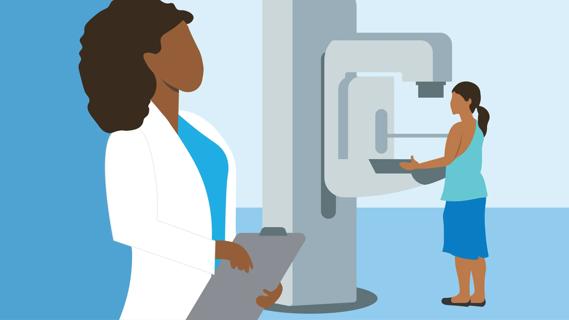
Healthcare provider showing patient how a mammogram machine works
When it comes to breast cancer, you can never be too safe. Having mammograms, doing breast self-exams and watching for warning signs can help detect cancer in its earliest stages and allow for timely treatment.
Advertisement
Cleveland Clinic is a non-profit academic medical center. Advertising on our site helps support our mission. We do not endorse non-Cleveland Clinic products or services. Policy
Increased awareness and candidness about breast health are good things, but they have also fueled some common misconceptions. Knowing the truth about breast cancer can help you better understand your own breast health, including when to talk to a healthcare provider.
Video content: This video is available to watch online.
View video online (https://cdnapisec.kaltura.com/p/2207941/sp/220794100/playManifest/entryId/1_laykbcij/flavorId/1_5f3sgelj/format/url/protocol/https/a.mp4)
Common signs of breast cancer and what to look for.
Does breast cancer always cause pain? Are all lumps always cancerous? Are mammograms actually safe? Oncologist Halle Moore, MD, sets us straight on some of the most common myths about this disease.
It can be scary to discover a new lump in your breast. But try to take a breath before jumping to any conclusions. Breast lumps are actually very common, and most of them are benign, meaning they’re not cancerous.
Just how common? Research shows that up to 50% of women between the ages of 20 and 50 experience breast tissue changes that cause noncancerous lumps, like cysts and fibroadenomas. These lumps are often related to changing hormone levels — and sometimes, they don’t even require treatment.
Still, you should never ignore a lump in your breast or assume it will go away on its own.
“Any time you notice lumps or other changes in your breasts, it’s important to see a healthcare provider,” Dr. Moore emphasizes. “There’s a high chance that it won’t be breast cancer. But in case it is, early diagnosis is critical.”
Advertisement
It’s true that your breast cancer risk increases as you get older: This condition is more common in women over age 40 than in younger women. But that doesn’t mean younger women can’t get it.
In fact, one study found that women under age 40 accounted for about 5% of all breast cancer cases. But younger women were more likely to be diagnosed with more aggressive and advanced forms of cancer.
“Breast cancer can occur at any age in an adult, especially if there's a family history or other risk factors,” Dr. Moore states.
Breast cancer is far more common in women. But it can happen to men, too — and it can develop in men who don’t have any known risk factors,
“Male breast cancer makes up less than 1% of all breast cancer cases,” Dr. Moore reports. “But ignoring the signs can lead men to dismiss their symptoms and delay seeking care.”
As in women, breast cancer in men can develop at any age. But most cases are diagnosed in men aged 60 to 70.
If one or more of your biological relatives has had breast cancer, you may be at a higher risk for developing it, too. There are more than a dozen genes that can substantially raise your risk of this disease.
But a lack of family history doesn’t mean you’re in the clear.
“Breast cancer can affect anyone, even if it doesn’t run in your family,” Dr. Moore clarifies.
A lump or a firm area in the breast is one of the most common symptoms of breast cancer. But not always.
“Less often, people can have pain or swelling in the breast or a swollen lymph node in the underarm area,” Dr. Moore says. “And sometimes, there are no symptoms from breast cancer at all.”
That’s one of the many reasons why it’s so important to have regular mammography screenings starting at age 40 (or earlier, if your healthcare provider recommends it). These screenings are the most common way that breast cancer is diagnosed.
Some breast cancer lumps are fixed, meaning they stay in place when you touch them. But don’t assume that a lump can’t be cancerous just because it isn’t fixed.
“Breast cancer lumps are often movable in the early stages,” Dr. Moore says. “As they progress, they become less movable and more fixed, which feels different than the breast tissue around them.”
Breast cancer can sometimes cause breast pain, depending on where it occurs in the breast — and especially if it grows quickly. Breast pain in one consistent, particular spot is a warning sign.
But that doesn’t mean that breast pain always signifies cancer.
Advertisement
“Many women experience general breast pain or soreness that comes and goes. But that’s not necessarily a sign of cancer,” Dr. Moore says. “It’s often due to hormonal factors instead.”
You might’ve heard that mammograms themselves contribute to cancer risk. But they’re considered exceptionally safe.
“Mammograms do expose your breasts to small amounts of radiation,” Dr. Moore acknowledges. “But study after study confirms that the benefits of mammography outweigh the risks of late diagnosis.”
There are rare times when your healthcare provider might recommend an alternative to mammography, like if you’re considered high-risk for receiving radiation. Ask your provider if you have any questions or concerns.
Neither you nor your healthcare provider — no matter how good they are — can tell with certainty whether a lump is cancerous without diagnostic evaluation.
“Saying, ‘It’s probably OK,’ without investigating further can cause a delay in diagnosing breast cancer,” Dr. Moore cautions.
There are lots of myths and misconceptions out there about breast cancer. But knowing the truth can help you understand when to seek care.
“Lumps, pain and other breast abnormalities can have a variety of causes that aren’t cancer, but it’s always important to get them checked out to be sure,” Dr. Moore reiterates. “And the more familiar you are with your own breasts, the better you’ll be able to notice changes if they do occur.”
Advertisement
The sooner you have your symptoms evaluated, the better. If it is breast cancer, an early diagnosis allows for earlier treatment — and if it’s not breast cancer, that reassurance will be invaluable.
Advertisement

Sign up for our Health Essentials emails for expert guidance on nutrition, fitness, sleep, skin care and more.
Learn more about our editorial process.
Advertisement

Managing your weight through physical activity may lower your chances of getting this common cancer
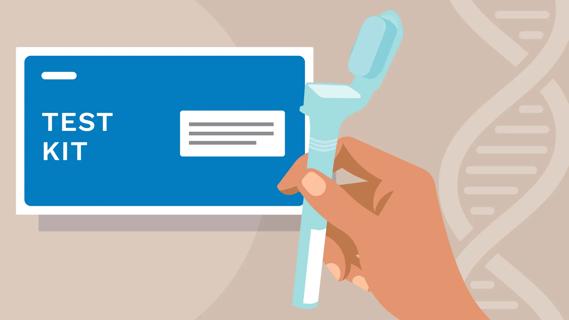
If you’re of Ashkenazi Jewish descent, these tests may be a reasonable starting point — but more thorough genetic testing can go much deeper

Breast cancer treatments can lower estrogen, which has a ripple effect on your bones

Breast cancer treatments can lower your fertility, but egg freezing and other preservation measures may be an option
Practical help and honest conversations can make a meaningful difference
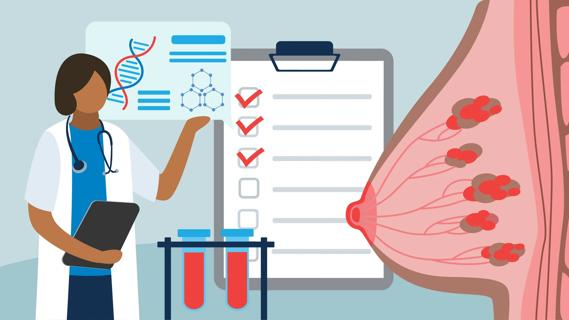
Your path lab report contains detailed information about your tumor — your care team can work with you to turn it into a care plan
Doctors look at stage, biology, genetic risk and more to recommend your treatment plan
While you can’t change risk factors, like age or genetics, lifestyle choices and regular screenings can help lower your overall risk
Managing your weight through physical activity may lower your chances of getting this common cancer

It typically starts in October and winds down in early spring, with cases at their highest in the middle of winter

Anxiety disorders, health conditions and past trauma can make driving nerve-wracking — help is available
 Search










