Locations:





It’s much less common in men, but it can happen — so it’s important to recognize warning signs and symptoms
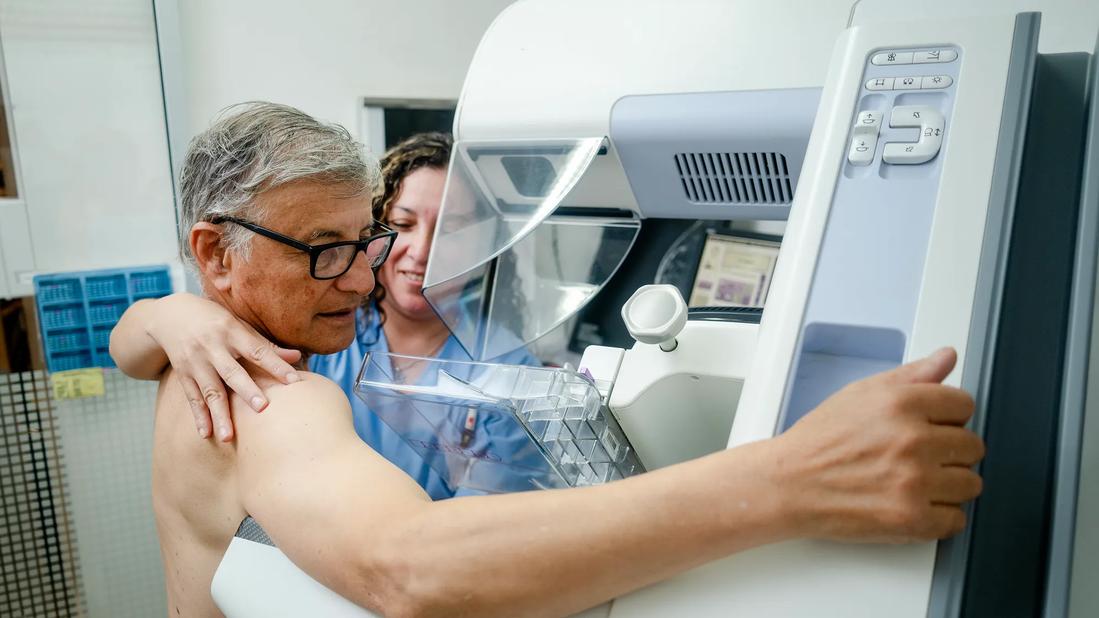
Image content: This image is available to view online.
View image online (https://assets.clevelandclinic.org/transform/919cab1b-b542-4a6b-922b-b9a007ab5b3f/man-mammogram-2245307015)
Older man getting a mammogram, with healthcare provider
After a male breast cancer diagnosis, it’s not uncommon to hear (or to be the one to say), “I didn’t even know men could get breast cancer.”
Advertisement
Cleveland Clinic is a non-profit academic medical center. Advertising on our site helps support our mission. We do not endorse non-Cleveland Clinic products or services. Policy
But they can, and the reason is simple: Men have breast tissue, too. It doesn’t usually develop the same way that it does in women, but that tissue can still undergo changes that ultimately lead to cancer.
Many men don’t even realize the risk, especially because male breast cancer makes up less than 1% of all breast cancer cases.
“It’s so uncommon in men that many ignore the signs,” says medical oncologist and hematologist Halle Moore, MD. “That can sometimes lead them to dismiss symptoms or delay seeking care.”
In men, breast cancer often develops underneath or around the nipple.
“The most common sign is a lump or area of skin thickening in the breast tissue,” Dr. Moore reports. “But men often think they’re just dealing with a cyst or something else that doesn’t require immediate attention.”
Any lumps, pain or nipple changes warrant medical attention, she urges. Possible warning signs include:
If you’re experiencing any of these symptoms, it doesn’t automatically mean cancer. Most breast lumps in men are benign, meaning they’re not cancerous. And there can be other explanations, too — like gynecomastia, a noncancerous condition that causes enlarged breast tissue in men.
Advertisement
But only a healthcare provider can say for certain.
“Regardless of what you think it may or may not be, any new lump or other unexplained breast change should be evaluated by a medical professional,” Dr. Moore reiterates.
Certain factors can increase your risk of developing breast cancer.
“As in women, breast cancer can develop in men who don't have any known risk factors,” Dr. Moore clarifies. “That’s why paying attention to symptoms is so important.”
Because breast cancer is often thought of as being a “women’s disease,” men sometimes hesitate to bring up breast symptoms with a healthcare provider. But if it is cancer, putting off that conversation only delays diagnosis and treatment.
“It’s always better to get answers than assume a symptom isn’t serious,” Dr. Moore emphasizes.
Plus, the earlier breast cancer is diagnosed, the more options are typically available for treatment.
“Breast cancer in men is diagnosed and treated much like breast cancer in women,” she continues. “It all depends on factors like the type and stage of the cancer and your overall health and preferences.” Treatment may involve:
Make an appointment with your primary care provider or a healthcare provider if you notice a lump, pain, nipple changes, skin changes or any other unusual symptom in your breast or chest area.
“Breast cancer may be rare in men, but rare doesn’t mean impossible,” Dr. Moore says. “Knowing the signs and seeking care can help ensure that potential problems are found and addressed as early as possible.”
Advertisement

Sign up for our Health Essentials emails for expert guidance on nutrition, fitness, sleep, skin care and more.
Learn more about our editorial process.
Advertisement
Eyes typically increase to full size during two growth spurts in childhood

Pre-birth injections and monoclonal antibodies can help prevent serious complications

These medications help calm the overactive brain signals that cause involuntary movements

The right mask fit, pressure settings and machine adjustments can help make this treatment more comfortable

RSV is common and may cause serious complications, but there are ways to reduce your and your baby’s risk of serious illness

Don’t underestimate the power of a pause

Boys are more likely to exhibit easily noticed hyperactive symptoms, while girls often show subtler, quieter signs of the condition

While the ADHD medications are similar, variations may make one a better choice over the other for you

Managing your weight through physical activity may lower your chances of getting this common cancer

It typically starts in October and winds down in early spring, with cases at their highest in the middle of winter

Anxiety disorders, health conditions and past trauma can make driving nerve-wracking — help is available
 Search










