Locations:





A single donor can give more than 80 people a shot at a longer, fuller life
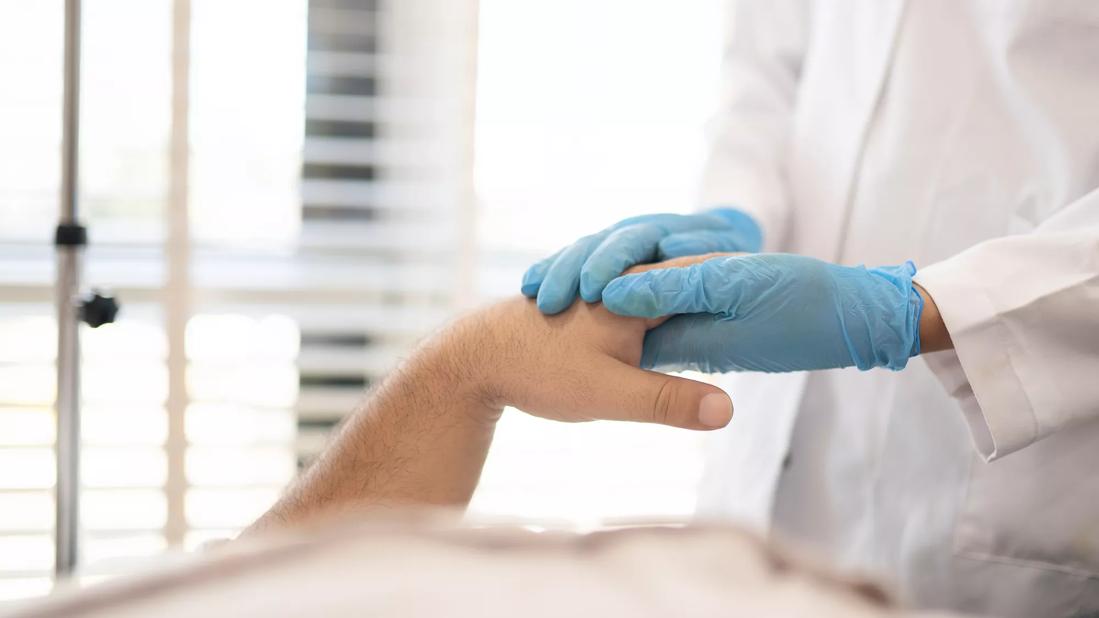
Image content: This image is available to view online.
View image online (https://assets.clevelandclinic.org/transform/0e9a66ef-73ff-4f3b-b2a8-8fdee03bbf86/organ-donor-recipient-doctor-1348048953)
Healthcare provider in gloves holding hand of patient
“Do you want to be an organ donor?” It can be a disarming question when you aren’t expecting it. But it’s worth giving serious thought. Every eight minutes, a new person joins the national waiting list for an organ transplant, and many end-stage diseases have no other cure. Your gift could, quite literally, save several lives.
Advertisement
Cleveland Clinic is a non-profit academic medical center. Advertising on our site helps support our mission. We do not endorse non-Cleveland Clinic products or services. Policy
In 2025 alone, Cleveland Clinic’s Enterprise Transplant Center staff completed 1,424 transplants. We talked with Transplant Center Director Kenneth McCurry, MD, about what becoming an organ donor means.
In 2025, a record-breaking 49,000 people donated their organs. Unfortunately, the need for donors is only growing with each passing day. The U.S. transplant waitlist currently has over 103,000 people on it.
Dr. McCurry was an organ donor long before he became a doctor.
“Being a donor became more meaningful to me over the years, as I became interested in medicine and ultimately pursued a career in transplantation,” he relates. “It has an even more significant meaning to me now than it did then, because I see how it helps people.”
If you’re considering registering, keep in mind:
Advertisement
Dr. McCurry explains that you don’t have to be dead to be an organ donor: Living donation is another way to give the gift of life to a person in need.
“Unfortunately, there’s a far greater need for organ transplantation in the U.S. than we can meet with deceased donation,” he notes. “Living donation is a way to help fill in that gap.”
How is living organ donation possible? Because there are some parts of your anatomy that you can donate without damaging your health. Most people are born with two kidneys, for example, but only need one to function. And your liver can regenerate, meaning you can have a portion removed without losing organ function.
“Living donation is generally quite safe, and donors recover well,” he adds. reports. “There’s a process you go through to ensure you’re healthy enough, can consent and are psychologically prepared to donate. Because of those guardrails, the vast majority of living donors don’t have negative effects.”
There are several types of living organ donation:
Deciding whether to become a donor is a deeply personal process — and you deserve to have all the facts. The two biggest misconceptions about organ donation are that healthcare professionals treat donors differently and that donation leads to disfiguration.
It’s important to be very clear about this: Your care team does not procure your organs for donation. In most cases, they don’t even know your status.
“The transplant teams are not engaged in care at all,” Dr. McCurry reassures. “The team of caregivers treating you is focused solely on saving your life. There’s a very clear line between treating someone, trying to get them better and then — after declaration of death — proceeding with organ donation.”
If you’re a living donor — or want an open-casket service when you die — it’s understandable to worry that the process might affect your appearance. But Dr. McCurry says that transplant specialists revere donors and make sure they’re handled with honor and dignity.
Dr. McCurry is no stranger to the difficult conversations that patients and their loved ones sometimes have about organ donation.
“I think it’s really important to think about what being an organ donor means to you,” he advocates. “What are the opportunities? And what would it mean to you — or to your family, after you’re gone — to know you helped others?”
Advertisement
Whatever choice you make, you can feel safe in the knowledge that your providers will respect and fulfill your final wishes.
Advertisement

Sign up for our Health Essentials emails for expert guidance on nutrition, fitness, sleep, skin care and more.
Learn more about our editorial process.
Advertisement
From the DMV and your iPhone to your MyChart mobile app, getting set up is quick and easy

Restricting the amount of fluid you take in and eating less salt can make your dialysis treatments more efficient
Rest, hydration, protein and light exercise all play an important role in your healing

Consider the severity and location of your arthritis to decide on the right support
Eyes typically increase to full size during two growth spurts in childhood

Pre-birth injections and monoclonal antibodies can help prevent serious complications

These medications help calm the overactive brain signals that cause involuntary movements

The right mask fit, pressure settings and machine adjustments can help make this treatment more comfortable

Managing your weight through physical activity may lower your chances of getting this common cancer

It typically starts in October and winds down in early spring, with cases at their highest in the middle of winter

Anxiety disorders, health conditions and past trauma can make driving nerve-wracking — help is available
 Search










