Locations:





Barometric pressure can play a role in joint pain, but that doesn’t mean you have to live with it
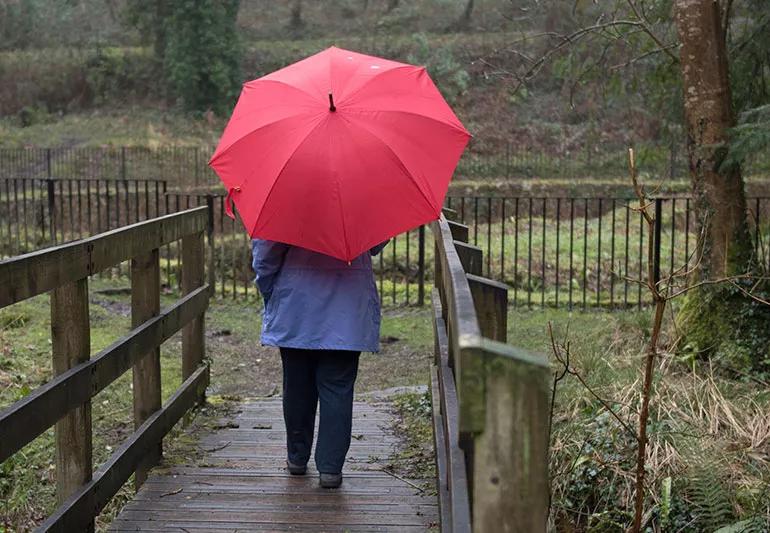
Image content: This image is available to view online.
View image online (https://assets.clevelandclinic.org/transform/84e49553-720d-41df-a3f1-6558f30b59b3/jointAcheWeather-915300112-770x533-1_jpg)
woman's knee aches during weather changes
Tomorrow’s weather forecast for your creaky joints? Cloudy with a chance of pain.
Advertisement
Cleveland Clinic is a non-profit academic medical center. Advertising on our site helps support our mission. We do not endorse non-Cleveland Clinic products or services. Policy
There’s a long-held belief that worsening weather can increase aches in your joints. There’s just something about cold and damp days that make your muscles, ligaments and joints feel stiff and painful.
But is there really a cause-and-effect relationship between weather and joint pain or is it just an age-old medical myth? For an answer, let’s check with chiropractor Andrew Bang, DC.
Judging by what Dr. Bang hears, the answer seems to be YES. “I see it all the time in my office,” he says. “People come in on bad weather days and they’re like, ‘I’m feeling it today. I’m really feeling it today.’”
They’re not the only ones. A study looking at pain felt by 13,000 United Kingdom residents living with conditions such as arthritis found that aches increased on days with:
But as is often the case, nothing is 100% when it comes to research. Other studies show just a casual or mild relationship between changing weather and achy joints.
“So, is the belief about weather changes causing joint pain true?” asks Dr. Bang. “Well, it doesn’t happen to every person — but we know it happens to some. There’s something there. We just haven’t quite figured it out scientifically yet.”
Advertisement
Video content: This video is available to watch online.
View video online (https://cdnapisec.kaltura.com/p/2207941/sp/220794100/playManifest/entryId/1_6mdzcvhr/flavorId/1_5f3sgelj/format/url/protocol/https/a.mp4)
Barometric pressure measures the weight of the air in the atmosphere pressing down against us. On average, the atmosphere exerts 14.7 pounds per square inch (psi) on the Earth’s surface.
But as the weather changes, that pressure/psi can bounce up and down.
Decreasing pressure — which typically ushers in worsening weather — means air presses a little less on our bodies. That lack of compression allows tissues within your body to swell slightly, which can irritate your joints.
The speed at which the pressure changes also makes a difference. A sudden drop in pressure as a storm blows into town creates more noticeable aches than a slow, gradual pressure decline.
“So, if you have arthritis, the space in your joint is already reduced,” notes Dr. Bang. “Add in an expansion of tissues because of the pressure change and you can see why people might hurt more.”
Lower barometric pressure also brings weather that tends to be cooler — and that’s not ideal for your joints. Cold can make muscles, ligaments and joints stiffer and more painful.
“There’s an oily fluid between your joints, and when it’s cold or the pressure changes, it can get sludgy,” explains Dr. Bang. “That prevents the oily fluid from lubricating the joint quite as well and can lead to pain when you move around.”
If damp, cold weather exacerbates chronic pain, you may wonder if you can avoid weather-related aches by moving to where the weather is milder, warmer or dryer. The answer? It’s not that simple.
Let’s look at the United States, where different regions have vastly different weather. One study found that people in mild, moderate San Diego reported more weather-related pain than residents of Boston and other towns known for getting a tad chilly.
“The sensitivity is to change, and the humidity and barometric pressure goes up and down in every zip code,” notes Dr. Bang. “There’s no avoiding it.”
Also, there’s some evidence that extreme heat may aggravate joints similar to extreme cold.
While you can’t avoid changing weather, you can take steps to prevent, ease or relieve weather-related joint pain. Dr. Bang recommends:
Advertisement
“When it comes to making an achy joint feel better, there are three main things you can do to make it feel better — heat it up, tighten it up or loosen it up,” states Dr. Bang. “That can go a long way to solving any problems.”
Advertisement

Sign up for our Health Essentials emails for expert guidance on nutrition, fitness, sleep, skin care and more.
Learn more about our editorial process.
Advertisement

Some creakiness is typical after rest, but longer-lasting stiffness may be other issues
What you need to know about prosthetic joint infection after surgery

Several options to help get you moving
Even one less pound helps preserve hips and knees
Getting the facts straight about osteoarthritis

Joint noises are common and usually due to normal body processes, but seek care if you also have pain or swelling

Popping your knuckles should be safe as long as you do it carefully

Fibromyalgia causes widespread pain — and now we know more about the root cause

Managing your weight through physical activity may lower your chances of getting this common cancer

It typically starts in October and winds down in early spring, with cases at their highest in the middle of winter

Anxiety disorders, health conditions and past trauma can make driving nerve-wracking — help is available
 Search










