Locations:





This social media productivity hack involves carving out time every morning for self-care

Image content: This image is available to view online.
View image online (https://assets.clevelandclinic.org/transform/55bd7635-465e-4803-8191-97612cb3d5f4/runner-outdoors-2060295100)
Man running intently on path outside, arched bridge nearby
It’s been true throughout human history: We’re always looking for more time. And as we never seem to find it, we focus on filling, stretching and enriching the time we do have.
Advertisement
Cleveland Clinic is a non-profit academic medical center. Advertising on our site helps support our mission. We do not endorse non-Cleveland Clinic products or services. Policy
If you spend any of your time on social media, you know that productivity trends are a go-to topic for influencers. Every day, there seems to be a new method for making the most of your time (and improving your health and well-being in the process).
The “5 to 9 before 9 to 5” is a particularly popular social media productivity trend. It’s popular, but does it actually make you happier, healthier and more effective? And even if it does, is it sustainable long term?
We asked psychologist Ramone Ford, PhD. He breaks down the benefits and drawbacks — and shares advice for getting started.
The premise of the 5 to 9 before 9 to 5 routine is easy to explain but, for many people, hard to actually do. Basically, you wake up at 5 a.m. and devote the first four hours of your day to self-care. Only after making time for yourself do you settle in and start your workday.
Dr. Ford describes self-care as activities you do to ensure your physical, mental and spiritual health. The 5 to 9 doesn’t specify the kinds of self-care activities you do during your morning me-time. Instead, he says that you’re supposed to tailor the 5 to 9 to fit your needs.
Here are a few examples of self-care activities that might make sense to include in a 5 to 9 routine:
Advertisement
Whatever combination of self-care activities you decide to perform, the end result is the same: You start your workday having already accomplished something that’s meaningful to you. At least, that’s what’s supposed to happen.
When it works, the 5 to 9 creates a snowball effect. The healthy habits you practice — and the sense of personal achievement — motivate you to continue making positive choices throughout the day.
“Especially if you’re waking up to do healthy activities you don’t typically do, that can have a positive effect on your physical and mental health,” Dr. Ford notes.
Devotees of the 5 to 9 often say the routine:
Everybody’s 5 to 9 looks a little bit different, but as Dr. Ford explains, the goal is the same: Getting more out of your day.
“I’m not a morning person,” he confesses. “But I always feel better when I wake up early and get a lot of things taken care of.”
There’s no doubt about it: The 5 to 9 trend sounds great in theory. Transformative, even. But in practice? Well, results are mixed, to say the least.
For some, a 5 to 9 is a recipe for a crash and burn.
For one thing, a 5 to 9 doesn’t actually add more hours to your day. So, in order to practice a morning self-care routine, you have to give something else up. For lots of people, that “something” ends up being sleep.
That’s a big mistake, Dr. Ford says.
“We need the restorative benefits of a good night’s sleep for everything from our immune and brain health to weight control,” he elaborates. “If you’re burning the candle at both ends, it can become physically, mentally and emotionally problematic.” You may want to let this social media trend pass you by if you:
Advertisement
Getting enough sleep is a huge accomplishment. But a 5 to 9 routine may still be a bad fit for you if you have a chronic health condition that impacts your energy levels, mood, motivation or executive functioning skills. Talk to your provider before changing things up if you:
Love the idea of a 5 to 9, but can’t wrap your head around the idea of waking up at 5 a.m.? No problem! Adopting healthy habits is easiest when you adapt the strategy to fit your needs. You can do that by:
Advertisement
Don’t twist yourself in knots trying to make a 5 to 9 before 9 to 5 happen. If adopting a self-care schedule is adding to your stress, robbing you of sleep or burning you out, let it go. You don’t serve the routine. It serves you. And if it stops serving you, dropping it’s the right thing to do.
Remember: At the end of the day (and at the beginning!), you are more than your productivity.
Advertisement

Sign up for our Health Essentials emails for expert guidance on nutrition, fitness, sleep, skin care and more.
Learn more about our editorial process.
Advertisement

This modern twist on a traditional sauna may help support heart health, soothe sore muscles, manage pain and more

That unnerving sense that something terrible is about to happen can be a sign of serious distress — trust your gut
From hydration to meditation, little changes can yield big benefits
Practices range from simple lifestyle changes to extreme experiments — and not all approaches come with the same level of risk

Cold-water immersion offers benefits like sore muscle relief, but the therapy comes with risks, too

These wearable devices can help you understand your body and stay active — but how you use them matters most
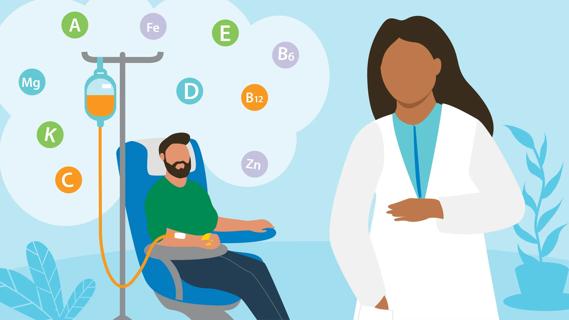
The process delivers nutrients quickly and efficiently, but research is limited on many claimed benefits

Hot tub sessions can help relieve stress, soothe sore muscles and improve heart health

Managing your weight through physical activity may lower your chances of getting this common cancer

It typically starts in October and winds down in early spring, with cases at their highest in the middle of winter

Anxiety disorders, health conditions and past trauma can make driving nerve-wracking — help is available
 Search










