Locations:





 Search
Body contouring can help trim excess skin
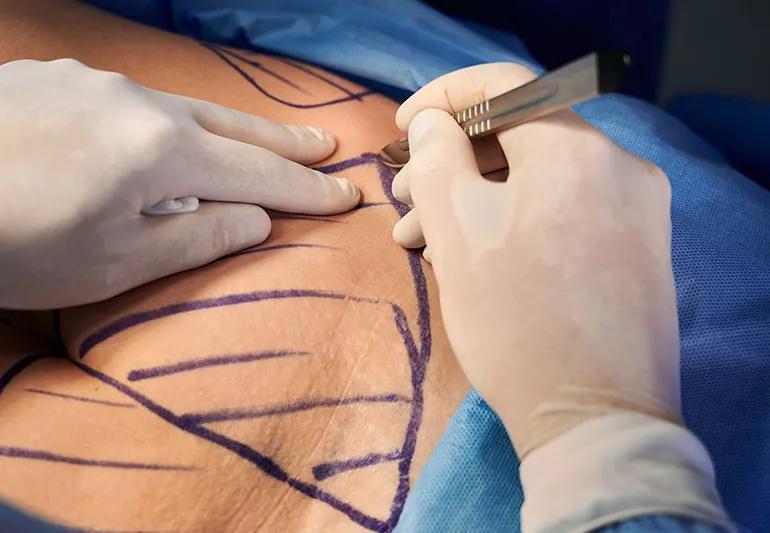
Image content: This image is available to view online.
View image online (https://assets.clevelandclinic.org/transform/5906a3e6-d803-4514-998d-28f8e9ed151c/BariatricSurgeryBodyContouring-1288244821-770x533-1_jpg)
A doctor using a scalpel to cut into a patient who is undergoing surgery
Have you lost a significant amount of weight but are now dealing with loose skin? There is a solution. A series of plastic surgeries called “body contouring” can help trim excess skin from several places on your body.
Advertisement
Cleveland Clinic is a non-profit academic medical center. Advertising on our site helps support our mission. We do not endorse non-Cleveland Clinic products or services. Policy
Sometimes, people believe removing extra skin after bariatric surgery or significant weight loss is a purely cosmetic procedure, but it has a practical health purpose.
“The medical reason to remove the skin is to prevent rashes and discomfort from the extra skin chafing,” says plastic surgeon J. Vicente Poblete, MD. “So, we usually recommend removing extra skin, as long as it’s going to be safe, reasonable and the patient is a good fit for the surgery.”
“It is also best to defer any body contouring surgery until the patient is as close as possible to target body weight and that the weight has been stable; usually, at least 18 months after the bariatric surgery.”
Dr. Poblete shares five places where body contouring can help.
The standard body contouring procedure for your belly is an abdominoplasty. The plastic surgeon removes your extra skin and tightens your muscles to make your entire stomach area look better and tighter.
“In some of the patients who’ve had a significant amount of weight loss, we actually go all the way around their body in a procedure that we call a circumferential or belt lipectomy,” says Dr. Poblete.
Also known as a lower body lift, the procedure reshapes your abdomen, hips, thighs and buttocks.
Advertisement
Both men and women may require breast surgery to remove extra skin hanging from their chest.
For women, the procedure is similar to a breast lift operation. For better shaping of your breast, an implant might be used. For men, your plastic surgeon performs a gynecomastia procedure, also used for men who develop breasts because of a hormone imbalance.
People often complain of deflated underarms or what is known as a “batwing” deformity — because there’s so much extra skin hanging down it resembles a batwing. This is a safe, specialized operation, but it will leave a scar, according to Dr. Poblete.
“All of these operations trade off scars for shape,” he says. “But they usually heal very well in time, and these patients don’t mind the trade-off.”
Your plastic surgeon can remove extra skin on your thighs, but this can be a more difficult procedure. It depends on how heavy your thigh still is and the anatomic location of your skin. If your skin excess is in your upper inner thigh, a medial thigh lift might help. With most weight loss people, the deflated appearance is circumferential (curved), and a standard thigh lift may be the optimal treatment, which results in a transverse (horizontal) and vertical scar.
Removing extra skin from your face is typically the final phase of the body contouring process. It usually requires a fair amount of work, too, Dr. Poblete says.
According to Dr. Poblete, your plastic surgeon can do some of these procedures at the same time, but this option really works best with people with lower body mass indexes (BMI) who are very healthy.
Usually, however, your surgeon performs the procedures in multiple stages. Each requires several months of rest and recovery. People must be at their plateau for weight loss for at least three months before beginning the procedures, too.
“Before each procedure, you have to be mentally prepared for a surgical recovery, motivated and have realistic expectations,” Dr. Poblete cautions. “I also have many patients supplement their protein intake prior to surgery.”
People must take ample time off work for the procedures and recovery. Covering the cost of the procedures is another concern for many. And as Dr. Poblete mentioned, people must also be mentally prepared.
“People think the insurance companies are going to cover all of this, and they don’t,” says Dr. Poblete. “Therefore, some people just can’t afford to have them done.”
While most people select the operation they want or need the most, the best thing to do first is talk with your doctor.
Advertisement
“Each patient needs a thorough medical consultation to assess their risk, what they need, what they’re capable of getting, how many procedures they’re capable of doing at one time, and what they can afford,” says Dr. Poblete.
Body contouring procedures and CoolSculpting®, or cryolipolysis, are very different. CoolSculpting is a brand name for a nonsurgical method that targets fat cells underneath the skin with controlled cooling. It only works on people with good skin quality, and will not be useful when excess skin laxity (loosness) is a concern.
People who’ve had bariatric surgery who’ve experienced substantial weight loss are not generally candidates.
“Post-bariatric body contouring is a more involved surgical procedure for our patients who need large amounts of skin surgically excised,” Dr. Poblete advises.
Advertisement

Sign up for our Health Essentials emails for expert guidance on nutrition, fitness, sleep, skin care and more.
Learn more about our editorial process.
Advertisement
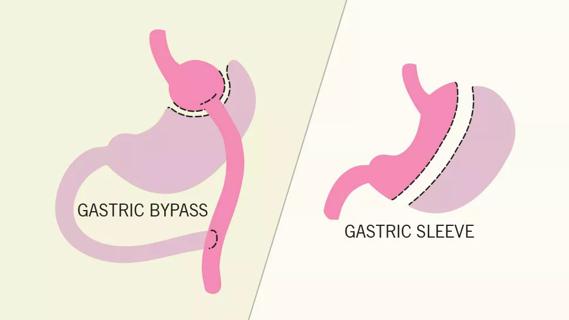
Gastric bypass and sleeve gastrectomy are different procedures that offer similar benefits, including significant weight loss
Warm water, lotion, cooking oils or nail polish remover may all help to loosen the adhesive

Plaque psoriasis builds over time, while GPP can appear suddenly with symptoms that may require urgent care

A little bit of math and a little bit of patience can put you on the path to meeting your goals

These tiny saltwater larvae can get trapped under your swimsuit and trigger an itchy reaction called seabather’s eruption
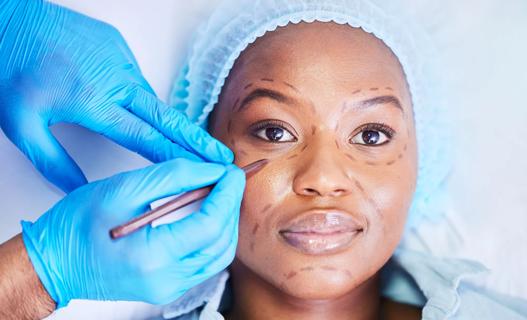
Start by selecting someone who’s board-certified and works from an accredited facility

Healthy eating helps, but so do a lot of other strategies for improving your overall health and wellness

Exercising while taking semaglutide and other GLP-1s helps prevent muscle loss and boosts metabolism

If you’re dealing with intense itching and red or swollen skin, it might be eczema
While similar in some respects, teeth and bones have key differences, like durability and structure
Warm water, lotion, cooking oils or nail polish remover may all help to loosen the adhesive











