Locations:





Healthy eating helps, but so do a lot of other strategies for improving your overall health and wellness

Image content: This image is available to view online.
View image online (https://assets.clevelandclinic.org/transform/de077c37-845f-417a-9e15-c6aae027fb92/weight-lifting-2175627928)
Person lifting large dumbbells in gym
If you’re taking GLP-1s, you know they can help you lose weight in a few different ways, like by targeting specific receptors in your body responsible for food cravings and metabolism.
Advertisement
Cleveland Clinic is a non-profit academic medical center. Advertising on our site helps support our mission. We do not endorse non-Cleveland Clinic products or services. Policy
“GLP-1s act on receptors in many parts of the body, some of which we’re still figuring out,” says endocrinologist Anira Iqbal, MD. “GLP-1s can be more effective for weight loss than lifestyle changes alone in a few major ways.”
If you’ve been taking GLP-1s, even for a little while, you may be wondering how to maintain the weight loss you’ve achieved. Dr. Iqbal explains what works and what to avoid.
To maintain weight loss on a GLP-1, you’ll need to make a comprehensive, long-term commitment to developing healthy habits. Dr. Iqbal explains how diet and nutrition, physical activity, mindful eating, and other physical and mental health changes all play a part.
GLP-1s can lead to rapid weight loss. But they can also cause you to lose muscle. So, when you’re taking these medications, it’s important to prioritize strength training as part of your exercise routine. That way, your body continues to shed fat while holding on to the muscle you’ve built.
Why is that so important? Because muscle plays a key role in weight loss. The more muscle you build, the more calories your body burns — even when you’re not actively exercising. Building muscle also helps improve how well your body uses energy. So, the more muscle you have, the more efficient your weight loss.
Advertisement
Tracking weight loss with GLP-1s goes beyond the scale to look at what you’re actually losing. For this, Dr. Iqbal recommends a body composition scan.
“This scan can tell you if you’re losing fatty tissue, muscle mass or water content,” she says. “It’s also the only way to really measure the amount of visceral fat you have.”
Visceral fat is the kind of fat that surrounds your organs. It’s associated with risk factors like diabetes and high blood pressure.
“A body composition analysis is done on a very simple machine, like an X-ray, and we use it to track what you’re losing every four weeks,” adds Dr. Iqbal. “Some gymnasiums have them, too, but you want someone who’s trained to interpret the results and discuss them with you.”
If your results show that you’re losing muscle and not enough fat, your provider can adjust your dosage, nutrition intake or exercise routine to help you lose fat more effectively.
Unsurprisingly, what you eat is key to long-term weight loss success on GLP-1s. But it also has a direct effect on how the medication works and the kinds of side effects you can expect.
For example, high-fat foods, fried foods and carbonated beverages can all cause upset stomach and worsen nausea. Same for large meals.
Skipping meals, on the other hand, can increase your risk of malnutrition. That’s because GLP-1s already lessen your ability to feel hungry and make you feel fuller for longer. This can limit your ability to recognize when you should be eating.
“While you’re on a GLP-1, focus on consuming protein-rich foods and have smaller, more frequent meals,” advises Dr. Iqbal. “That way, you’re getting enough nutrition throughout the day rather than all at once during a big meal, which might make you feel more nauseated.”
Not sure where to start? Work with a dietitian to develop a healthy eating plan that works for you.
Stress and a lack of sleep can put your body through the wringer, making it harder for you to lose weight and for GLP-1s to do their job.
“If you’re stressed, having trouble sleeping or have a lot of anxiety, there’s an increased risk of side effects and a higher chance that it becomes difficult to stay consistent with the medication,” says Dr. Iqbal. “So, anything you can do to reduce stress and improve your sleep quality will benefit the effectiveness of GLP-1s.”
She notes that some GLP-1s, like tirzepatide (Mounjaro®), have been shown to help treat sleep apnea in addition to obesity.
Advertisement
Consistency is key when you’re trying to maintain a healthy weight with GLP-1s.
“It’s important to take your medication on the same day every week,” states Dr. Iqbal. “If you’re off by a few days, the amount of medication in your body might not be enough to help sustain that weight loss.”
Side effects like nausea and bloating are most common in the first day or two after taking a GLP-1. So, Dr. Iqbal usually recommends taking it on a Friday or Saturday night, when you know you might be home the next day and can manage those side effects.
Nausea is to be expected, especially in the day or two following your first dose of GLP-1.
“Every time you take a GLP-1, the nausea gets better,” says Dr. Iqbal. “You might not even have any nausea by the time you get to the fourth week.”
But reach out to your healthcare provider if you’re dealing with any of the following, even at the lowest dose:
If you don’t experience any weight loss in the first four weeks of taking a GLP-1, tell your healthcare provider about that, too.
Advertisement
“We see most of the clinical benefits when we start increasing doses of GLP-1,” explains Dr. Iqbal. “We don’t want you to stay at the same dose if you’re not losing any weight, so it’s important to touch base with your providers every so often to make sure things are headed in the right direction.”
When taking GLP-1s, you want to maximize your weight loss and lessen the side effects. To do that, Dr. Iqbal recommends avoiding:
Studies show that you can keep the weight off the longer you take a GLP-1. For this reason, healthcare providers look at GLP-1s as long-term medications designed to help you live an overall healthy life.
Advertisement
Think of them like paddles for a canoe: As long as you’re using them, they help you get to your destination in a much more manageable way.
“To sustain weight loss after you’ve stopped the medication, it helps to make — and stick with — significant lifestyle changes,” advises Dr. Iqbal. “For the best results, we recommend GLP-1 maintenance doses for as long as possible.”
If you’re curious about what a maintenance dose looks like for you, talk with your healthcare provider. They’ll help you come up with a long-lasting strategy for losing weight and identify other steps you can take to make your weight loss journey more sustainable.

Sign up for our Health Essentials emails for expert guidance on nutrition, fitness, sleep, skin care and more.
Learn more about our editorial process.
Advertisement
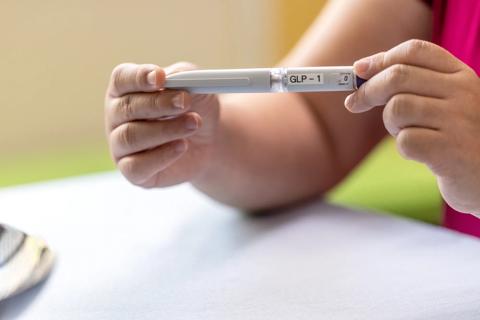
Abruptly ending treatment often comes with weight regain and other issues

Despite their name, these patches don’t contain GLP-1 medication and have dubious effects

Rapid weight loss can cause loose skin, facial volume loss and body contour changes

Eat smaller meals, stay hydrated, avoid high-fat foods and, if needed, ask your doctor about switching to a lower dosage
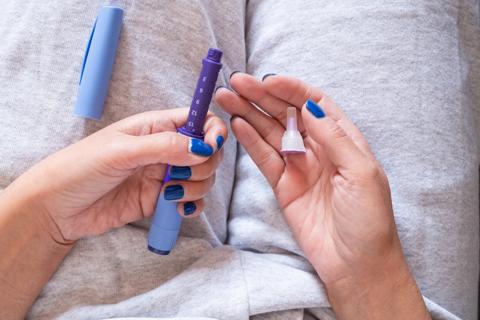
Taking a smaller dose than what your doctor recommends isn’t a good idea

Both are GLP-1 medications that are FDA-approved for Type 2 diabetes and weight loss, but how they work differs

Exercising while taking semaglutide and other GLP-1s helps prevent muscle loss and boosts metabolism
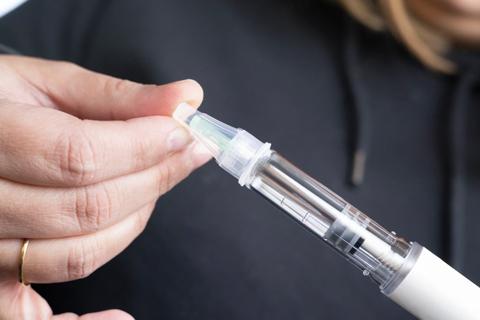
Semaglutide and other GLP-1s work best as long-term medications

Managing your weight through physical activity may lower your chances of getting this common cancer

It typically starts in October and winds down in early spring, with cases at their highest in the middle of winter

Anxiety disorders, health conditions and past trauma can make driving nerve-wracking — help is available
 Search










