Locations:





The benefits of these drugs typically outweigh potential risks — but talking about your eye health and GLP-1s with your provider is advised
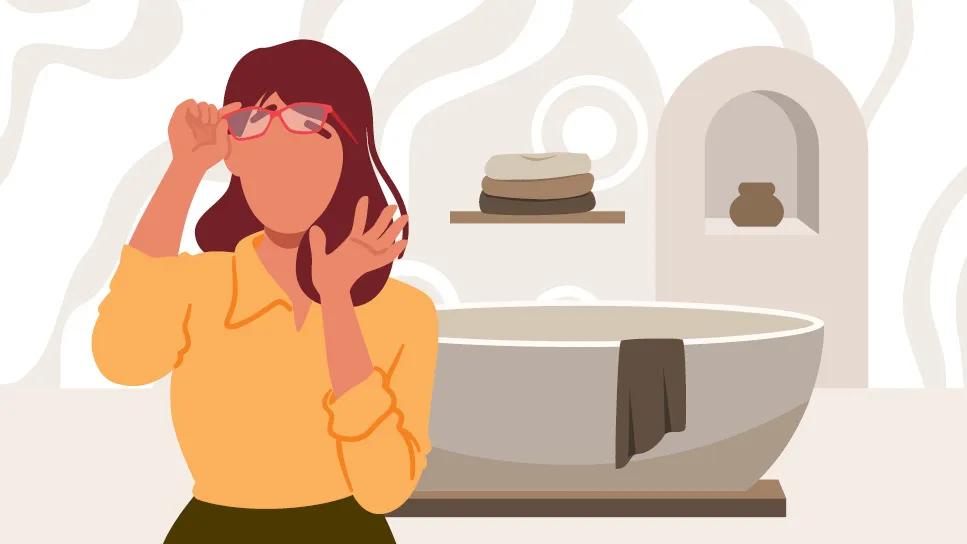
Image content: This image is available to view online.
View image online (https://assets.clevelandclinic.org/transform/78424a96-55a6-469a-9da6-61e6a902c38f/ozempic-blindness-2167323796)
Person in bathroom, lifting glasses off, trying to see
If you’re using Ozempic® or other GLP-1s, you’re probably familiar with potential side effects like “Ozempic face” and “Ozempic butt.”
Advertisement
Cleveland Clinic is a non-profit academic medical center. Advertising on our site helps support our mission. We do not endorse non-Cleveland Clinic products or services. Policy
But what about “Ozempic blindness”?
Vitreoretinal surgeon Katherine Talcott, MD, explains what we know about how weight loss drugs may impact your vision.
“Ozempic blindness” isn’t an actual medical diagnosis, notes Dr. Talcott.
“There’s been a lot of research on whether medications like Ozempic have any adverse impacts in the eye,” she says. “There’s a possible association with nonarteritic anterior ischemic neuropathy (NAION), which can cause vision to decrease.”
One study compared people who were on Ozempic with people who weren’t taking the medication. The results showed an increased risk of having NAION in people who were on Ozempic.
“That caused a fair amount of concern. But it’s important to note the researchers found an association, not necessarily a causation, between the two,” clarifies Dr. Talcott, who was a co-author on a study that found no association between Ozempic and NAION.
It’s worth noting that organizations, including the American Academy of Ophthalmology, have advised healthcare providers to discuss the potential link with patients on Ozempic or other GLP-1s.
“But it’s not recommended that people stop those medications,” stresses Dr. Talcott. “You should have a discussion with your primary care doctor about the risks and benefits. Most eye doctors feel that the benefits of these drugs outweigh any potential risk, in terms of the eye.”
Advertisement
One of those potential benefits? Some early studies show that Ozempic may decrease the risk of developing age-related macular degeneration (AMD).
If you’re experiencing NAION, you may notice:
“While there isn’t any treatment for NAION, about a third of people diagnosed with it will experience an improvement in their vision over time,” says Dr. Talcott.
Healthcare providers are still learning more about NAION and how it affects someone’s vision. The theory is that there’s a disruption to the circulation in your optic nerve. Certain factors can contribute to NAION like:
“Some initial studies on Ozempic suggested that if you have diabetes-related retinopathy, the medication can worsen it,” says Dr. Talcott. “But regardless of what those studies show, most healthcare providers would recommend GLP-1s because they help manage diabetes.”
If you’re on a semaglutide or another weight loss drug and notice a difference in your vision, Dr. Talcott recommends talking to your healthcare provider.
“You should be seen sooner, rather than later — within a few days,” she urges. “If you have sudden, painless vision loss, then you should be seen urgently.”
Ozempic eye blindness is rare. “People who are on Ozempic shouldn’t notice a change in their vision at all,” concludes Dr. Talcott.
And she stresses that more research is needed to fully understand the pros and cons of Ozempic and other weight loss drugs and how they may affect your eye health.
“So many people are on the GLP-1s, including Ozempic,” she adds. “We want to have a better understanding of how these medications impact eye health in terms of either preventing the progression of an eye disease or worsening an existing condition. Having that understanding will allow healthcare providers to better guide how we manage and monitor patients.”
Advertisement

Sign up for our Health Essentials emails for expert guidance on nutrition, fitness, sleep, skin care and more.
Learn more about our editorial process.
Advertisement
Abruptly ending treatment often comes with weight regain and other issues
Despite their name, these patches don’t contain GLP-1 medication and have dubious effects
Rapid weight loss can cause loose skin, facial volume loss and body contour changes

Eat smaller meals, stay hydrated, avoid high-fat foods and, if needed, ask your doctor about switching to a lower dosage
Taking a smaller dose than what your doctor recommends isn’t a good idea

Both are GLP-1 medications that are FDA-approved for Type 2 diabetes and weight loss, but how they work differs

Healthy eating helps, but so do a lot of other strategies for improving your overall health and wellness

Exercising while taking semaglutide and other GLP-1s helps prevent muscle loss and boosts metabolism
Hormonal changes, a slower metabolism and muscle loss can make weight gain more common around menopause — healthy habits can help you manage it

Life-threatening complications include sepsis, stroke, pneumonia and more
Fruity-smelling breath can happen when your body burns fat for energy, and in some cases, can signal a medical emergency
 Search










