Locations:





Both are semaglutide — but their FDA-approved uses and recommended dosages differ
Wegovy™ and Ozempic® are both GLP-1 medications that include the drug semaglutide. They work by mimicking the hormone glucagon-like-peptide-1 (GLP-1). When you eat, GLP-1 triggers your body to produce insulin to lower your blood sugar and sends signals to your brain that you’re full.
Advertisement
Cleveland Clinic is a non-profit academic medical center. Advertising on our site helps support our mission. We do not endorse non-Cleveland Clinic products or services. Policy
But when it comes to Wegovy vs. Ozempic, is one better than the other?
Endocrine clinical pharmacist Diana Isaacs, PharmD, explains how both work.
You’ll need a prescription to take either Wegovy or Ozempic, and both have the active ingredient semaglutide. But they have different approved uses. Here’s a look at how they differ.
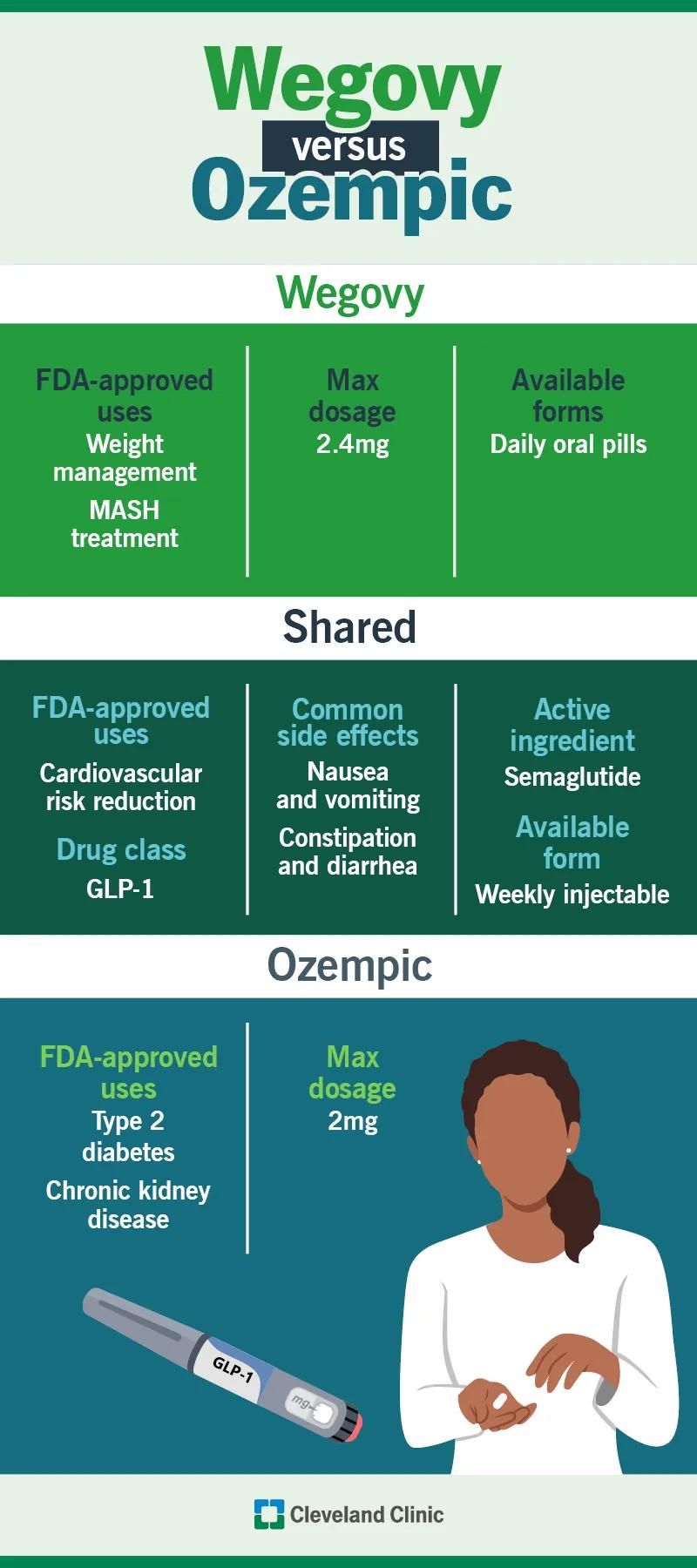
Image content: This image is available to view online.
View image online (https://assets.clevelandclinic.org/transform/71c7b21b-3a27-4549-bc68-a02945c5a825/wegovy-versus-ozempic-infographic)
Wegovy is approved by the U.S. Food and Drug Administration (FDA) for:
Ozempic is approved by the FDA for:
Wegovy is available at a higher dose than Ozempic, with the maximum recommended dosage for Wegovy at 2.4 mg and Ozempic at 2 mg.
When it comes to how they’re taken, there are some similarities:
Advertisement
Some people use Ozempic and experience weight loss as a side effect. But Wegovy is the only semaglutide approved by the FDA for weight loss — and it comes in a higher dose compared to Ozempic.
Research shows that Wegovy may be the better choice for weight loss because it goes up to 2.4 mg weekly as an injectable and up to 25 mg as a pill.
“In clinical trials, people with Type 2 diabetes lost less weight than people without diabetes, but that’s likely related to other factors,” Dr. Isaacs notes. “The semaglutide is the same active ingredient in both forms.”
Semaglutide comes with common digestive side effects like:
Other side effects may include fatigue, headaches and low blood sugar (hypoglycemia) if semaglutide is combined with other drugs that lower blood sugar, like insulin.
Dr. Isaacs says you’re likely to experience more side effects while on higher doses of semaglutide.
“Anytime you have a higher dose of a medication, more side effects are likely,” she explains. “But that doesn’t mean everyone on a higher dose is going to have more side effects.”
She recommends slowly increasing your dosage, which gives your body time to adjust and typically reduces side effects.
While most people can safely take Wegovy or Ozempic, you should avoid these medications if you have severe gastroparesis (stomach paralysis). You should also avoid semaglutide if you’re pregnant.
It’s important to note that semaglutide has a boxed warning from the FDA (the strongest safety warning for prescription drugs) about the risk of developing thyroid C-cell tumors, especially if you have a personal or family history of this type of cancer.
A healthcare provider can help you determine which option is best for you by considering factors like your medical history, potential cost and insurance coverage.
And Dr. Isaacs says to be careful about using compounded medications — and microdosing GLP-1s.
“There’s no regulation around compounded versions of semaglutide, so you don’t know if you’re getting the right potency of the medication or not,” she cautions. “You could end up getting very little, or you could end up getting too much. And the medication could be mixed with other substances that could cause additional side effects.”
Having a conversation with a doctor can also help you learn more about the benefits and risks of taking a GLP-1 like semaglutide. Discuss certain lifestyle changes, like healthy eating and physical activity, which you may need to make in partnership with taking Wegovy or Ozempic.
Advertisement
“Semaglutides should be coupled with positive lifestyle changes,” Dr. Isaacs stresses. “They aren’t meant to replace healthy habits.”
Advertisement

Sign up for our Health Essentials emails for expert guidance on nutrition, fitness, sleep, skin care and more.
Learn more about our editorial process.
Advertisement
Abruptly ending treatment often comes with weight regain and other issues

Despite their name, these patches don’t contain GLP-1 medication and have dubious effects

Rapid weight loss can cause loose skin, facial volume loss and body contour changes

Eat smaller meals, stay hydrated, avoid high-fat foods and, if needed, ask your doctor about switching to a lower dosage
Taking a smaller dose than what your doctor recommends isn’t a good idea

Both are GLP-1 medications that are FDA-approved for Type 2 diabetes and weight loss, but how they work differs

Healthy eating helps, but so do a lot of other strategies for improving your overall health and wellness

Exercising while taking semaglutide and other GLP-1s helps prevent muscle loss and boosts metabolism

Hormonal changes, a slower metabolism and muscle loss can make weight gain more common around menopause — healthy habits can help you manage it

Life-threatening complications include sepsis, stroke, pneumonia and more

Fruity-smelling breath can happen when your body burns fat for energy, and in some cases, can signal a medical emergency
 Search










