Locations:





These delicate green sprouts can give you an extra dose of vitamin K and other nutrients — but they’re not safe for everyone
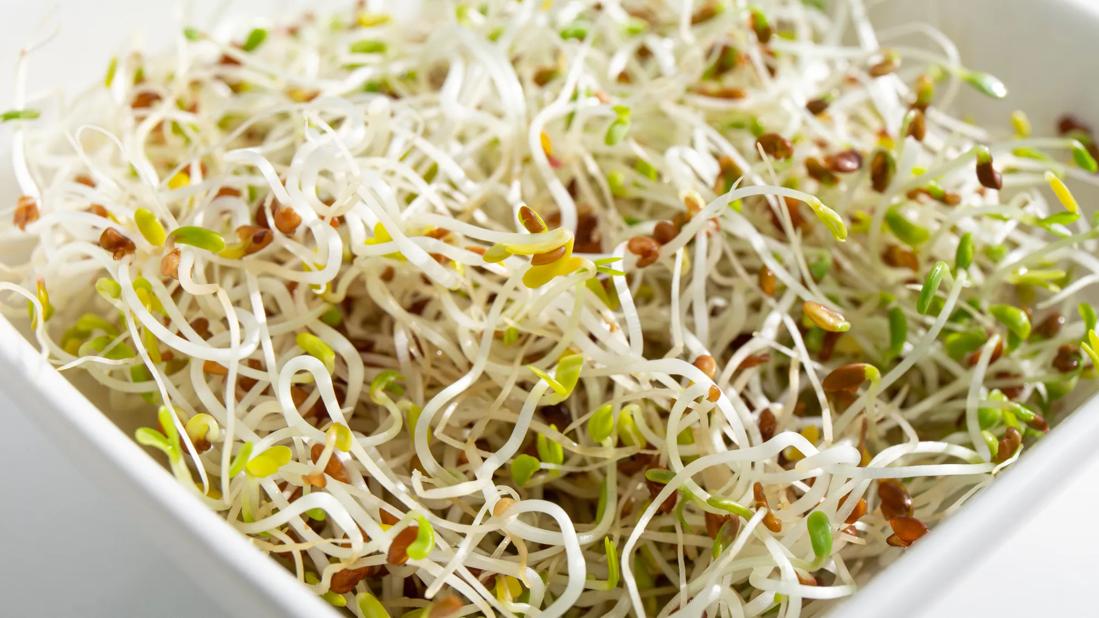
Image content: This image is available to view online.
View image online (https://assets.clevelandclinic.org/transform/6e766a4c-f2b6-4c0a-ad4b-9105088286f6/alfalfa-sprouts-1387139366)
Alfalfa sprouts in white bowl
Alfalfa has earned a long-standing spot in the health food hall of fame, thanks to its crisp, fresh sprouts. These tiny greens are packed with outsized benefits for your diet.
Advertisement
Cleveland Clinic is a non-profit academic medical center. Advertising on our site helps support our mission. We do not endorse non-Cleveland Clinic products or services. Policy
Registered dietitian Michelle Dodd, RD, LD, tells you everything you need to know about alfalfa, including how to enjoy it and who should avoid it.
Yes, alfalfa is considered healthy for most people. It’s low in calories and has small amounts of key vitamins and minerals, making it a good “filler food” to round out sandwiches, salads and grain bowls.
“There’s not a whole lot to it,” Dodd acknowledges, “but it can give your meals some extra plant-based compounds and antioxidants.”
One cup (33 grams) of alfalfa sprouts has:
A caveat about alfalfa: It isn’t a good choice for everyone, especially if you take blood-clotting medication or have a weakened immune system. But more on that in a moment.
As a member of the legume family (think lentils and beans), alfalfa is actually an herb, not a vegetable. And like all other plant-based foods, it’s full of health benefits.
Alfalfa is a good source of vitamin K, with 1 cup of sprouts offering about 8% of your daily value (DV). This important vitamin helps your blood to clot and your bones to stay strong.
One cup of alfalfa also provides:
Advertisement
Alfalfa gets its color — and many of its benefits — from the presence of special compounds called flavonoids.
“All plant-based foods have these compounds, which work like antioxidants in the body,” Dodd explains. “Antioxidants support healthy aging and prevent cell damage by reducing oxidative stress.”
Alfalfa and other legumes contain compounds called saponins, which some research suggests may help lower cholesterol. But that doesn’t mean you can replace your cholesterol medication with alfalfa sprouts.
“To lower your cholesterol, we’re looking at an overall healthy diet that includes lots of plant-based foods,” Dodd says. “It’s not about just eating more alfalfa sprouts.”
Alfalfa is low in protein, carbs and calories. But for such a delicate green, it offers a surprising amount of vitamins and nutrients.
“Adding alfalfa to your meals can be a good way to boost your overall plant intake without adding extra calories or fat,” Dodd says.
Following a diet that focuses on whole plant-based foods can help reduce inflammation and lower your overall risk of developing conditions like cardiovascular disease and type 2 diabetes.
Researchers continue to study other possible benefits of alfalfa, like whether it can:
But it’s important to note that none of these benefits has yet been proven by science.
You might not think twice about adding sprouted greens to your meal. But before you pile them on, it’s important to make sure they’re safe for you.
Some people should steer clear of alfalfa or touch base with a healthcare provider before piling on the sprouts.
Alfalfa is high in vitamin K, which is an important part of the chemical process for forming blood clots in your body. But if you’re taking an anticoagulant (aka a blood thinner), too much vitamin K can make your medication less effective.
“Blood thinners like warfarin (Coumadin®) are often prescribed for people who are at risk of developing blood clots,” Dodd explains. “But it’s important to keep your vitamin K level low so it doesn’t interfere with your medication.”
This doesn’t mean cutting out vitamin K entirely. But you should speak with your healthcare provider to figure out how much is safe for you.
Because alfalfa sprouts are eaten raw, there’s a higher risk that they may carry harmful bacteria like Listeria, E. coli or Salmonella. These bacteria can cause food poisoning, which is particularly dangerous for people with a weakened immune system.
Advertisement
“There’s really no way to sterilize alfalfa without cooking it,” Dodd states. “But cooking it removes its health benefits.”
Avoid raw alfalfa sprouts if you have a weakened immune system, like if you:
Sprouts are the most common form of alfalfa, and you’ll find them in the refrigerated produce section of grocery stores.
As a reminder, heating them up nukes their health benefits, so alfalfa should be served cold and raw.
“If you’re adding sprouts to warm foods, like soups or stir-fries, stir them in at the very end, or pile them on top for a little bit of extra crunch,” Dodd suggests.
If you’re prone to browsing the vitamin aisle, you might have noticed alfalfa supplements on the shelf — right there next to vitamin A and ashwagandha. But Dodd says it’s best to avoid alfalfa in supplement form.
The U.S. Food and Drug Administration (FDA) doesn’t regulate supplements, so there’s no way to know exactly what you’re getting (or how much of it), regardless of what the packaging promises.
Advertisement
Plus, Dodd cautions that vitamin K is a fat-soluble vitamin, which means your body can’t easily get rid of any surplus through your urine (pee). Instead, it can build up in your liver.
“You always want to be careful with the four fat-soluble vitamins: vitamins A, D, E and K,” she cautions. “It’s never a good idea to super-dose anything that affects those particular vitamins because they stay in your body longer.”
Plus, she says that there’s just no real reason to take alfalfa supplements, as most people get enough vitamin K through diet alone.
“Just put alfalfa on something you’re eating and enjoy it that way instead,” she recommends. “Or turn to spinach, kale, Swiss chard or collard greens. Any dark, leafy green is a great source of vitamin K.”
Alfalfa is a nutrient-rich legume that can add antioxidants, vitamins and minerals — plus a little bit of satisfying crunch — to your meals. For most people, it’s a healthy way to boost your intake of plant-based foods.
“Raw alfalfa is a simple but filling green that brings a few nice health benefits,” Dodd reiterates. “But if you’re considering incorporating it into your diet on a regular basis, it’s best to check in with your healthcare provider first to be sure it’s safe for you.”
Advertisement

Sign up for our Health Essentials emails for expert guidance on nutrition, fitness, sleep, skin care and more.
Learn more about our editorial process.
Advertisement
From sauerkraut to kimchi, these foods can help keep your gut healthy
This East Asian and subtropical fruit is packed with delicious nutrition
Lean meats, fish, dairy and plant proteins can help you meet your protein needs without piling on saturated fat and sugar
Choosing snacks with protein can help curb hunger, support muscle health and keep your energy steady between meals
Fish packs plenty of protein, heart-healthy fats and other body-boosting nutrients into every bite

Both are healthy choices, but wild-caught salmon offers a few more benefits
These bright berries are packed with nutrients and antioxidants that may support your eyes, immune system and overall well-being

The general rule is 1.2 to 1.6 grams of protein per kilogram of body weight — but that may not be exactly right for you

Managing your weight through physical activity may lower your chances of getting this common cancer

It typically starts in October and winds down in early spring, with cases at their highest in the middle of winter

Anxiety disorders, health conditions and past trauma can make driving nerve-wracking — help is available
 Search