Locations:





Not always — but wearing flip-flops too often for too long can leave your feet, legs and back feeling the strain
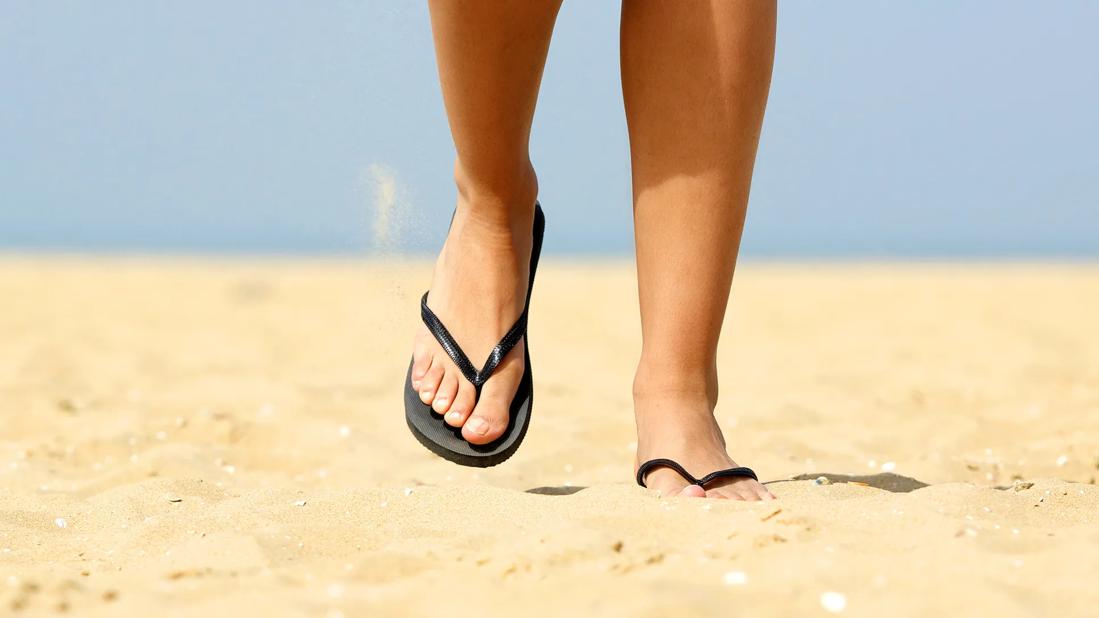
Image content: This image is available to view online.
View image online (https://assets.clevelandclinic.org/transform/20b8d101-decc-4958-99f5-1d1bd6f82ca3/walking-beach-flip-flops-491609109)
Person walking on beach in flip-flops
If flip-flops were a season, they’d be summer for sure.
Advertisement
Cleveland Clinic is a non-profit academic medical center. Advertising on our site helps support our mission. We do not endorse non-Cleveland Clinic products or services. Policy
But if you’ve ever ended a summer day with aching arches, sore heels or tired toes, you may wonder: Are flip-flops bad for my feet?
Podiatrist Georgeanne Botek, DPM, says these seasonal favorites can be fine for short walks, locker rooms or poolside lounging. But they don’t offer enough support for longer hikes or all-day wear.
“Wearing them feels good initially,” Dr. Botek says, “but you could pay for it later.”
Here’s when flip-flops are OK, when they can cause problems and what to look for in a better pair.
As fun as they are, flip-flops aren’t the best choice when it comes to avoiding musculoskeletal aches and pain. How often you wear them, how far you walk in them and how much support they give your feet can make a big difference.
Here’s what to consider.
There are better flip-flops and worse flip-flops, says Dr. Botek.
Flimsy ones are the worst. Flat and thin, they don’t have the arch support, heel cushioning or protection your feet and body need. But even a sturdy pair can come with risks.
Flip-flops can change the way you walk (gait), especially when you wear them for hours.
These shoes don’t hug your feet like sneakers or supportive sandals, so your toes may work harder to keep them on. Research has found that flip-flops can separate from your feet as you walk. This can force you to bend your knees or flex your ankles more so they don’t catch on the ground.
Advertisement
One quick walk across the pool isn’t a problem. But when flip-flops slide around as you’re strolling down the street, you may be changing the way you walk to keep them on. Over time, your feet, ankles, knees, hips and back can feel the strain.
Your body may be the first to notice when you wear flip-flops too long or in the wrong situation. These shoes can cause:
Plus, there’s always a chance you could sprain your ankle. When you wear flip-flops, you’re constantly gripping the shoe with your toes in a clawing motion, which may throw off your stability.
They can also cause you to slip or fall, particularly on stairs. And they can be hazardous when you’re driving, as your toe end can get stuck under a pedal.
If you have neuropathy from diabetes or other health conditions, be extra careful with flip-flops, especially if you also have:
Because flip-flops leave so much of your feet exposed, it’s also easier to get cuts, blisters, cracked skin or small injuries you may not feel right away. Those minor problems can become more serious if they don’t heal well.
A healthcare provider can help you choose footwear that better protects and supports your feet.
Flip-flops have long been considered fashionable yet utilitarian footwear for public showers, pool decks or the beach. But they’re not meant to be everyday shoes.
How safe they are for you to wear depends on factors like:
“Flip-flops let your feet breathe. They’re a good reprieve from being in a closed-toe shoe all winter,” Dr. Botek acknowledges. “But they shouldn’t be worn regularly.”
Construction is important. If you’re not willing to give up flip-flops as an everyday shoe, try upgrading the kind you wear. When shopping, look for:
Advertisement
“If the sole feels soft enough to roll up, twist like a pretzel or fold in half, you’re probably not getting enough support,” Dr. Botek states. She also notes it’s time to replace your flip-flops when the soles look worn, uneven, cracked or are permanently flattened.
“If they’re disintegrating or the straps are stretched out, it’s time for new ones,” she adds.
It’s worth repeating: Flip-flops are fine for quick outings, like going to a casual brunch where you won’t be on your feet much. But they’re not made for long walks, city exploring, all-day standing or running errands for hours.
“Point A to point B, that’s it. These shoes aren’t designed for walking or standing for long periods,” Dr. Botek reiterates.
Think of flip-flops as a summer fling — not a long-term relationship. They have their place. If you like them, you’re going to wear them. Just don’t ask them to do more than they were made for.
Your feet will know the difference.
Advertisement

Sign up for our Health Essentials emails for expert guidance on nutrition, fitness, sleep, skin care and more.
Learn more about our editorial process.
Advertisement
Home remedies are unlikely to cure your contagious foot fungus — and they might even make it worse
Cramps can creep up if your shoes are too tight, you’re dehydrated or you have poor circulation

Rethink your exercise routine to maintain — and maybe even gain — fitness during recovery
How to safely stay active if you have flat feet
Home remedies to reduce pain and water retention
Toe separators can help create space between crowded toes, but they’re not a permanent fix
While it may be no big deal, underlying conditions that need treatment can also cause cold extremities
Try seated and standing exercises to help lengthen and strengthen the muscles that support your plantar fascia

Hormonal changes, a slower metabolism and muscle loss can make weight gain more common around menopause — healthy habits can help you manage it
Life-threatening complications include sepsis, stroke, pneumonia and more

Fruity-smelling breath can happen when your body burns fat for energy, and in some cases, can signal a medical emergency
 Search










