Locations:





 Search
The emotional toll of loss and other strong emotions can have life-threatening physical effects
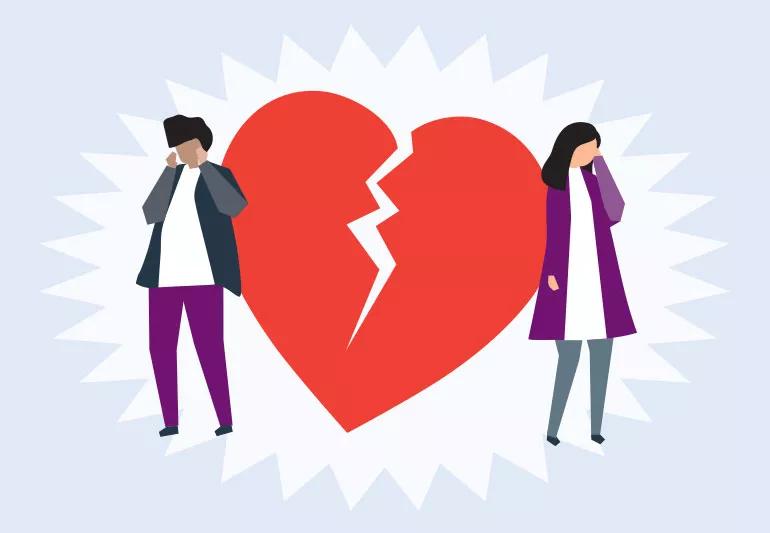
Most of us have experienced some sort of heartbreak before.
Advertisement
Cleveland Clinic is a non-profit academic medical center. Advertising on our site helps support our mission. We do not endorse non-Cleveland Clinic products or services. Policy
Maybe it was the breakup of a relationship that left you feeling lonely, disconnected or rejected. Or the death of a loved one that left your heart wrenched. Even losing a job can leave a void in your life that feels like a gaping hole you may never climb out of.
Any loss in your life can fuel feelings of grief. And grief is a powerful emotion — one that can even make you physically sick.
But can you die from a broken heart?
It’s possible, yes. But is it likely? Not at all.
“Strong emotions like grief, anger, fear and even excitement elicit physical changes in your body,” explains cardiologist Marc Gillinov, MD. “Emotional responses absolutely affect your physical well-being. But the likelihood that you'll actually die from a broken heart is pretty slim.”
We talked with Dr. Gillinov about how a broken heart can physically affect your health.
When you think about a broken heart, you’re probably thinking more in terms of emotional well-being than your physical heart health. But it turns out there’s a lot of overlap.
That’s because our emotional state has a real impact on our physical state (and vice versa).
Let’s take a look at a few ways experiencing heartbreak can — quite literally — hurt your heart, as well as the rest of your body.
Advertisement
When you experience emotional or traumatic events, your nervous system triggers stress hormones, like adrenaline and epinephrine. That’s normal.
But rarely, and for reasons that aren’t well understood, a person in emotional distress can experience a heart attack-like event. It’s called broken heart syndrome, or more formally, stress cardiomyopathy or takotsubo cardiomyopathy. It can be an emergency situation that requires prompt medical attention.
Here’s what happens.
Following an emotionally charged situation, you get a huge surge of adrenaline — much more than a typical emotional response. The rush of hormones can cause your heart muscle to stop contracting normally, putting you in short-term heart failure.
The symptoms of broken heart syndrome can feel like a heart attack and include:
Even on an EKG (electrocardiogram), broken heart syndrome can look like you’re having a heart attack. But you’re not.
“Broken heart syndrome is probably caused by hormonal factors,” Dr. Gillinov says. “It can imitate a heart attack, but heart attacks are caused by a blood clot in the arteries.”
Most of the time, the heart failure will resolve. But if not, broken heart syndrome could cause death in extremely rare circumstances — as in, less than 1% of cases. So, it’s important to seek emergency medical attention if you’re experiencing heart attack-like symptoms.
Grief is the most common emotional stressor associated with broken heart syndrome (hence the name). But the symptoms can show up within minutes or hours of any highly emotional event. A breakup or the death of a loved one, yes. But also flashes of intense excitement, like winning the lottery. Or after surviving an act of violence, a car crash or a natural disaster.
Living with heartbreak and grief can be stressful. And as a natural response during times of high stress, your body kicks into fight-or-flight mode (also called a stress response). That causes a cascade of changes in your body.
Your pupils dilate. You tense up or tremble. And, importantly, your heart rate and blood pressure climb.
“Negative emotions, including ones you’d commonly associate with heartbreak or grief, can cause blood pressure to rise, increase vascular reactivity and heighten the risk for blood clots,” Dr. Gillinov states.
A short-lived rise in your blood pressure probably isn’t going to be problematic for most people. But if you already have high blood pressure or if you’re at risk for other heart conditions, the stress of a broken heart could be damaging over time.
Advertisement
A quick rise in blood pressure could potentially lead to a heart attack. That’s particularly true for people who are already at high risk.
“Stressful emotions can trigger a heart attack in people who are vulnerable,” Dr. Gillinov emphasizes.
It’s not common, but in some cases, a quick rise in blood pressure may be too much for your heart to handle, especially if you’re living with heart disease or if you have a personal or family history of heart attack.
Heart attacks can be very serious and life-threatening. If you’re showing signs of a heart attack, it’s critical to get immediate medical attention.
Grieving and heartbreak can feel debilitating. And while it’s perfectly normal to feel “down” for a bit when you’re heartbroken, prolonged periods of sadness can cross over into the realm of depression.
You may think of depression as something that affects your mental state, and it does. But living with depression can also damage your physical health.
“People with depression have an increased likelihood of developing heart disease, and vice versa,” Dr. Gillinov shares. “The link is strong enough that anyone with depression should be screened for heart disease, and heart patients should be evaluated for depression.”
Advertisement
Like dominoes in a line, long-term feelings of heartbreak can lead to depression, which could lead to heart disease, which is the leading cause of death in the United States.
Our mental and physical selves are intricately linked. And living with heartbreak, grief and sadness can be physically damaging to your body. It’s rarely life-threatening but potentially harmful, particularly in the long run.
If you’re experiencing sudden signs of a heart attack, get emergency medical attention. For longer-lasting feelings of heartache or grief, consider talking with a mental health professional. They can help you learn to live with a new normal and improve your overall well-being.
Advertisement
Learn more about our editorial process.
Advertisement

Age, sex and genetics are just a few factors that can affect your risk of developing coronary artery disease

Being hooked on love can cause unhealthy relationship patterns and obsessive thoughts
You may notice a decrease in your LDL ‘bad’ cholesterol in about four weeks

Eating heart-healthy foods, moving around more and getting quality sleep are a few ways to get started
Introverts refuel with quiet time, while extroverts thrive on connection
There’s no way to stop a heart attack on your own — call for help immediately
Even small moments of time outdoors can help reduce stress, boost mood and restore a sense of calm

Olive oil is high in heart-friendly unsaturated fats

The tropical fruit is a good source of antioxidants and vitamin C

Most people fall asleep within 10 to 20 minutes, but if your experience is different, adjusting your sleep schedule may help

Exploring your hidden side can lead to better understanding of what makes you tick











