Locations:


Your care team can help you explore heat and cold therapies, topical treatments and gentle movement, alongside medication
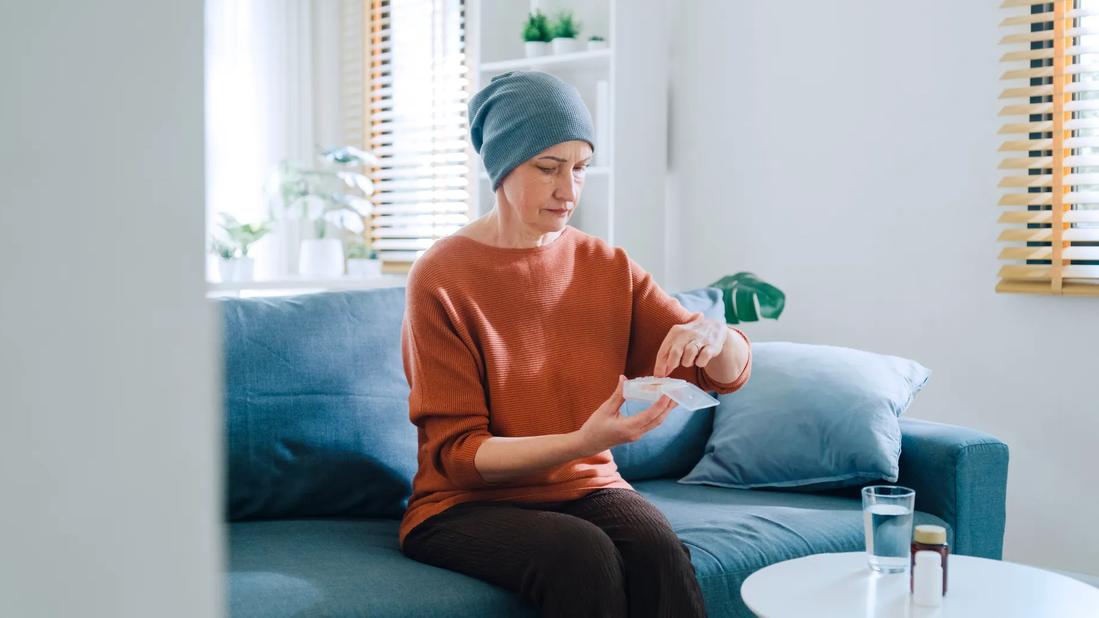
Image content: This image is available to view online.
View image online (https://assets.clevelandclinic.org/transform/c15882e0-c9ec-47e0-b108-2e007e816cd1/cancer-pain-2218643431)
Woman sitting on couch with cancer scarf on head, holding pill box, taking medication
Getting comfortable shouldn’t feel like a full-time job. But cancer pain can lead to sleepless nights or make everyday movements like sitting, standing or walking hurt.
Advertisement
Cleveland Clinic is a non-profit academic medical center. Advertising on our site helps support our mission. We do not endorse non-Cleveland Clinic products or services. Policy
Not everyone with cancer has pain. But if you do, it can be tough to manage — even with prescribed medication. Cancer pain home remedies may offer added relief alongside your treatment.
Palliative care specialist Chirag Patel, MD, explains how to make at-home pain relief part of your cancer care plan, starting with understanding your pain.
“Pain relief shouldn’t become a guessing game when it comes to finding a solution,” Dr. Patel says.
Talking with your care team is the first step to putting it all together. This includes letting them know where it hurts, what it feels like, how often it happens and how severe it is. For instance, sometimes the pain may be a deep ache in one specific area, but other times you may feel it all over your body.
These details can help them figure out what may be causing the pain and build a plan around how it affects you.
Some at-home therapies may help, while others may not suit your needs. Fragile bones, skin changes, numbness, swelling or a high risk of infections can affect what your care team recommends.
Your care team can help you choose medication, at-home therapies or both to ease your pain. These approaches are part of your cancer treatment — not a replacement for it.
Advertisement
“Pain management is a puzzle, with different treatment pieces working together to create the big picture,” Dr. Patel says.
If you have prescription pain medicine, take it as directed. You can still use at-home approaches your care team recommends with it. You don’t have to choose one or the other.
Depending on where it hurts and what the pain feels like, your care team may recommend one or more of these options. Check with them before trying a new medicine, cream or therapy, even if you can buy it without a prescription.
Over-the-counter pain relievers, like acetaminophen (Tylenol®), and anti-inflammatory medicines, like ibuprofen (Advil®, Motrin®) or naproxen (Aleve®), both ease pain, but they work in different ways.
Acetaminophen calms pain signals in your brain, and your liver breaks it down. Anti-inflammatory medicines ease pain and swelling, but they can be hard on your kidneys, upset your stomach or cause bleeding.
That matters because some cancer treatments can affect your liver, kidneys or how easily you bleed. Ask your care team which one to take, how much and how often. They may suggest taking it at set times through the day so pain doesn't build up.
Stick to that dose, even when pain flares. Taking more may not bring more relief, but it can raise your risk of serious side effects. And check labels so you don't double up — acetaminophen is also in many cold, flu and sleep products.
Advertisement
Heat and cold ease pain in different ways. Heat boosts blood flow to relax tight muscles and loosen stiff joints. Cold calms swelling and numbs sore spots. Your care team can help you choose the one that fits your pain.
Use either one for 10 to 20 minutes at a time, every one to two hours while you’re awake. Wrap the heat or cold pack in a thin towel to protect your skin. Skip areas that are numb, have a wound or are getting radiation. Never use a heating pad over a pain-relieving cream — it can cause a burn.
Creams, gels, sprays or patches you put on your skin work best on pain in one spot, like a sore muscle or an achy knee, hand or elbow. They’re less likely to reach deep pain in your bones, hips or back.
How they ease pain depends on the ingredients. Lidocaine numbs the area. Capsaicin, which comes from chili peppers, creates a warming sensation that blocks pain signals. Menthol cools. Anti-inflammatory gels, like diclofenac (Voltaren®), can ease swelling with less medicine entering your bloodstream than a pill.
Follow the label or your care team’s directions for how often to use these products. If you already take an anti-inflammatory pill, ask before adding an anti-inflammatory gel.
Advertisement
Moving may be the last thing you want to do when your body aches. But walking, stretching or gentle yoga can help ease stiffness, keep your muscles strong, improve sleep and give you more energy. Even a few minutes at a time counts.
And you don’t need a gym to try gentle yoga, meditation or relaxation exercises at home. Ask your care team to recommend videos or online classes that fit your needs.
Start slowly and stop if a movement makes your pain worse. If you have fragile bones, ask your care team which moves are OK for you. They may also recommend changing or pausing activity after surgery or if you have a fever or new pain or swelling.
Depending on what’s available where you live, your healthcare providers may also connect you with trained professionals who offer home visits for services like massage or physical therapy.
You may hear about supplements or herbal pills, creams or lotions that can help with cancer pain. That idea of natural relief may sound good.
But before trying a pain remedy you saw online or on social media, check with your care team.
What may have helped someone else may not be right for you. And “natural” doesn’t mean free of risks. Supplements and herbal remedies can cause side effects or interact with your cancer treatment.
Advertisement
“Once it’s in your body, it’s doing something to create an effect, just like a medicine we prescribe,” Dr. Patel explains. “That means supplements and herbs can carry unintended effects, too.”
Your care team can help weigh the possible benefits and risks for you. They’ll want to know what medicines, vitamins, herbs and supplements you already take. This includes the brand, dose and how often you take each one.
It might feel easier to ignore new pain or pain that seems different. But don’t.
Cancer pain can stir up memories of your diagnosis or fears about what’s changed or needing more treatment. You may not want to ask for help, but it’s important to speak up.
Call 911 or your local emergency number for new or unexplained chest pain or sudden or severe trouble breathing.
Also, contact your cancer care team immediately if you have new:
For new pain, pain that’s getting worse or pain in a different area, call or message your care team even if it’s mild. Also call if your pain relief plan isn’t helping enough, has stopped working or causes side effects that make daily life harder. Don’t wait for your next appointment.
Advertisement
“When you’re in doubt, that’s probably a good time to make a phone call,” Dr. Patel encourages. “Tell your team that you’re worried about the pain and what it means. They can connect you with a social worker or mental health professional to help you manage that part of the experience.”

Sign up for our Health Essentials emails for expert guidance on nutrition, fitness, sleep, skin care and more.
Learn more about our editorial process.
Advertisement

Unexpected DNA changes can cause cells to grow out of control and lead to cancer

No, we aren’t all born with cancer cells — and having cancer in your family doesn’t mean you already have cancer or will necessarily develop it

Research on whether glyphosate increases cancer risk is mixed, but you can take steps to limit your exposure

While there’s no 100% guarantee, you can help limit cancer risk by adopting healthier lifestyle habits

Exercise is safe and beneficial for most people with cancer, but listen to your body and your healthcare team
Smoking can make symptoms from cancer treatment worse, and can even make treatments less effective

Prioritize protein and fresh produce, but be extra careful to avoid bacteria that could cause foodborne illnesses

Here’s how (and why) to ask your doctor about treatment goals, second opinions, clinical trials and more
Research hints at improved strength, balance, blood flow and weight loss, but more evidence is needed

The blended oat beverage may help curb hunger, but it doesn’t work like a GLP-1
Teen cycles are often ‘off-cycle’ for the first few years
 Search