Locations:


From sauerkraut to kimchi, these foods can help keep your gut healthy
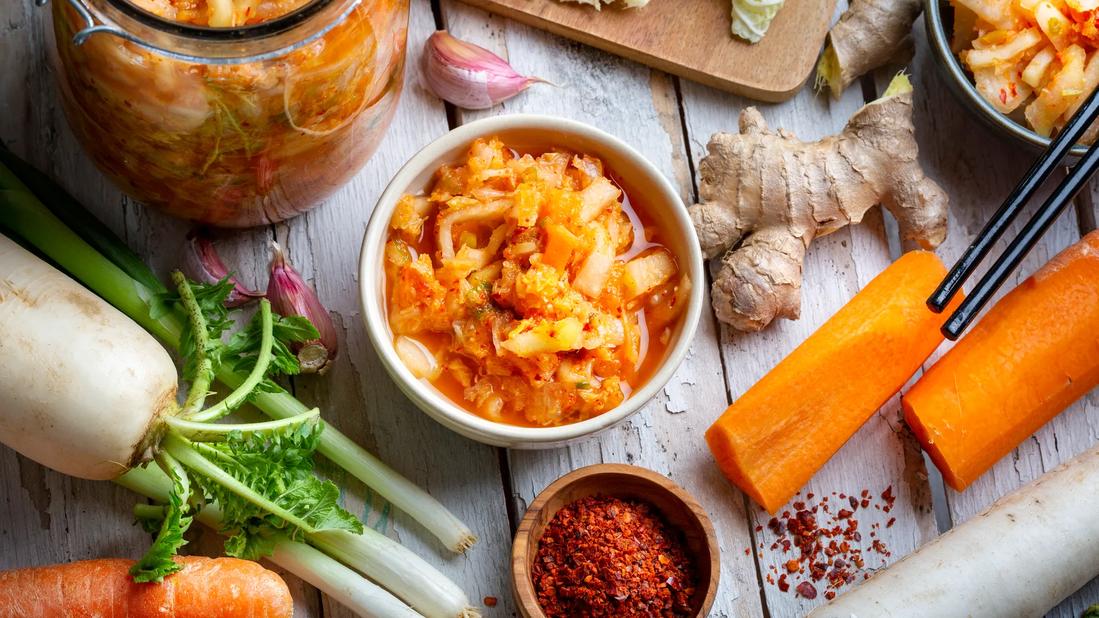
Image content: This image is available to view online.
View image online (https://assets.clevelandclinic.org/transform/8fbb3c06-03fc-4273-9fbf-9a49f9d4cf31/fermented-foods-1472581913)
Fermented foods and their raw ingredients
Too many of us eat a diet heavy on processed foods, which can upset the balance of our gut microbiota and lead to unpleasant gastrointestinal symptoms, like bloating, diarrhea or constipation.
Advertisement
Cleveland Clinic is a non-profit academic medical center. Advertising on our site helps support our mission. We do not endorse non-Cleveland Clinic products or services. Policy
But eating fermented foods — like sauerkraut, kimchi and pickles — can help keep your gut healthy by introducing good bacteria.
Gail Cresci, PhD, RD, LD, who studies gut bacteria, shares which fermented foods to try and how they can impact your health.
During the fermentation process, bacteria and yeast are used to break down the sugar and starches in foods.
“This process creates probiotics, or good microbes, and beneficial metabolites that help with digestion and overall gut health,” Dr. Cresci explains. “In addition to changing a food’s nutritional profile, fermentation can affect how something tastes and feels.”
Fermented foods can affect your health by:
“The tiny bacteria in your intestine have full-body effects,” shares Dr. Cresci. “Research shows that a less varied gut microbiota is linked to chronic conditions, like obesity, heart disease, asthma and inflammatory bowel disease.”
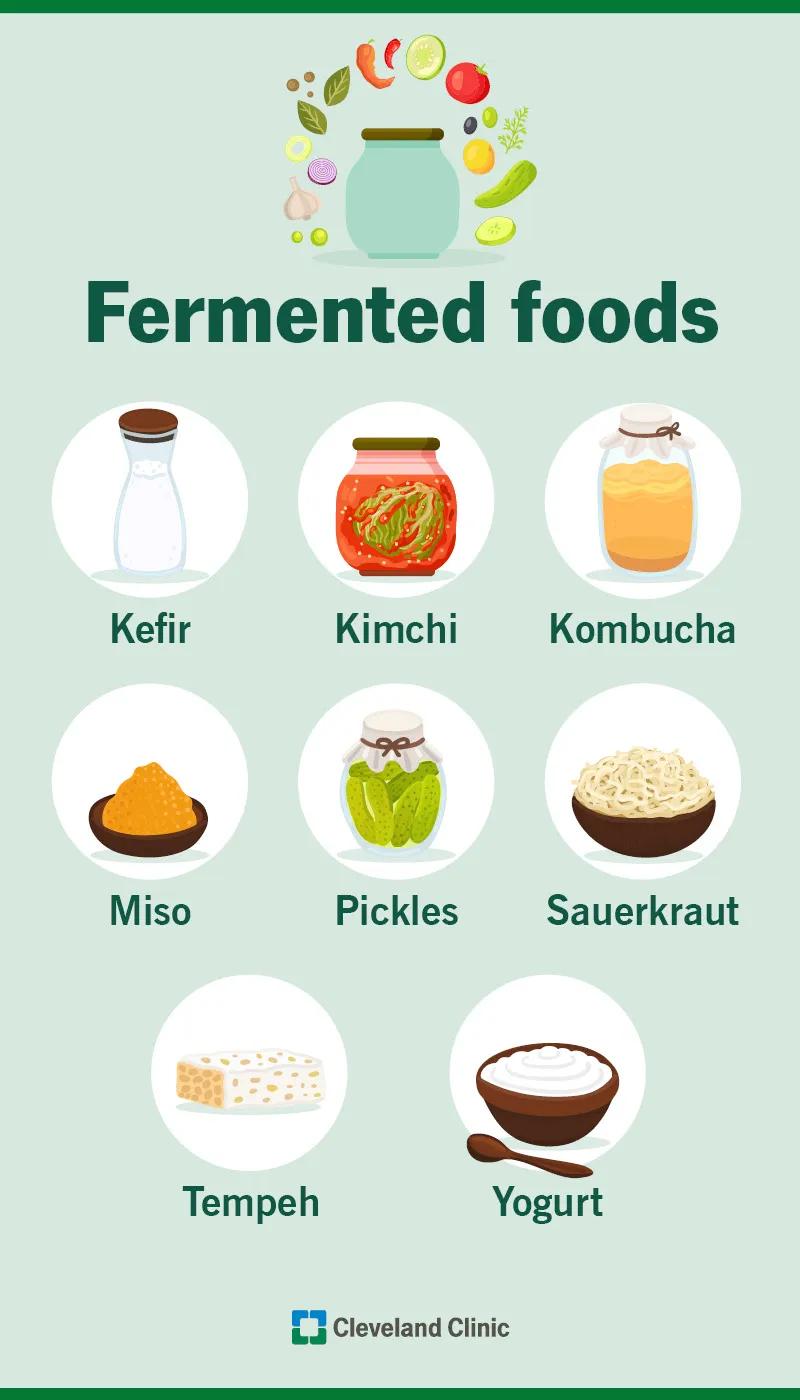
Image content: This image is available to view online.
View image online (https://assets.clevelandclinic.org/transform/9b38c6ad-f01e-409e-b8b1-52c6b2540a18/fermented-foods-infographic)
Give these gut-healthy foods a try for optimal benefits.
This fermented dairy drink is made using kefir grains (a combination of bacteria and yeast). The end result? A slightly fizzy, tangy drink that’s thinner than yogurt. You can find it in a grocery store’s dairy case.
Advertisement
There are hundreds of varieties of the traditional Korean fermented side dish, commonly made from a base of napa cabbage, radish, scallions and spices. Find your favorite version at Asian markets or grocery stores, or experiment with flavors at home.
This slightly fizzy fermented tea is a good alternative to soda. You can find it in your grocery store’s refrigerated section. You can also brew your own at home in seven to 30 days using just tea, water, sugar and a “mother,” a symbiotic colony of bacteria and yeast.
Miso is typically used in Japanese cuisine. It’s made from fermenting soybeans, salt and koji (a fungus that gives miso its rich umami flavor). Miso usually comes in a paste form and works well in all kinds of recipes, like sauces, marinades and soups.
Pickles are all the rage right now. Choose a variety from the grocery store’s refrigerated section to see which ones you like most. Or better yet, make your own pickles from cucumbers with brine (a cooled sea salt solution), dill, mustard, coriander seeds and peppercorns.
Find live versions of this traditional Eastern European staple, which literally translates to “sour cabbage,” in the refrigerator case at most grocery stores. Or if you don’t mind chopping, make your own artisan batches.
This plant-based option comes from fermented whole soybeans (unlike tofu, which is made from soy milk). It has a slightly nutty flavor and a hearty texture. With its high amount of protein, it works well in recipes as a meat substitute.
Yogurt is made from fermenting milk (or a nondairy alternative, like almond milk) with a starter culture of bacteria. Some commercial varieties also contain additional probiotic bacteria.
Ready to get fermented foods like pickles and kimchi into your daily meals? Here’s how:
Advertisement
Fermented foods can be a simple and tasty way to support your gut health.
“Different fermented foods contain different microorganisms and their metabolites that can support your gut microbiota,” says Dr. Cresci. “So, there’s value in eating a variety of fermented foods rather than relying on just one.”
Advertisement

Sign up for our Health Essentials emails for expert guidance on nutrition, fitness, sleep, skin care and more.
Learn more about our editorial process.
Advertisement

Don’t underestimate the power of a pause

This famously funky-smelling fruit is packed with fiber, vitamins and minerals
Choosing snacks with protein can help curb hunger, support muscle health and keep your energy steady between meals
Fish packs plenty of protein, heart-healthy fats and other body-boosting nutrients into every bite

The best choices are high in omega-3s and protein and low in mercury

Look for foods with a variety of nutrients that last a long time and work in multiple meals — like legumes, whole grains and frozen or canned produce
Prepping ingredients ahead of time, rethinking your snacks and making smart protein swaps can up your daily intake

The traditional hot dog isn’t exactly a nutritious choice, but that doesn’t mean you can’t enjoy one here and there

Managing your weight through physical activity may lower your chances of getting this common cancer

It typically starts in October and winds down in early spring, with cases at their highest in the middle of winter

Anxiety disorders, health conditions and past trauma can make driving nerve-wracking — help is available
 Search