Locations:





The best choices are high in omega-3s and protein and low in mercury
Fish has earned its reputation as one of the healthiest proteins you can put on your plate. But with so many options in the seafood case, it can be hard to know which ones deserve a spot in your shopping cart.
Advertisement
Cleveland Clinic is a non-profit academic medical center. Advertising on our site helps support our mission. We do not endorse non-Cleveland Clinic products or services. Policy
“It can get overwhelming sometimes with so many choices,” says registered dietitian Julia Zumpano, RD, LD. “The key is choosing fish that give you the most nutritional benefit while limiting your mercury exposure.”
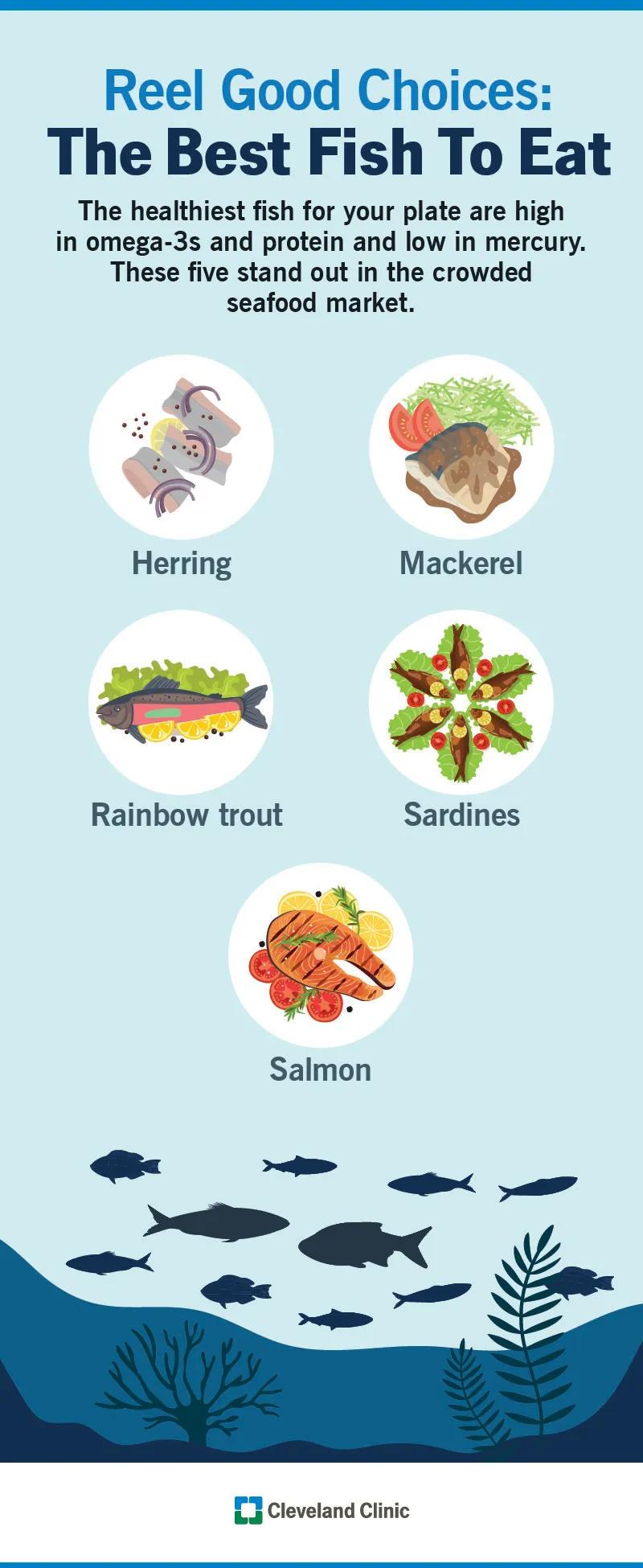
Image content: This image is available to view online.
View image online (https://assets.clevelandclinic.org/transform/912052e0-27c7-4302-b449-ab0cf565ba53/healthiest-fish-to-eat-infographic)
Fish is packed with lean protein, but its biggest nutritional advantage is omega-3 fatty acids. These healthy fats can help support heart and brain health and lower inflammation, among other benefits.
Zumpano’s top choices for fish are all high in omega-3s and protein, as well as other vitamins and nutrients.
They’re also low in mercury, a toxic metal that brings health concerns in high amounts.
Here are five fish choices to search out at the market.
Don’t let their tiny size fool you: “Sardines offer big health benefits,” says Zumpano.
A 3-ounce serving provides about 2 grams of omega-3 fatty acids — one of the highest amounts of any fish. They’re also a good source of calcium and vitamin D, essential nutrients your body needs to work right.
Another perk? They're inexpensive and easy to keep on hand. You can buy sardines packed in olive oil or tomato sauce and add them to:
If you’re watching your sodium intake, compare nutrition labels and choose lower-sodium varieties when possible.
Advertisement
Herring is another oily fish loaded with omega-3s. While it contains slightly less omega-3 than sardines, herring still delivers plenty of heart-healthy fats. It’s also swimming in vitamin B12 and vitamin D.
Depending on your preferences, herring can be eaten:
“Herring has a stronger, fishier flavor because it’s rich in those healthy oils,” Zumpano notes. “If you’re trying it for the first time, using mustard and dill is a traditional preparation that’s a great place to start.”
Mackerel is another excellent source of omega-3s and lean protein, but there’s one important catch: Not all mackerel is created equal.
It’s best to choose the smaller Atlantic or Spanish mackerel, which are relatively low in mercury, clarifies Zumpano. And pass on king mackerel, a larger predator fish that contains much higher mercury levels.
Mackerel is tasty grilled, baked or poached. The fish pairs well with vegetables, salads and whole grains for a balanced meal.
No list of healthy fish would be complete without salmon. Popular with diners for its rich and meaty texture, salmon is another excellent source of protein, omega-3 fatty acids and key vitamins.
When it comes to nutritional value, wild salmon holds a slight edge over responsibly raised farmed salmon, notes Zumpano. But both are excellent choices.
“If you have the opportunity to choose wild Pacific salmon, it’s a great option,” she adds. “But don't be afraid to eat farm-raised Atlantic salmon if that’s what’s available or fits your budget.”
Rainbow trout is another option in the seafood case that checks a lot of good-for-your-health boxes. It’s rich in lean protein and omega-3 fatty acids while also providing important key vitamins and nutrients.
“Rainbow trout has a mild flavor and soft texture, too, so it’s easy to work into meals,” says Zumpano. Try it baked, grilled or pan-seared. It goes nicely with veggies, salads or whole grains for a balanced plate.
No fish is completely “bad” for you, given the protein and other nutrients they offer. But some are worth eating less often because they’re lower in omega-3s or potentially higher in mercury or other contaminants.
This list includes:
Advertisement
While fish consumption in the United States has risen in recent years, most Americans still don’t eat from the seas often enough, says Zumpano. That adds up to a lot of people missing out on an important source of omega-3 fatty acids.
In general, health experts recommend that adults eat two 4-ounce servings of fish per week as part of a healthy and balanced diet. (Pregnant or breastfeeding women should limit it to one serving per week, given the mentioned mercury concerns.)
Zumpano recommends adding a variety of seafood to your meals. If you’re looking for choices other than the fish cited here, check out the “best choices” list put together by the U.S. Food and Drug Administration (FDA).
“Fish is one of the healthiest sources of protein you can eat,” reiterates Zumpano. “When you choose fish that’s high in omega-3s and lower in mercury, you’re getting the greatest nutritional benefit.”
Advertisement

Sign up for our Health Essentials emails for expert guidance on nutrition, fitness, sleep, skin care and more.
Learn more about our editorial process.
Advertisement

Don’t underestimate the power of a pause

From sauerkraut to kimchi, these foods can help keep your gut healthy

This famously funky-smelling fruit is packed with fiber, vitamins and minerals

Choosing snacks with protein can help curb hunger, support muscle health and keep your energy steady between meals

Fish packs plenty of protein, heart-healthy fats and other body-boosting nutrients into every bite

Look for foods with a variety of nutrients that last a long time and work in multiple meals — like legumes, whole grains and frozen or canned produce
Prepping ingredients ahead of time, rethinking your snacks and making smart protein swaps can up your daily intake

The traditional hot dog isn’t exactly a nutritious choice, but that doesn’t mean you can’t enjoy one here and there

Managing your weight through physical activity may lower your chances of getting this common cancer

It typically starts in October and winds down in early spring, with cases at their highest in the middle of winter

Anxiety disorders, health conditions and past trauma can make driving nerve-wracking — help is available
 Search










