Locations:





Injections may help your child gain inches and build muscle, but results vary widely
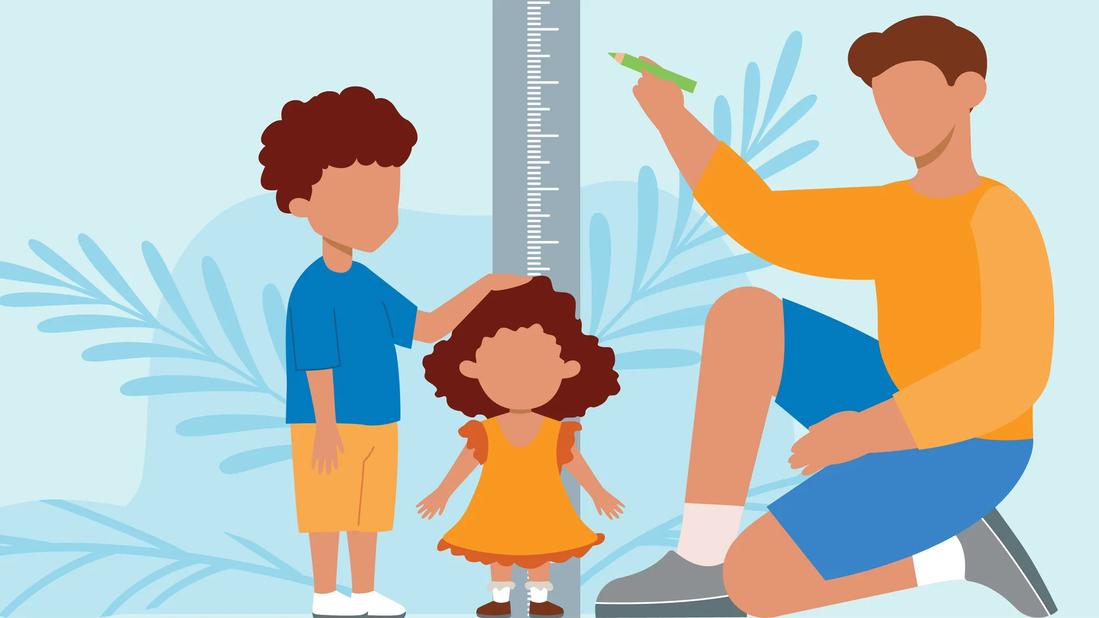
Image content: This image is available to view online.
View image online (https://assets.clevelandclinic.org/transform/b574628a-bfa6-48c7-9f32-71b7c60e7d93/parent-measure-childs-height-1485459248)
Parent measuring their shorter child, with taller sibling nearby
When your child has hypochondroplasia, questions about their growth may feel unavoidable.
Advertisement
Cleveland Clinic is a non-profit academic medical center. Advertising on our site helps support our mission. We do not endorse non-Cleveland Clinic products or services. Policy
Will they be shorter than friends their age? Can growth hormone therapy or some other therapy help?
Finding answers to those questions may not be as straightforward as you’d hope. And that ambiguity can make it difficult when you’re trying to balance medical concerns, your child’s emotional well-being and day-to-day quality of life.
Pediatric endocrinologist Emine Yilmaz, MD, helps sort out these uncertainties and discusses other treatment options.
Families may look to growth hormone therapy as a possible solution when their child’s short stature becomes more noticeable in school, social situations and everyday life.
“In grade school, children may realize they’re smaller than their peers or someone may tell them they look different,” says Dr. Yilmaz. “That can create emotional and psychological distress for some children.”
Growth hormone therapy may help some children with hypochondroplasia grow faster in their first year of treatment, but research on its long-term benefits has mixed results.
Part of that is because a hormone deficiency doesn’t cause hypochondroplasia. It’s a skeletal dysplasia, and changes (a mutation) in a certain gene affecting cartilage and bone growth cause it. As children with hypochondroplasia aren’t deficient in a growth hormone, therapy targeting those hormones may have a limited effect.
Advertisement
“And because hypochondroplasia can affect people differently, responses to treatment can vary, too,” Dr. Yilmaz says. “Families usually want to know how much growth they can realistically expect, but the best answer we have is that it varies.”
Growth hormone therapy may help support muscle growth, bone density and overall physical function in some children, she notes. That benefit may help children with hypochondroplasia who have an increased risk for obesity and metabolic complications.
Growth hormone treatment typically involves daily injections over several years, along with regular follow-up appointments to monitor growth and overall health. Side effects may include headaches, joint pain and reactions at injection sites.
If you’re considering growth hormone therapy for your child, it may help to consider a few key questions before you move forward.
For some families, increasing height is the primary goal. Others may be equally concerned about mobility, physical function, confidence or independence. Growth hormone therapy may help support growth, but every family’s priorities are different.
Growth hormone therapy requires ongoing monitoring and regular injections, often over several years.
Do you want your child to be taller? Gain strength or be able to play sports? Defining success for your family is an important part of managing expectations. "It’s important to look at the entire picture, the whole child,” Dr. Yilmaz advises.
Researchers are continuing to study newer therapies for several forms of skeletal dysplasia. Vosoritide (Voxzogo®) is a medication approved for treating the related, more severe condition, achondroplasia, but it’s also being studied for people with hypochondroplasia.
The medication works differently from growth hormone therapy by improving the signals that control bone growth. It’s an approach that focuses not on hormone replacement, but on the genetic cause of the growth limitation.
Early studies suggest the treatment is effective and safe, but researchers are still learning which kids with hypochondroplasia may benefit, Dr. Yilmaz clarifies.
It’s up to you to decide if growth hormone therapy is right for your child. Some families decide potential benefits outweigh the demands of treatment. Others choose careful monitoring and supportive care instead.
What matters most, says Dr. Yilmaz, is building realistic expectations while focusing on your child’s long-term well-being — not just height alone.
Advertisement
“That’s the better way to approach it,” she encourages. “A child with hypochondroplasia can do just about anything, whatever their actual height may be.”
Advertisement

Sign up for our Health Essentials emails for expert guidance on nutrition, fitness, sleep, skin care and more.
Learn more about our editorial process.
Advertisement
Spine curvature may be a possible sign of hypochondroplasia, but it typically doesn’t need serious medical intervention

They sound similar, and the two conditions are related, but hypochondroplasia tends to cause milder symptoms

Breast cancer treatments can lower estrogen, which has a ripple effect on your bones

ADHD can present differently from child to child and can change with age

People with PKU need to avoid high-protein foods, like meat, dairy, legumes and whole grains

Estrogen loss contributes to bone loss, which significantly raises your risk of osteopenia and osteoporosis

The emergency room is for serious medical issues; urgent care can help when you can’t get a quick appointment with your child’s doctor
Making certain changes to your diet, sleep habits and even your wardrobe may help lessen the impact of menopause symptoms
Eyes typically increase to full size during two growth spurts in childhood

To start, opt for calorie-dense foods that are rich in protein and healthy fats

Pre-birth injections and monoclonal antibodies can help prevent serious complications
 Search










