Locations:





Bright bathing suit colors can make kids easier to see in pools, lakes and oceans — but color is only one part of water safety
You’ve packed sunscreen, towels, goggles and snacks. The kids are ready to jump in the water. But before they start splashing around, their bathing suit color is worth a closer look.
Advertisement
Cleveland Clinic is a non-profit academic medical center. Advertising on our site helps support our mission. We do not endorse non-Cleveland Clinic products or services. Policy
That’s because swimsuit colors can look very different underwater than they do on the rack — and this can affect your child’s safety in and around the water. Having your child wear an easy-to-see bathing suit is an important part of swimming safety.
Pediatrician Richard So, MD, says visibility can give you one more cue to follow when your kiddo’s racing down a waterslide, splashing in a crowded pool or playing at the beach.
Some colors stand out clearly in pools and open water like lakes and oceans, making it easier for adults to keep kids in sight.
Other colors can disappear quickly beneath the surface, especially when there’s glare, movement or deeper water — and that can make it harder to spot a child quickly if they go under.
“A bright swimsuit can make it easier to spot your child in the water,” Dr. So says. “It helps when your eyes have a lot to sort through — crowds, waves, glare, waterslides or other kids moving through the water.”
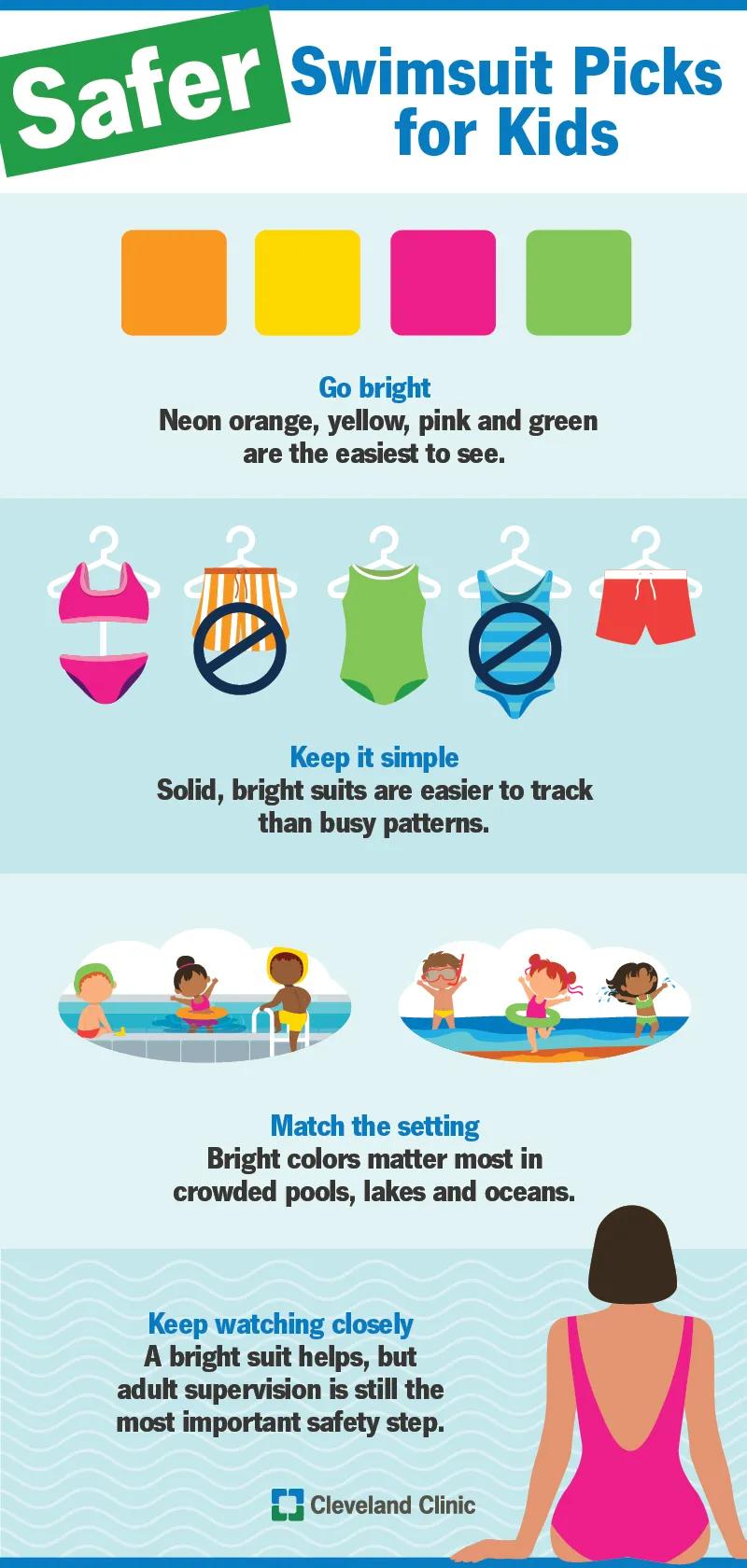
Image content: This image is available to view online.
View image online (https://assets.clevelandclinic.org/transform/a8a39bb4-f4f6-4554-960a-ed3d16145d71/SwimsuitColors-infographic-800x1680)
The 1980s may be long gone, but that era’s eye-popping neon green, yellow, pink and orange are still in style when it comes to keeping kids safe at the pool or beach.
These bright colors are hard to miss. They create a clearer visual cue against water, pool bottoms and sunlight reflections, which can make it easier to follow your child as they swim and play.
Advertisement
“The busier or less controlled the setting, the more I recommend highly visible colors,” Dr. So says. “If you’re at the beach, on a boat or swimming in open water, fluorescent colors tend to stand out best.”
But what if your child doesn’t want to wear the suit you choose because it’s too bright for their tastes? Don’t worry. There are workarounds, like offering a few easy-to-see options and letting them pick the one they like best.
A swimsuit with a favorite character or small design may help you persuade them, as long as the suit’s bright color still stands out.
“If your child has strong opinions about what they wear — and most kids do — you don’t have to turn swimsuit shopping into a safety lecture,” Dr. So adds. “Choose a few fluorescent options, then let your child pick the one they like best from those. That way, you’re still thinking about visibility, but they get a say, too.”
While black, navy blue and other dark shades may look sleek out of the water, they can be difficult to spot once submerged.
In pools, these colors can get lost in shadows or dark pool bottoms. In lakes, oceans and other open-water settings, they may blend into the water itself.
White swimsuits can also be harder to identify because they can mimic sunlight reflecting off the water’s surface.
“Try to avoid colors that blend into the water or their surroundings,” Dr. So advises. “Blues, greens, black and other darker shades can create a camouflage effect, making them harder to see.”
If your child is open to wearing a solid, bright swimsuit, it’s usually the easiest to spot. It gives your eyes one standout color to follow in the water. It’s still OK to have a character on the front or even a tiny, allover pattern if the bright background color stands out.
But large dark patterns can break up that bright color and make the suit harder to follow. When you’re choosing between options, evaluate the overall look of each one from a few steps away — if you notice the color first, it’s the better choice for visibility, Dr. So says.
Choosing a highly visible bathing suit for your child is important, but it’s only one piece of the puzzle when it comes to keeping kids safe near water.
The most important step is still watching closely and staying free of distractions. The goal is simple — keep kids in sight in every kind of swim setting.
In busy places like public pools, water parks, resorts, beaches and lakes, a highly visible suit can give your eyes one more cue to follow. Bright colors may also be helpful for children who tend to wander or need extra supervision in crowded public areas.
Advertisement
Dr. So notes that bathing suit color may be less of a concern in a smaller backyard pool where adults are watching closely. That may be a better place for letting your child wear the suit they like best.
But in larger or more crowded swimming areas, or around open water, choosing a color that stands out from the setting can make it easier to quickly find your child, whether they’re in or out of the water.
“Think of swimsuit color as one more layer of protection, but not a replacement for watching kids closely around water,” Dr. So advises. “Swimming lessons, U.S. Coast Guard-approved life vests and other water safety steps still matter, too.”
Advertisement

Sign up for our Health Essentials emails for expert guidance on nutrition, fitness, sleep, skin care and more.
Learn more about our editorial process.
Advertisement

Excessive exposure to saltwater can dehydrate skin and hair, despite having a few benefits

A fresh water rinse before and after swimming can go a long way

Both strategies work together to impact muscle growth, fat loss and strength gains

A type of high-intensity interval training, boxing can challenge your body and mind

Start training with full-body workouts at least six to eight weeks before you hit the slopes
To avoid swimmer’s eye, wear goggles, use eye drops and flush out your eyes with fresh, clean water when irritated
Keep kids safe while they swim by staying vigilant and setting up a safe pool environment

Having a well-rounded, healthy nutrition plan is just as important as staying consistent with your exercise routine

Managing your weight through physical activity may lower your chances of getting this common cancer

It typically starts in October and winds down in early spring, with cases at their highest in the middle of winter

Anxiety disorders, health conditions and past trauma can make driving nerve-wracking — help is available
 Search










