Locations:





They sound similar, and the two conditions are related, but hypochondroplasia tends to cause milder symptoms

Image content: This image is available to view online.
View image online (https://assets.clevelandclinic.org/transform/ef0d51fa-37e0-4eaf-80b0-78b4bce69f49/child-doctor-clinical-apt-1499159849-r)
Healthcare provider high-fiving toddler sitting on caregiver's lap
If your child has been diagnosed with hypochondroplasia, you may have heard another term come up during medical appointments or in your own online research: achondroplasia.
Advertisement
Cleveland Clinic is a non-profit academic medical center. Advertising on our site helps support our mission. We do not endorse non-Cleveland Clinic products or services. Policy
They sound similar, and the two conditions are certainly related. But hypochondroplasia and achondroplasia are not exactly the same. In short, hypochondroplasia tends to cause milder symptoms, and some children aren't diagnosed until later in childhood. Achondroplasia is generally more noticeable and often diagnosed earlier.
Both conditions stem from changes (a mutation) in the same gene (FGFR3) and affect cartilage and bone growth.
The major differences between the two conditions are a matter of severity and timing — when symptoms appear, how noticeable they are and what kinds of medical monitoring or accommodation your child may need over time.
We asked endocrinologist Emine Yilmaz, MD, to expand on some of those key differences and what they could mean for you and your child today and in the long run.
“The most common questions that come up from families when thinking about hypochondroplasia vs. achondroplasia are about quality of life, future expectations and whether there’s any treatment option for their child,” Dr. Yilmaz shares. “Families want to know what to expect as their child grows.”
Knowing more about the two conditions is the first step.
Achondroplasia, the chief cause of dwarfism (short stature), is the more easily observed condition. Children with achondroplasia usually have more obvious shortening of the arms and legs, a larger head size and distinct facial features that are often noticeable at birth or in early infancy. Experts say achondroplasia affects about 250,000 people worldwide.
Advertisement
Researchers believe hypochondroplasia may be nearly as common, but possibly underdiagnosed. “That’s true because the symptoms can be really subtle,” Dr. Yilmaz agrees. “Even experienced physicians might have a hard time recognizing hypochondroplasia.”
Some children may not be diagnosed with hypochondroplasia until later in childhood because growth differences and skeletal changes can emerge gradually. That can also make it harder for families to know what’s happening.
“There’s definitely a spectrum,” Dr. Yilmaz adds. “Not every person will experience similar symptoms or at similar ages.”
The physical differences between the two conditions are a matter of degree, Dr. Yilmaz says.
Both conditions can cause short stature, bowed legs, broad hands and feet, a larger head size and an inward curve of the lower spine (lordosis).
The most noticeable difference may be in your child’s height. In general, males with hypochondroplasia may reach an adult height of 54 to 65 inches, while females may reach 50 to 59 inches. Children with achondroplasia are rarely taller than 48 inches at adulthood.
And children with achondroplasia may have concerns that aren’t as easily noticeable. Achondroplasia is generally associated with more severe skeletal changes and a greater risk of complications involving breathing, problems with the nervous system and spinal narrowing (stenosis).
Many parents and caregivers focus most on what the final height will be for their child with hypochondroplasia. But adult heights can vary significantly depending on the person and the severity of symptoms. Some people may have relatively mild short stature, while others may need accommodations or adaptive tools in daily life.
That variability is one reason healthcare providers focus less on predicting an exact adult height and more on helping children maintain mobility, comfort and overall well-being.
Researchers are also continuing to study newer therapies for these conditions, including a medication called vosoritide (Voxzogo®), an injection treatment that’s approved for achondroplasia and is being studied in hypochondroplasia. Dr. Yilmaz notes that researchers are still learning how much benefit children with hypochondroplasia may see over time.
Achondroplasia is frequently diagnosed during infancy or even before birth, but hypochondroplasia usually isn’t so easily pinned down. Instead, families may first notice that their child is growing more slowly than peers or has differences in body proportions. Some children may develop spinal curvature or experience bone and joint pain as they get older.
Advertisement
And sometimes, your child, or even their friends, may actually notice differences before you or a clinical diagnosis.
When a provider does make a diagnosis of hypochondroplasia, it may involve physical exams, growth measurements, imaging (including X-rays, MRI or CT scans) and genetic testing. But because symptoms can overlap with other conditions — or appear mild — some people may go undiagnosed for years.
Both conditions can affect growth, mobility and bone development. And both may require ongoing medical monitoring over time.
Children with achondroplasia may need more care — from spinal fusion and spinal decompression therapy to sleep support, like a CPAP machine.
Children with hypochondroplasia may still need monitoring for issues like spinal curvature, spinal narrowing, bone pain or developmental differences.
“We mostly talk with caregivers about quality of life,” Dr. Yilmaz says. “Because these kids can do just about anything — sometimes, with minor modifications.”
Those modifications could be as simple as step stools where needed, foot supports under chairs or some physical therapy, as needed.
In the end, Dr. Yilmaz says families of children with hypochondroplasia are free to focus more on quality of life, independence and day-to-day function.
Advertisement
Advertisement

Sign up for our Health Essentials emails for expert guidance on nutrition, fitness, sleep, skin care and more.
Learn more about our editorial process.
Advertisement
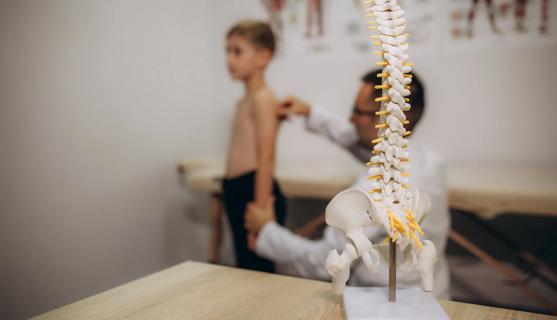
Spine curvature may be a possible sign of hypochondroplasia, but it typically doesn’t need serious medical intervention
Injections may help your child gain inches and build muscle, but results vary widely

ADHD can present differently from child to child and can change with age

People with PKU need to avoid high-protein foods, like meat, dairy, legumes and whole grains

Estrogen loss contributes to bone loss, which significantly raises your risk of osteopenia and osteoporosis

The emergency room is for serious medical issues; urgent care can help when you can’t get a quick appointment with your child’s doctor
Lice don’t jump — but they can spread with direct head contact
Some warts will clear up on their own, but others may need home remedies or medical care
Eyes typically increase to full size during two growth spurts in childhood

To start, opt for calorie-dense foods that are rich in protein and healthy fats

Pre-birth injections and monoclonal antibodies can help prevent serious complications
 Search