Locations:





 Search
High amounts of cholesterol and saturated fat in red meat may be linked to heart disease
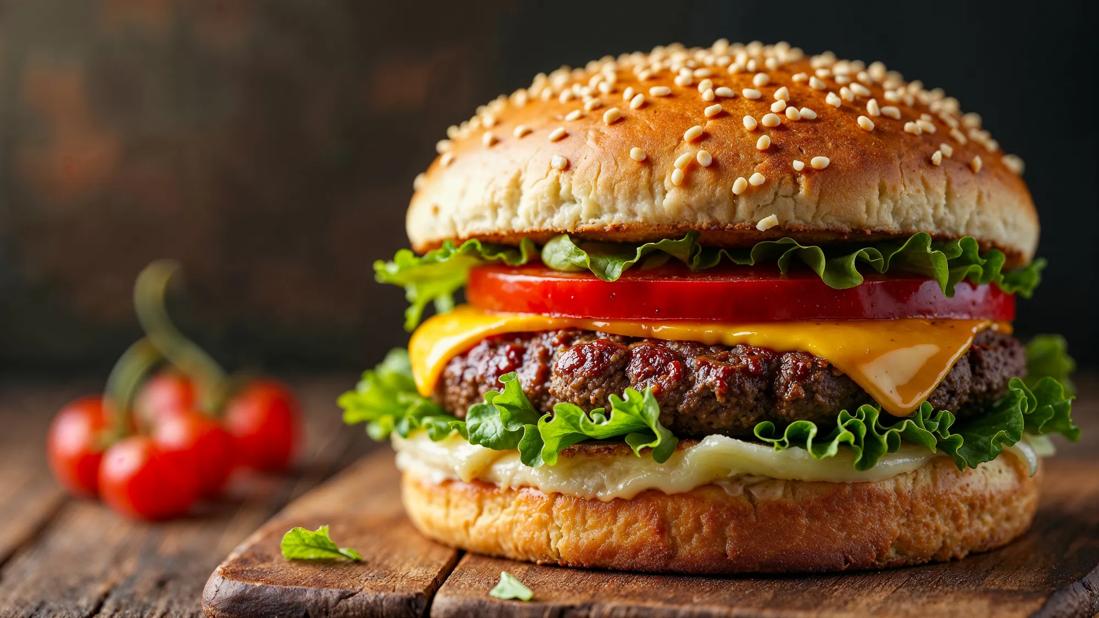
Image content: This image is available to view online.
View image online (https://assets.clevelandclinic.org/transform/4cff0c0b-b553-44d7-b604-ec8f7fce6d14/beef-hamburger-2166728719)
A big ol' beef patty hamburger on a bun, with lettuce, cheese, tomato and sauce
Is red meat bad for your heart? For decades, scientific studies have shown a connection between eating red meat — like beef, pork, veal and lamb — and getting heart disease. That’s why the American Heart Association encourages limiting the amount of red meat you eat.
Advertisement
Cleveland Clinic is a non-profit academic medical center. Advertising on our site helps support our mission. We do not endorse non-Cleveland Clinic products or services. Policy
Cardiologist Dennis Bruemmer, MD, PhD, explains the connection between red meat and heart disease.
Like a lot of animal products, red meat can be high in salt, fat and cholesterol. And while it may be a staple of American cuisine, it’s one that’s probably best experienced in moderation.
“There have been innumerable studies that show a connection between eating red meat, getting heart disease and dying from heart disease,” says Dr. Bruemmer. “It’s remarkably consistent.”
Exactly how red meat contributes to heart disease is debated. There are likely multiple reasons, including:
There’s no official recommendation on how much red meat is OK to eat.
Advertisement
But consider this: The amount of red meat consumption that’s associated with an increased risk for cardiovascular disease is rather small, reports Dr. Bruemmer. On average, that’s 100 grams or 3.5 ounces per day for unprocessed red meat and 50 grams or 1.7 ounces for processed red meat.
Increased red meat consumption is also associated with a higher risk for Type 2 diabetes and cancer, and consuming more than three-and-a-half servings of red meat per week is associated with an increased overall death rate. For example, a serving of meat is about 3 ounces, which is about the size of a deck of cards, and the average New York strip steak is about 10 to 14 ounces.
So, the American Heart Association encourages people to prioritize plant-based proteins, seafood and lean meats, and limit high-fat animal products, including red meat.
And it can be especially worrisome if you already have high cholesterol, high blood pressure or a family history of heart disease.
If you have any heart disease risk factors, talk to your doctor, have your nutrition evaluated and ask for a lipid panel to get a better picture of your heart health.
If you’re going to have red meat as part of your meal, here are some tips:
What about plant-based meat alternatives? There are some benefits to such a switch, but consuming them should still be done in moderation. For example, plant-based burgers achieve their beef-like taste thanks to a high degree of ultra-processed ingredients and hidden carbohydrates and salts.
“They can still be high in calories, salt and fat,” warns Dr. Bruemmer.
According to most scientific studies, people who eat more red meat have a higher risk of heart disease.
Advertisement
So, what can you do? Eat a well-balanced diet, limit how much red meat you eat and think about the types of red meat you eat.
“Being mindful of how often you’re eating red meat can help improve your overall heart health,” concludes Dr. Bruemmer.
Advertisement

Sign up for our Health Essentials emails for expert guidance on nutrition, fitness, sleep, skin care and more.
Learn more about our editorial process.
Advertisement

This famously funky-smelling fruit is packed with fiber, vitamins and minerals

This citrus fruit delivers vitamin C, fiber and other nutrients that can support your heart, immune system and skin

Eating about 20 to 30 grams of protein for your first meal can help you feel fuller longer and fend off cravings

The best choices are high in omega-3s and protein and low in mercury

This bright citrus juice is packed with vitamin C and other nutrients that support your health

This vibrant purple yam offers vitamin C, fiber and antioxidants in every bite

Look for foods with a variety of nutrients that last a long time and work in multiple meals — like legumes, whole grains and frozen or canned produce

The traditional hot dog isn’t exactly a nutritious choice, but that doesn’t mean you can’t enjoy one here and there

Most breast pain isn’t a sign of cancer, but certain symptoms deserve a closer look

It’s a myth that you should avoid sleep (or have someone wake up throughout the night) after a head injury

The color and shade of your urine offer a window to your health











