Locations:


KT tape may help relieve some foot and ankle pain, but it’s no replacement for medical attention
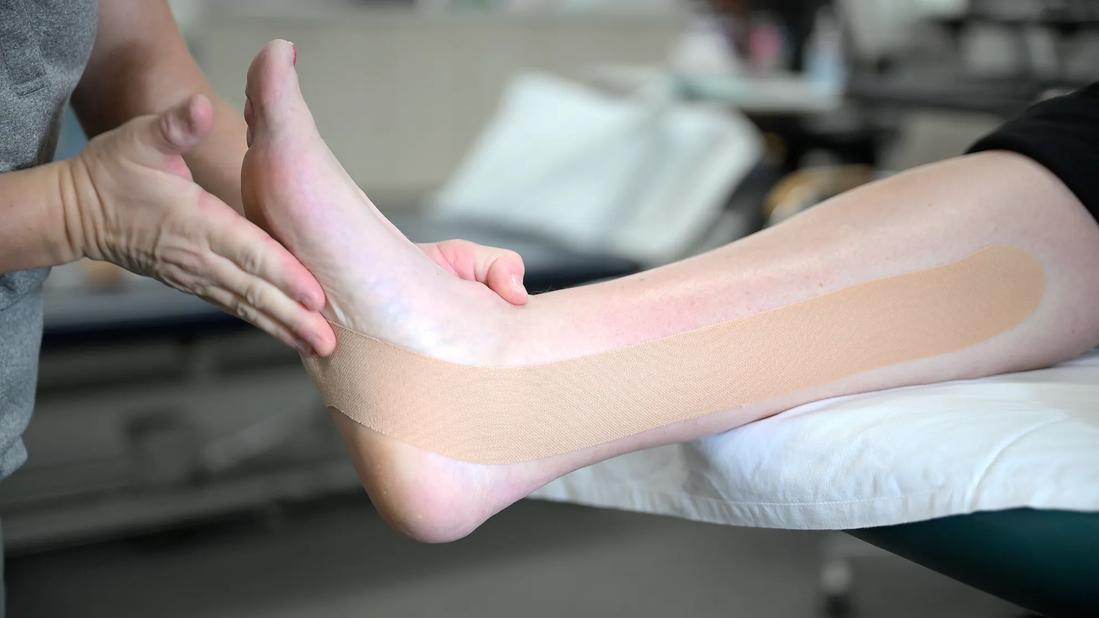
Image content: This image is available to view online.
View image online (https://assets.clevelandclinic.org/transform/20d8b316-c44f-45e9-a258-45abe2cbfdc7/how-to-tape-ankle)
Provider applying kinesiology tape to an ankle
If you’ve ever seen athletes decked out in colorful tape stretched across their muscles and joints, you may have wondered what it is — and whether it could help your achy feet and ankles.
Advertisement
Cleveland Clinic is a non-profit academic medical center. Advertising on our site helps support our mission. We do not endorse non-Cleveland Clinic products or services. Policy
It’s called kinesiology tape (it also goes by the names K-tape, kinesio tape or KT Tape®).
But what does it actually do? And could it offer the support your ankles have been begging for?
It’s worth a try, says physical therapist and athletic trainer Michele Dierkes, PT, DPT, ATC. But it depends on how you use it and what’s causing your pain.
Here’s what to know about KT taping your ankles.
Kinesiology tape is a lightweight elastic tape that’s designed for sports, fitness and daily activities. It supports your muscles and joints without restricting movement. Some people use it for relief from osteoarthritis.
A healthcare provider may recommend it as part of a treatment plan to support your muscles and help you feel better. It could help foot and ankle pain and swelling, too.
“The key benefits of using kinesio tape are to provide pain relief, reduce swelling and edema, improve muscle performance, and provide proprioception (body awareness) support,” Dr. Dierkes explains. “It can help decrease your foot and ankle pain so you can walk with better form and improve your mobility.”
K-tape shouldn’t cause any harm, but that doesn’t make it a proven solution.
“There are a lot of people who say kinesio tape is great and that it helps them,” Dr. Dierkes acknowledges. “But the medical evidence doesn’t necessarily prove those benefits.”
Advertisement
In other words, it might be worth a try, but don’t expect miracles. Kinesio tape works best with the right rehabilitation exercises to address the problems causing your pain in the first place. Resist the temptation to choose DIY taping over seeking medical advice from a physician or rehabilitation specialist, like a physical therapist.
The methods you use for kinesio tape for your ankles will depend on your goals. But regardless of the exact uses, here’s what to know before you get started:
Dr. Dierkes shares three ways to use KT tape for your ankles.
If you’re living with plantar fasciitis, kinesiology tape may help support your ankle and alleviate pain in your heels and arches.
Advertisement
Your Achilles tendon connects your foot to your calf. If it gets stressed, it can cause ankle pain, weakness and swelling (Achilles tendonitis). KT tape may help support your ankle as you work to rehabilitate your ankle.
Damage to your posterior tibial tendon can cause pain on the inside of your ankle and foot. This is more common if you have low arches or flat feet.
“If you’re dealing with posterior tibial tendinopathy, good arch support in your shoes is important,” Dr. Dierkes advises. “Kinesio tape can be used, too, to help facilitate and support the tendon to relieve some pain while you work to strengthen this muscle.”
Advertisement
Kinesiology tape may help support your ankles and other muscles or joints, but it’s no replacement for more proven treatments, like physical therapy.
“K-tape could be a helpful add-on treatment for some foot and ankle problems,” Dr. Dierkes advises. “But if you’re injured or in pain, start by seeking medical guidance. We can help you come up with a plan for recovery that goes beyond taping.”
Advertisement

Sign up for our Health Essentials emails for expert guidance on nutrition, fitness, sleep, skin care and more.
Learn more about our editorial process.
Advertisement
Expert advice on when you can treat it at home

Remember to start slow and if things don't improve, ask your doctor about more advanced solutions

You can improve strength and stability with these eight easy exercises

Home remedies to reduce pain and water retention

An expert discusses shoes, braces and other ways to support your ankles

Hypoglycemia means your blood sugar is too low, and hyperglycemia means it’s too high

Look at menus in advance, ask for modifications and consider portion sizes

Paying attention to serving sizes, total carbs and other stats can help you make informed food choices

This low-impact activity could boost your cardiorespiratory health

The advice dates to 1574, but it falls a little short given what we know today

Most tongue pain isn’t too serious, but seek help if it’s severe or lasts longer than a few weeks
 Search