Locations:


Paying attention to serving sizes, total carbs and other stats can help you make informed food choices

Image content: This image is available to view online.
View image online (https://assets.clevelandclinic.org/transform/c6abe548-7c27-4ac6-9367-f20c5b4bf485/reading-nutrition-labels-889664710)
Person reading a nutrition label at the grocery store
When you’re living with Type 2 diabetes (T2D), it’s important to choose foods that will help manage your blood sugar. But walking down a grocery store aisle can be overwhelming.
Advertisement
Cleveland Clinic is a non-profit academic medical center. Advertising on our site helps support our mission. We do not endorse non-Cleveland Clinic products or services. Policy
The key to making an informed choice? Knowing how to read — and decode — the nutrition label on packaged foods.
Registered dietitian and diabetes educator Nicole Bruno, RD, LD, shares what to look for on food labels.
Packaged foods contain a “Nutrition Facts” label that lists information like serving size and total carbs to help you make educated, informed choices when you’re grocery shopping.
“You can use this vital data to decide if an item is right for you or compare it against similar items,” says Bruno.
Here’s what you’ll find on a label as you read it from top to bottom — and what to consider when managing Type 2 diabetes.
To start, you want to look at the serving size and how many servings are in each product. Some may contain more than one serving, which becomes important when you’re gauging how much you want to eat.
“For example, a serving size could be 1 cup, but you could choose to have 2 cups, which would be two servings,” Bruno illustrates. “The nutritional info that follows, like total fat and total carbs, is based on one serving. So, if you have two servings, you’d have to double the amount of everything.”
U.S. dietary guidelines recommend that adults 21 years old and older should consume somewhere between 1,600 and 3,000 calories per day. But factors like age, weight, gender, height and activity level can influence how many calories you need.
Advertisement
A registered dietitian can help you determine the best calorie range for you to manage your Type 2 diabetes.
While the amount of total fat in a serving won’t greatly impact your blood sugar, it’s something you should still take into consideration. The type of fat can affect your health — in positive and negative ways.
People with Type 2 diabetes may have a higher risk of heart issues, like heart attacks and stroke, making the amount of saturated fat an important number to consider.
“You want to be mindful of how much saturated fat you’re having in your diet,” says Bruno.
To help you make the best decision, she advises paying attention to the percentages (shown as “% Daily Value”) listed on the right of the label.
“It’s recommended that you keep those numbers below 20%,” she says.
On the other hand, unsaturated fats — like monounsaturated fats and polyunsaturated fats — are considered to be “good fats.” They support your heart health and can help with blood sugar management.
If saturated fat plays a big role in your heart health (especially if you have Type 2 diabetes), what about cholesterol?
Dietary cholesterol — the type of cholesterol we eat — also plays a part. Looking at a product’s “% Daily Value” can ensure you’re not getting too much cholesterol in your diet.
Advertisement
Sodium doesn’t directly affect blood sugar. But as sodium can impact blood pressure and heart health, Bruno says it’s important to be aware of how much you’re eating.
“Generally, we want to have less than 2,300 milligrams (mgs) per day,” she notes.
When it comes to living with diabetes, you want to consider the total carbohydrates in a serving of food. But let’s clear up a big misconception: You don’t need to be carb-free if you have diabetes.
“Carbohydrates — fiber, starch and sugar — have the biggest impact on our blood sugar,” explains Bruno. “A general rule of thumb is about 30 to 60 grams of total carbohydrates per meal. Your body needs them for energy.”
Keep in mind that a food may only be one part of your overall meal, so make sure you account for total carbs across everything you plan to eat in one meal.
Beneath the amount of total carbs, you’ll see the amount of dietary fiber. You probably know that fiber is essential when it comes to gut health and keeping your bowels moving. And getting enough fiber is also important if you have Type 2 diabetes.
“If you’re watching your carbs and trying to manage your blood sugars, you may tend to have smaller portions of carbs and not feel as full after eating,” says Bruno. “Boosting the fiber content in your meals can help keep you more satisfied.”
Advertisement
What’s the difference between total sugar and added sugar? Total sugar includes sugar naturally found in foods, plus added sugar. For both, Bruno says to pay attention to the percentages listed on the right of the label.
“Anything greater than 20% is going to be considered high,” she reports. “If something has a higher amount, you want to rethink the portion size. Maybe you only eat a half-portion to reduce those added sugars.”
Protein doesn’t directly affect blood sugar, but it can still help balance it.
“For someone with diabetes, we may recommend more protein because it helps to keep you full and satisfied,” says Bruno. “Eating protein also helps lower how many total carbohydrates you might have with a meal, which can also help manage your blood sugar.”
The exact amount of protein you need depends on factors like age, gender, muscle mass and activity level.
A nutrition label also lists other key nutrients found in that specific food, like vitamin C and calcium. But Bruno says this shouldn’t sway you one way or the other from eating or not eating an item — unless your healthcare provider has talked to you about watching something in particular.
“If you’re eating a varied diet with fruits and vegetables, lean proteins and healthy carbs, you should be getting a variety of nutrients in your diet,” she says.
Advertisement
Additionally, she advises paying attention to the ingredient list and the order in which ingredients appear.
“Ingredients are listed by weight,” explains Bruno. “For example, if you’re looking at a product and the first ingredient is wheat flour, that’s the most prominent ingredient.”
Nutrition labels have a lot of information that can help you make informed choices when it comes to managing your Type 2 diabetes.
Advertisement

Sign up for our Health Essentials emails for expert guidance on nutrition, fitness, sleep, skin care and more.
Learn more about our editorial process.
Advertisement

Look at menus in advance, ask for modifications and consider portion sizes

Drinking water doesn’t lower blood sugar, but hydration does support diabetes management
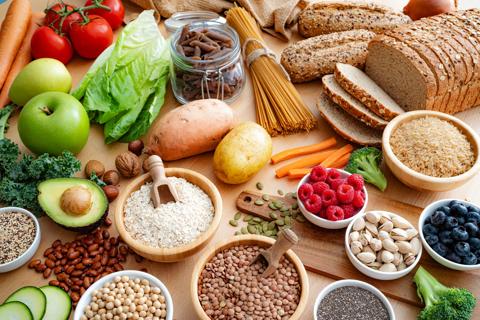
Fiber slows down digestion, helping prevent blood sugar spikes

Remission is possible for Type 2 diabetes, but it requires significant, sustained changes to your health

Avoiding outside messaging may be difficult, but you can change how you think about T2D

Track your blood sugar levels and pay attention to any symptoms, like feeling thirstier than normal

Prioritize your health by managing stress, strengthening your social connections and getting quality sleep

Keto can reduce blood sugar, but that doesn’t mean it’s right for everyone

This low-impact activity could boost your cardiorespiratory health

The advice dates to 1574, but it falls a little short given what we know today

Most tongue pain isn’t too serious, but seek help if it’s severe or lasts longer than a few weeks
 Search