Locations:





Hint: smoking, drinking and diet play a role
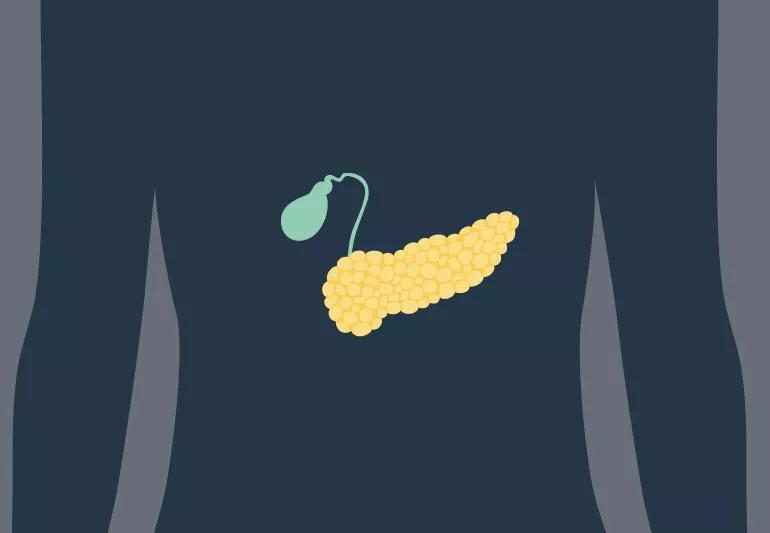
Image content: This image is available to view online.
View image online (https://assets.clevelandclinic.org/transform/1848d81f-88d1-4ea8-989b-001f3c38ff89/pancreaticAttacks-1249669069-770x533-1_jpg)
Illustration of pancreas in the human body
Have you ever gotten severe, sharp stomach pain caused by your pancreatitis? Or has it felt more like a constant, dull discomfort?
Advertisement
Cleveland Clinic is a non-profit academic medical center. Advertising on our site helps support our mission. We do not endorse non-Cleveland Clinic products or services. Policy
Either way, you need to address it by working closely with your doctor and by making important lifestyle changes.
“Early and aggressive treatment of pancreatitis can improve outcomes, prompt an early recovery and limit complications,” says pancreatic specialist Prabhleen Chahal, MD.
Pancreatitis occurs when the pancreas — the long organ that sits behind the stomach and next to the small intestine — gets inflamed. The pancreas aids in digestion and helps regulate your hormones for sugar and metabolism.
“Pancreatitis has two forms: acute and chronic,” says Dr. Chahal. “Problems start happening when the pancreas releases digestive enzymes too soon and they attack the pancreas itself instead of breaking down the food you eat.”
If you have an acute case, your symptoms may range from mildly uncomfortable to life-threatening. Mild attacks typically last a few days.
Moderate to severe attack of pancreatitis may cause:
Chronic pancreatitis, however, is a result of progressive, long-lasting inflammation. It can develop after you have an acute attack and over time, symptoms may include:
Advertisement
Stopping future pancreatitis attacks are possible. To start on a healthy journey, it’s important to make some behavioral and lifestyle changes.
“The disease of the pancreas has significant impact on your quality of life,” she says. “Successful management will involve multi-specialist care, including behavioral and lifestyle modification.”
If you keep having pancreatitis flare-ups, it can eventually lead to pancreatic scarring, so it’s crucial to make these needed changes. Do what you can to lower these risk factors:
If your pancreatitis is causing you mild to moderate pain, over-the-counter pain medications like acetaminophen or ibuprofen taken over the short term may help.
“For pain that is constant and severe, consider a consultation with a pain management doctor who often prescribe medications called neuro pain modulators,” says Dr. Chahal. “A specialized procedure called celiac plexus block is also offered to patients for managing chronic pain related to chronic pancreatitis.”
If you’ve had an acute attack, avoid it coming back by starting with medication and behavioral changes. In some cases, further endoscopic procedures like an endoscopic ultrasound (ERCP) or surgery is necessary.
If you have stones in your pancreas, your doctor may use shock waves to break up the stones that are creating blockages.
“This may help with the pain and recurrent pancreas flare-ups,” she says. “Surgeons can remove diseased or inflamed areas of the pancreas or the entire pancreas, if necessary.
Ultimately, managing the condition often requires both medical, endoscopic, surgical and personal changes.
Advertisement

Sign up for our Health Essentials emails for expert guidance on nutrition, fitness, sleep, skin care and more.
Learn more about our editorial process.
Advertisement

Eat foods that are high in protein and low in animal fat and simple sugar
In its early stages, the disease rarely causes symptoms — but as it progresses, it can cause jaundice, stomach pain, mid-back pain, vomiting and more
Most of the risk factors aren’t things you can control, but making healthy lifestyle changes and managing other health conditions may help

How to know when a stomachache is something more serious

Consider the severity and location of your arthritis to decide on the right support
Eyes typically increase to full size during two growth spurts in childhood

Pre-birth injections and monoclonal antibodies can help prevent serious complications

These medications help calm the overactive brain signals that cause involuntary movements

Managing your weight through physical activity may lower your chances of getting this common cancer

It typically starts in October and winds down in early spring, with cases at their highest in the middle of winter

Anxiety disorders, health conditions and past trauma can make driving nerve-wracking — help is available
 Search










