Locations:





 Search
The tropical fruit is a good source of fiber and antioxidants and may help reduce inflammation
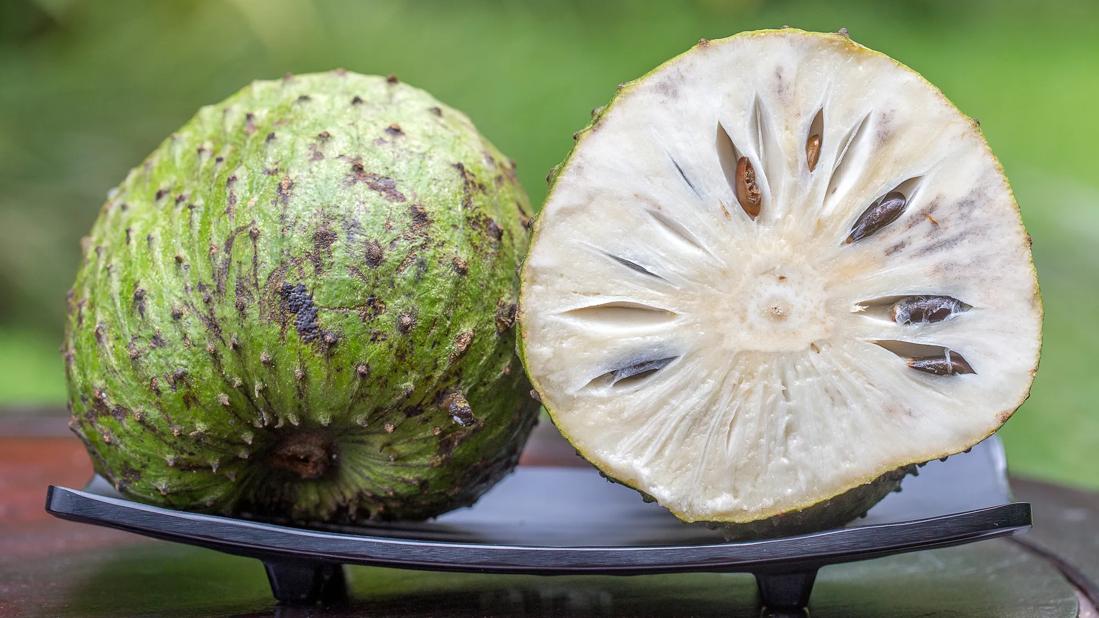
Image content: This image is available to view online.
View image online (https://assets.clevelandclinic.org/transform/acdd1fe9-5ab1-4962-a5bc-3fb9b70cc7bb/soursop-fruit-899698968)
A soursop, guanabana, cut in half
Officially known as Annona muricata, soursop is a native fruit of South America. It goes by many names, like guanabana, graviola or custard apple. On the outside, the fruit resembles an oversized avocado — if the avocado were covered with prickly spikes. Soursop, which is a good source of fiber and high in antioxidants, may help reduce inflammation and support digestive health.
Advertisement
Cleveland Clinic is a non-profit academic medical center. Advertising on our site helps support our mission. We do not endorse non-Cleveland Clinic products or services. Policy
Registered dietitian Alexis Supan, RD, LD, explains what you should know about this trendy tropical treat.
Despite its tough exterior, soursop is sweet at heart. The guanabana fruit’s white pulp is smooth and creamy with large black seeds. People sometimes compare its sweet-tart flavor to a blend of strawberries and apples.
While soursop can be hard to come by in the U.S., you might be able to find it in specialty grocery stores (like Latin American and Caribbean markets). If you can track down fresh soursop, Supan recommends enjoying it in its pure form.
“Soursop has a great creamy texture and tropical taste that’s delicious eaten raw,” she says. “But spit out the seeds, as they’re toxic.”
Like many fruits, soursop is a healthy source of dietary fiber, vitamins and minerals.
One cup (about 225 grams) of raw soursop contains:
Besides fiber, the fruit is a good source of nutrients, like:
Traditional healers have long used soursop for medicinal purposes. They utilize many parts of the plant — including the fruit, leaves and stems — to treat a variety of illnesses.
But there’s a big caveat to those claims, notes Supan. Medical researchers have only just begun studying the possible health benefits of soursop, so we don’t yet have enough scientific data on the plant’s health-boosting properties.
Advertisement
Here’s a look at some of the potential ways soursop may impact your health.
The antioxidants found in soursop — phytosterols, tannins and flavonoids — may help fight free radicals in your body. Free radicals can cause oxidative stress, which, in turn, can cause inflammation.
“While we know antioxidants help keep our cells healthy, more research is needed to understand what amount of antioxidants would be viewed as beneficial,” says Supan.
Soursop has antibacterial properties. Lab studies show that it may help kill bacteria that contribute to tooth decay, gingivitis and yeast infections.
“While this research is promising, further research is needed before we can assume the benefit of soursop in this area,” says Supan.
Soursop may help manage high blood pressure. One study shows that people who drank 7 ounces of soursop juice each day over a three-month period had lower blood pressure than a control group.
“This study is very promising, as it shows the properties of soursop could potentially help to treat high blood pressure, which is something nearly half of adults in the U.S. currently face,” explains Supan.
Researchers are looking into whether soursop may potentially help with diabetes management. The thought? Certain enzymes in soursop may break down carbohydrates to slow how quickly your body absorbs glucose.
But more research, especially in people, is needed to fully understand the role soursop may play.
Getting enough fiber each day is key to your digestive health — and soursop contains both soluble and insoluble fiber.
“Fiber not only helps with our digestive system, but it also helps regulate blood sugar and lower cholesterol,” states Supan. “Having a cup of soursop a day can greatly help you reach your fiber needs.”
There’s some evidence that the extracts from the plant’s leaves could kill cancer cells. But slow your roll: Those findings came from lab studies, which often involved huge doses of extracts from soursop leaves.
“Keep in mind that there haven’t been any human studies, so it’s too soon to tell if there are any benefits,” Supan clarifies.
You can find soursop teas and extracts for sale, but the U.S. Food and Drug Administration (FDA) doesn’t regulate those products. And there are reasons to be wary, Supan warns.
Soursop can be toxic in large doses, causing symptoms that resemble those of Parkinson’s disease, including:
The compounds found in extracts and teas can also interfere with medications used for high blood pressure and diabetes treatments.
Advertisement
“I’d advise staying away from soursop extracts and teas,” she stresses. “You don’t want to play scientist with your health.”
While you should probably steer clear of soursop extract or teas, there’s no reason not to enjoy the fresh fruit. Just be aware that it’s a big fruit with plenty of natural sugars.
“One fruit can have 70 or 80 grams of sugar, so you don’t necessarily want to eat an entire fruit at once, especially if you’re concerned about your sugar intake,” notes Supan.
Supan suggests eating half, then freezing the rest to use in smoothies later. Its flavor blends seamlessly with other tropical fruits, like mangoes, papayas and pineapples.
Bottom line? Like most trendy superfoods, soursop isn’t a miracle cure-all. But it’s a tasty treat and a good source of nutrients.
Advertisement

Sign up for our Health Essentials emails for expert guidance on nutrition, fitness, sleep, skin care and more.
Learn more about our editorial process.
Advertisement

This caffeinated South American tea contains antioxidants and other nutrients that may offer some health benefits

Protein is essential in your diet, but piling more onto your plate isn’t always better

Choosing snacks with protein can help curb hunger, support muscle health and keep your energy steady between meals

Fish packs plenty of protein, heart-healthy fats and other body-boosting nutrients into every bite

Both are healthy choices, but wild-caught salmon offers a few more benefits
These bright berries are packed with nutrients and antioxidants that may support your eyes, immune system and overall well-being

Prepping ingredients ahead of time, rethinking your snacks and making smart protein swaps can up your daily intake

It’s a good on-the-go option and can help build muscle and aid in weight loss

Most breast pain isn’t a sign of cancer, but certain symptoms deserve a closer look

It’s a myth that you should avoid sleep (or have someone wake up throughout the night) after a head injury

The color and shade of your urine offer a window to your health











